

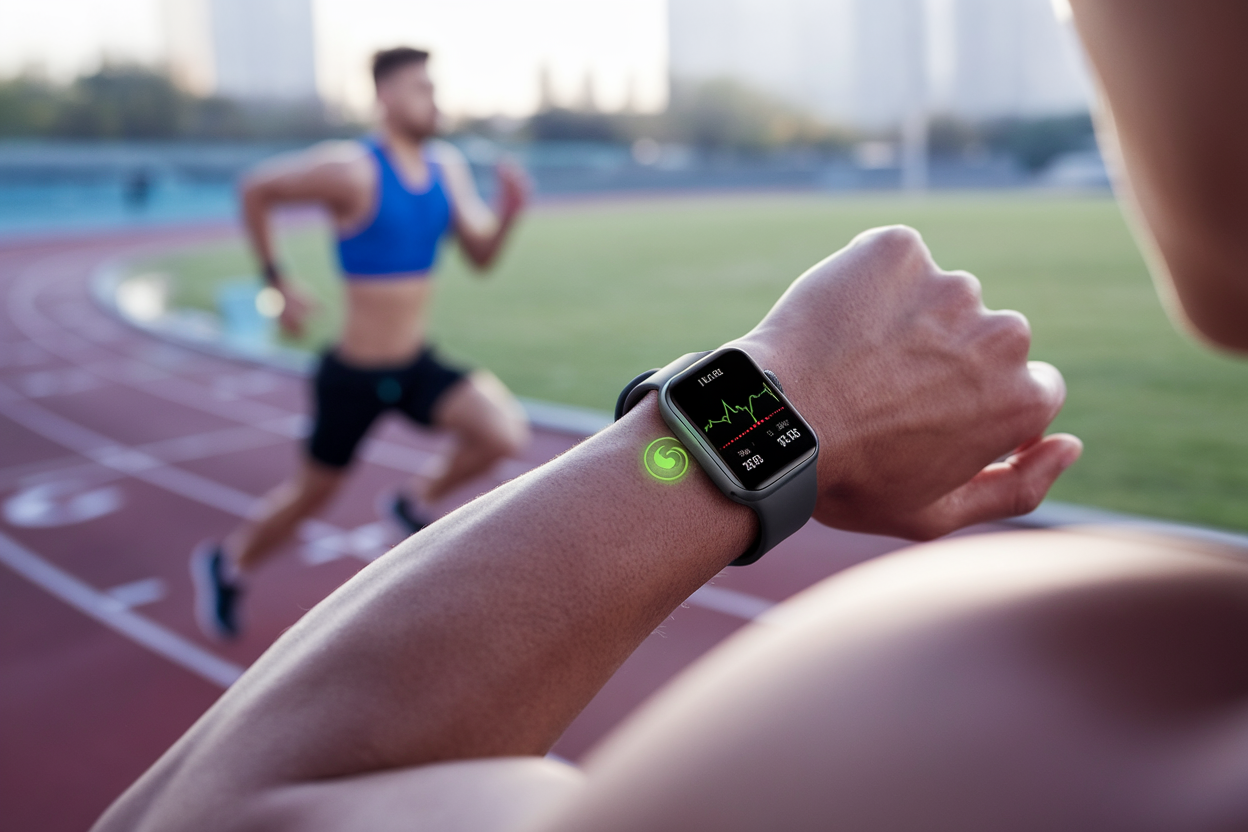
You can drop about $110 and walk out with a smartwatch that reads your heart rate. Suddenly your pulse—once the domain of doctors and ER nurses—becomes your workout boss. The screen flashes color-coded “zones,” and one of them is practically catnip: the so-called fat-burn zone.
Here’s the problem: that neat little number on your wrist is the end of a long chain of assumptions. The watch isn’t measuring fat. It’s measuring a light signal, translating it into heartbeats, then running that through a model that was built for the average human—not necessarily you.
That doesn’t make the watch useless. It makes it a tool. And like any tool, it works better when you understand what it’s actually doing—and where it’s flat-out bluffing.
That green light measures blood flow, not “fat burning”
Flip your watch over. See that little green glow? That’s not decoration. Most watches use PPG—photoplethysmography. LEDs (often green) shine into your skin, and a sensor reads how much light bounces back. When your heart beats, blood volume in tiny vessels changes, and the reflected light changes with it. An algorithm turns that into beats per minute.
In a calm, steady workout—walking, steady jogging, cycling on smooth roads—PPG can be pretty solid. But start doing anything that makes your wrist bounce and twist and the signal gets messy. Intervals, lifting, tennis, mountain biking, anything with sharp changes? The watch can lag, smooth over spikes, or mistake motion for a heartbeat.
And even when the heart rate is accurate, it still doesn’t tell you what fuel you’re burning. Heart rate is a readout of cardiovascular strain. The “fat-burn” label comes later, when apps convert your heart rate into intensity zones and then into calorie estimates using statistical models—age, sex, weight, sometimes a guessed VO2 max.
The American College of Sports Medicine (ACSM) has been clear for years: heart rate correlates with oxygen use and energy burn, but it swings with heat, fatigue, hydration, stress, and caffeine. Same pace, different day, different heart rate. Same heart rate, different output.
Use the watch for what it’s good at: keeping your effort honest. It can stop you from doing the classic mistake—running too hard on “easy” days and too easy on days that are supposed to build fitness.
The “fat-burn zone” is usually 60–70% of max heart rate—and the label is misleading
On most platforms, the fat-burn zone sits around 60–70% of your max heart rate. That’s moderate effort: breathing faster but controlled, you can talk in sentences, you’re working but not suffering.
Physiology-wise, yes—at moderate intensity, the percentage of energy coming from fat tends to be higher than at high intensity, where carbs dominate. But here’s the catch people don’t like hearing: at higher intensity you often burn more total calories per minute. So you can do a harder workout that burns more total energy even if the “fat percentage” is lower during the effort.
That’s why the “fat-burn” branding is such a trap. It makes people think there’s a magic lane where fat melts off and everywhere else is wasted motion. Real life doesn’t work like that. Different intensities serve different goals: endurance base, aerobic capacity, recovery, training volume, performance.
Then there’s the dirty secret behind those zones: your watch might be using a junk estimate for max heart rate. Plenty of devices still lean on the old 220 − age formula. For individuals, that can be off by 10–15 beats per minute—sometimes more. If your true max is higher than the watch thinks, your zones are set too low and you’ll “leave the zone” doing basically anything. If your max is set too high, you’ll push too hard trying to “earn” the zone.
Some brands offer guided tests or auto-detection based on workout history. Not perfect, but usually better than a one-size-fits-nobody formula. If you want a serious number, coaches use progressive field tests (carefully), and for anyone with medical concerns, a supervised stress test is the grown-up answer.
Also: 60–70% isn’t universal. Well-trained athletes can oxidize fat at higher intensities. Beginners often get hit with cardiac drift—heart rate creeping up even when pace stays the same—so the watch claims you “changed zones” when you didn’t change speed at all.
The smarter move: treat zones as guardrails. Cross-check them with breathing, perceived effort, and—when you can—pace (running) or power (cycling).
Why “winging it” fails: cardiac drift, stress, and bad zone math
Most “weight-loss cardio” done by feel lands in the worst middle ground: too hard to sustain for long, too easy to drive real improvement. A heart-rate monitor can expose that fast. Plenty of “easy” sessions are actually 75–80% of max—high enough to rack up fatigue and make it harder to stack volume across the week.
Cardiac drift is the other head-fake. You hold the same pace, but your heart rate climbs over time because your body heats up, plasma volume shifts, you’re dehydrated, or you’re just cooked. On your wrist it looks like you’re ramping intensity. If you slam the brakes to stay in a zone, you can turn a planned endurance run into a glorified walk.
Stress and lousy sleep also jack with heart rate. Some watches spit out “readiness” or recovery scores, but those are still estimates wrapped in slick UI. The simple reality check is this: if a normal pace feels awful and your heart rate is unusually high, adjust the day’s plan.
And yes, sometimes it’s just bad data. Loose strap, cold skin, lots of arm hair, heavy tattoos, very thin wrists—PPG can struggle. Most manufacturers recommend wearing the watch a bit above the wrist bone and snug enough to prevent micro-movement.
For hard sessions, lots of athletes switch to a chest strap. It’s closer to the heart’s electrical signal and usually reacts faster when intensity changes.
The real danger isn’t that the watch is wrong every time. It’s that a small, consistent error can steer your training off course. Under-read during intervals and you’ll push harder than you should. Over-read on easy days and you’ll slow down too much, then “make up for it” later with a sufferfest. That’s how people end up tired, stuck, and annoyed.
Better approach: decide what the workout is for—easy endurance, tempo, intervals, strength. Then use heart rate to confirm you’re doing that workout, not improvising based on whatever color your wrist is yelling at you.
Practical fixes: set your max HR, pick a zone system, and use a chest strap when it counts
If you want your watch to help instead of heckle you, three things matter: your max heart rate setting, your zone model, and whether the sensor matches the workout.
First: check what max HR your device is using—age formula, a number you entered, or something it “learned.” If you can replace it with a more realistic value from a progressive test (or coaching), your zones get better immediately.
Second: pick a zone method and stick with it. Some systems use straight percentages of max HR. Others use heart rate reserve (Karvonen), which factors in resting heart rate and can better reflect relative intensity across different fitness levels. The key is consistency over weeks so you can compare sessions and track progress.
Third: match the hardware to the job. Optical wrist HR is usually fine for steady endurance. For short intervals, fast pace changes, or lifting—use a chest strap if you care about accuracy.
If fat loss is the goal, the most underrated variable is weekly volume. Moderate intensity you can repeat—again and again—builds aerobic base and racks up total energy burn without turning every workout into a punishment. A watch can help you stay “comfortably working” instead of accidentally racing every day.
One last tip: stop worshiping the calorie number. It’s an estimate dressed up as a fact. Watch trends instead—average heart rate at the same pace, how long you can hold a given effort, how quickly you recover. That’s the stuff that actually tells you you’re getting fitter.
FAQ
Can a heart-rate watch tell if you’re burning fat in real time?
No. It measures heart rate (usually via an optical sensor) and then infers intensity zones. It doesn’t directly measure fat oxidation at your wrist.
What heart-rate zone is usually labeled “fat burn”?
Often around 60–70% of max heart rate—assuming your max HR is set correctly.
Why does heart rate rise even if my pace stays the same?
Cardiac drift: heat, dehydration, fatigue, and overall training load can push heart rate up over time at the same mechanical effort.
When should I use a chest strap instead of wrist HR?
Intervals, fast changes in pace, and workouts with lots of wrist movement (lifting, racket sports). Chest straps are typically faster and less prone to motion errors.