

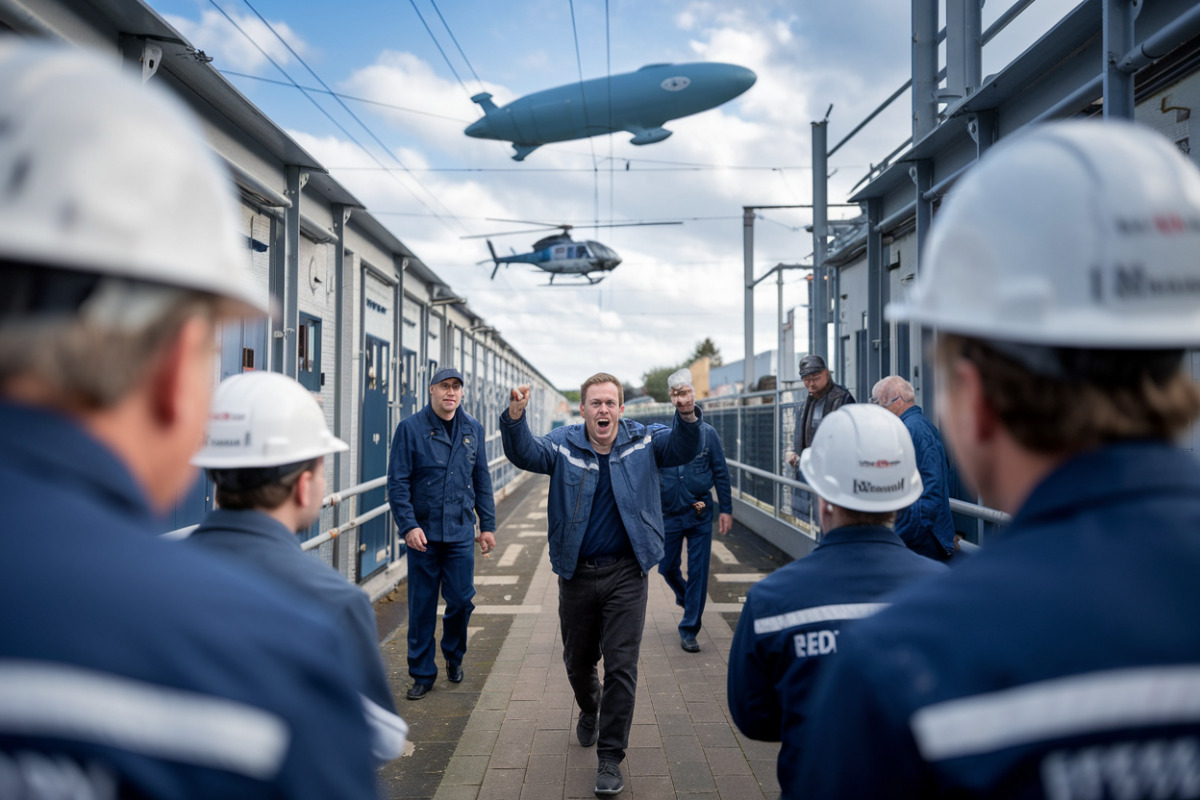
France’s power-grid operator is sending hydrogen blimps up where helicopters used to rule—and it’s not a gimmick. Enedis says it’s shifting aerial inspections of 15,570 kilometers of electric lines—about 9,675 miles—away from helicopters it considers too risky for crews and too dirty for the climate.
If you’re picturing a Goodyear-style balloon lazily floating over vineyards, you’re not totally wrong. But the point here is deadly serious: inspecting high-voltage lines means flying close to live cables, often in rough terrain, and helicopters don’t leave much margin for error.
Helicopters did the job. They also scared the hell out of people.
For decades, helicopters have been the default tool for checking transmission lines in hard-to-reach places—mountain ridges, deep rural stretches, environmentally sensitive corridors. They’re fast, they’re flexible, and they’re loud as sin.
They’re also dangerous. Flying low and close to energized lines is exactly the kind of work where “experienced crew” can still end up as a headline. Enedis is basically admitting what everyone in that business already knows: the risk profile is ugly, especially during tight maneuvers near cables.
Hydrogen airships, Enedis argues, give pilots a steadier platform and let inspection teams slow down without the constant twitchiness of a helicopter hovering near a wire. Slower flight means better visuals, better sensor readings, and fewer white-knuckle moments.
The company says this approach will cover roughly 16% of France’s 100,000-kilometer network—about 62,137 miles total—using these airships as part of a broader preventive-maintenance push.
Hydrogen: cleaner in the air, quieter on the ground
Enedis is also selling this as a climate move. Traditional helicopters burn fuel and pump out CO2. These hydrogen airships, the company says, emit water vapor during operation—cutting the carbon footprint of aerial surveillance that racks up hundreds of flight hours each year.
There’s another benefit nobody complains about: noise. Rural residents don’t exactly throw block parties when a helicopter starts chopping the air overhead. Airships are far quieter, which matters when you’re flying repeated inspection routes over farms, small towns, and protected areas.
This fits into Enedis’ longer-term pledge to reach carbon neutrality by 2050. Swapping out fossil-fuel aircraft for hydrogen lift isn’t the whole plan, but it’s a concrete lever they can pull now.
Rolling it out slowly—because weather doesn’t care about press releases
Enedis isn’t flipping a switch overnight. The rollout is staged over several years, with the 9,675 miles targeted first focused on the most strategic—and often most difficult—segments: rugged topography and zones where environmental impact is a political and practical headache.
And yes, other countries are watching. The article notes that grid operators in Germany and Italy are paying close attention, because they’ve got the same problem: aging infrastructure, tough terrain, and growing pressure to decarbonize maintenance operations without sacrificing reliability.
The catch is obvious: airships have to perform in real-world conditions. Wind, storms, shifting weather—none of it negotiates. The whole experiment hinges on whether these hydrogen blimps can stay dependable enough to meet inspection schedules that keep a national grid safe.