

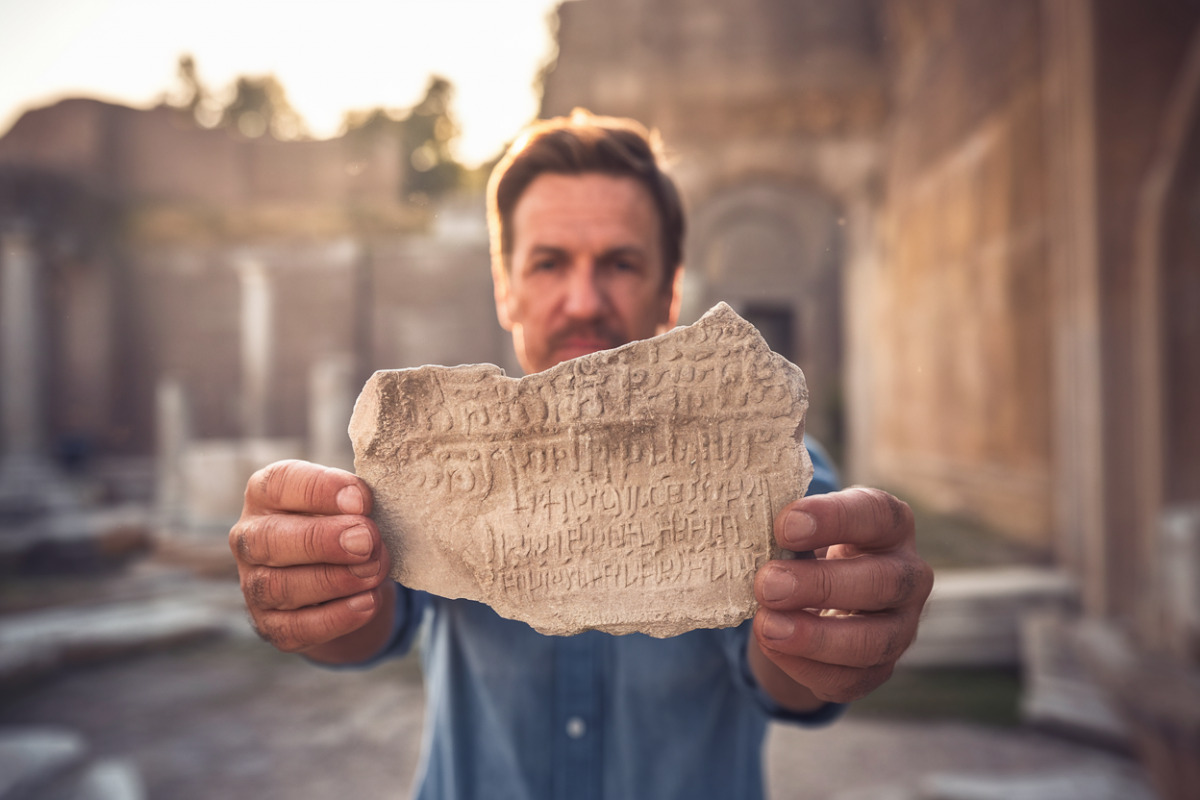
The Romans have a talent for taking credit. Roads, aqueducts, concrete—sure. But that slick plaster flooring everyone’s been pinning on Rome? Archaeologists digging at Motza, just west of Jerusalem, say humans were pulling off that trick around 7100–6700 B.C.—roughly 8,000 years before Rome was even a glimmer.
The finding comes out of excavations run from 2015 to 2021 and published in the Journal of Archaeological Science. And it’s the kind of date-stamp that forces historians to swallow hard and redraw the timeline.
A “Roman” building trick—pulled off in 7100 B.C.
At Motza, researchers found plaster floors that aren’t just crude, throw-some-mud-down surfaces. The analysis points to a controlled, repeatable manufacturing process—one that had long been treated as a Roman-era innovation, typically dated to around the 1st century A.D.
Instead, the Motza floors land squarely in the Pre-Pottery Neolithic B period (PPNB), a stretch roughly 8800–6900 B.C. That’s the era when communities in the Levant were settling down, getting serious about farming, and building permanent villages—without ceramics, but clearly not without brains.
Making plaster isn’t magic, but it isn’t nothing either. You need the right raw material, you need heat, and you need to understand—through experience, not textbooks—how the stuff behaves when you cook it and rehydrate it. The Motza floors suggest these people had that know-how dialed in.
Motza wasn’t a tiny camp—it was a serious place
This wasn’t one fancy building with a show-off floor. The site is a large Neolithic settlement, and the plaster shows up across multiple structures. That matters: it hints the technique wasn’t reserved for elites or special ritual spaces. It was part of the local building toolkit.
Excavators also describe an organized community layout—residential areas, storage spaces, and specialized activity zones—signs of a society that had moved past mere survival mode.
And the location helps explain the ambition. Motza sits near what’s now Jerusalem, at a geographic crossroads between the Judean highlands and the coastal plain—basically a natural corridor for trade, contact, and ideas. If innovations were going to spread early, this is the kind of neighborhood where they’d catch on.
Obsidian tools, fancy ornaments—and a timeline that needs fixing
The plaster floors aren’t the only flex. The digs also turned up obsidian tools (volcanic glass that often signals long-distance exchange), sophisticated ornaments, and advanced construction methods. Put it together and you get a community that looks less like “primitive farmers” and more like skilled engineers with a Stone Age supply chain.
The bigger takeaway is uncomfortable for anyone who likes neat, Rome-centered origin stories: a lot of what we label “classical” innovation may have deep prehistoric roots. Motza is another reminder that early settled societies in the Near East weren’t waiting around for Greeks and Romans to teach them how to build.
Archaeology keeps doing this—quietly humiliating our assumptions with better dating, better materials analysis, and a growing pile of evidence that ancient people were far more technically capable than the old stereotypes allow.