

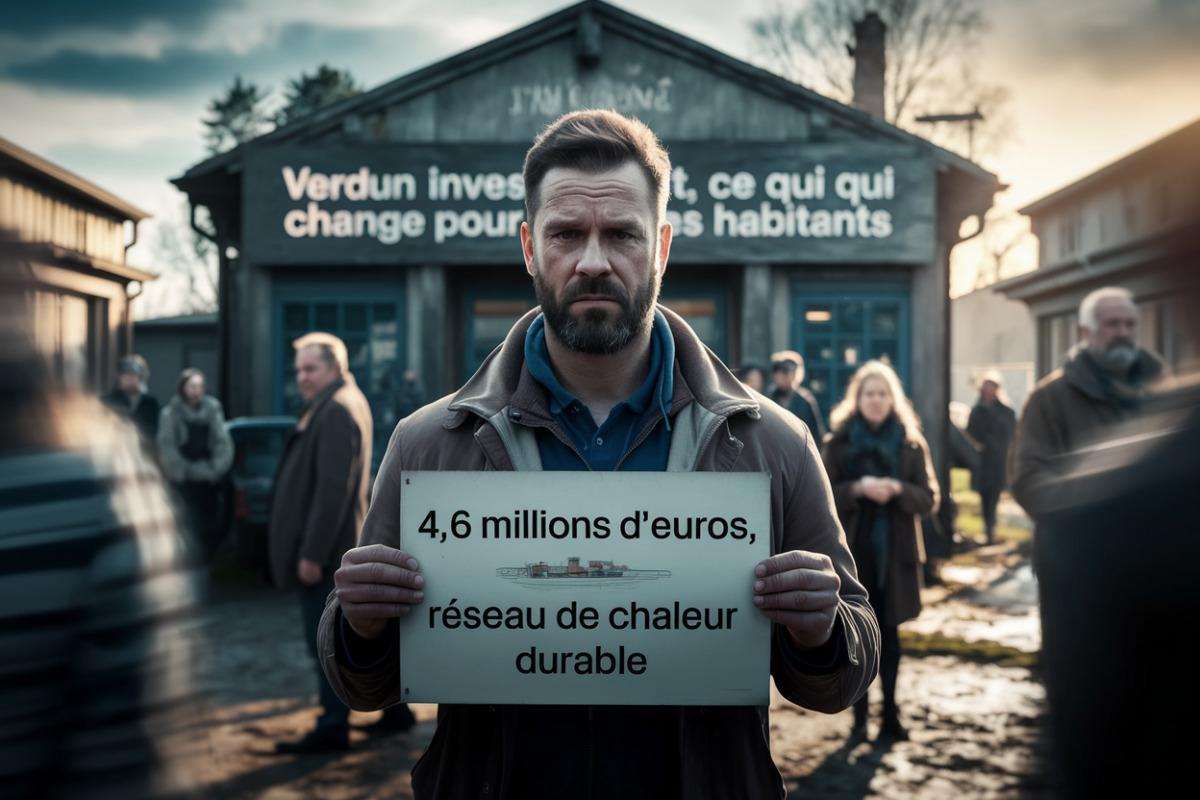
Verdun—yes, that Verdun, the World War I name Americans half-remember from history class—is taking a very modern swing at an old problem: how to heat a town without lighting money (and carbon) on fire.
The city in France’s Lorraine region is taking out a €4.6 million loan—about $5 million—to build a low-carbon district heating network. Translation: instead of every building running its own gas boiler, the town wants a shared system that pumps heat through underground pipes to public and private buildings.
$5 million to rewire how a city stays warm
Verdun’s loan bankrolls the construction and rollout of a district heating system designed to serve municipal buildings and private customers across town. This isn’t a “swap the furnace” weekend project. It’s heavy infrastructure: trenching streets, laying insulated piping, installing circulation pumps, and paying for the engineering studies that keep these projects from turning into expensive spaghetti underground.
District heating is basically the anti–individual boiler model. You produce heat in one place—ideally from renewables or recovered waste heat—then distribute it efficiently. When it’s done right, it cuts local air pollution and improves overall efficiency compared with a neighborhood full of separate gas units all doing their own thing.
Why they’re borrowing instead of paying cash
Verdun isn’t unique here. Across France, local governments are leaning on loans to pay for energy upgrades because municipal budgets are tight and climate mandates aren’t waiting around for a budget surplus.
Debt lets a city spread the cost over years while moving faster on decarbonizing buildings—one of the hardest, least glamorous parts of cutting emissions. The interest rate and terms depend on the borrower and the moment’s rate environment, but French municipalities with solid finances can usually access credit—often through “green” financing channels or public lenders like France’s Caisse des Dépôts (think of it as a state-backed investment institution that helps bankroll public projects).
Why district heat is suddenly political in France
In France, “urban heat” has become a real political battleground because heating is where fossil fuels still cling on. National and regional leaders have been pushing district heating as a practical middle path: not as piecemeal as everyone buying their own heat pump, and not as centralized as massive national infrastructure overhauls.
For Lorraine—an old industrial region trying to modernize without hollowing out—cleaner, cheaper, more stable heating is also an economic pitch. If Verdun can lock in a system powered by biomass, geothermal, or other recovered sources (as local reporting has suggested), residents could see less exposure to the kind of gas-price whiplash that’s hammered Europe in recent years.
What changes for residents—and what could go wrong
If you live in Verdun, the promise is straightforward: a cleaner heating supply and potentially lower, steadier bills once the system is up and running and enough customers connect to make the economics work.
But district heating has a catch: it’s only a bargain if the rollout is managed well and the pricing stays fair. Digging up streets is disruptive. Hookups can be complicated. And once you’re connected, you’re buying heat from a network—so governance, transparency, and long-term contracts matter a lot. A “green” system that locks residents into bad rates is still a bad deal.
Sources
Ouest-France; L’Est Républicain (Verdun) Facebook post; YouTube explainer on district heating; Planète Énergies; Exergo.