

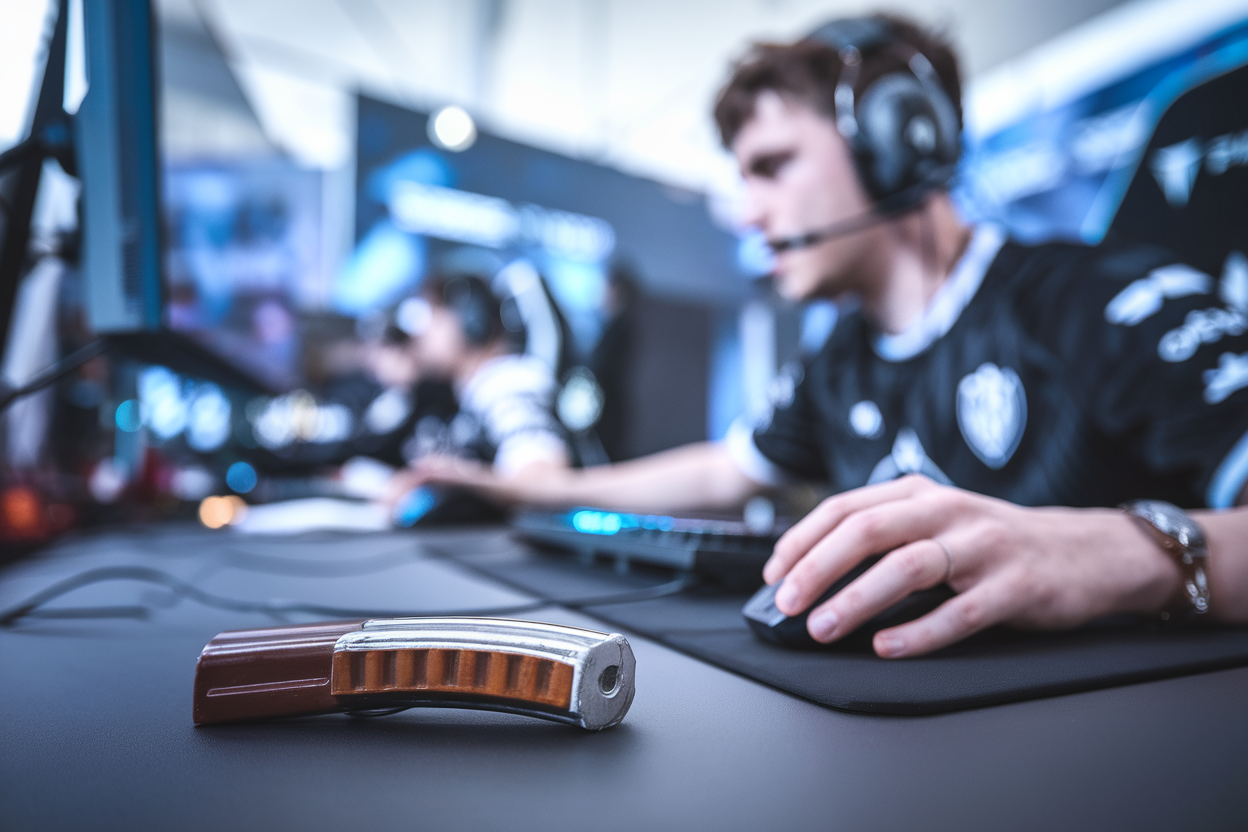
Valve slipped a tiny change into Counter-Strike 2 and managed to light the community on fire anyway. The new rule: reload too early, and you don’t get to keep all the bullets you left in the magazine. Cut a mag in half? Congrats—you just threw ammo in the trash.
It sounds like a realism tweak. In practice, it’s a direct hit on muscle memory in one of the most habit-driven competitive games ever made. And if you’ve spent 2,000 hours building “reload after contact” into your bloodstream, Valve just told you that instinct now comes with a tax.
Reloading isn’t “animation” in Counter-Strike. It’s a decision.
In tactical shooters, reloading is part rhythm, part risk management, part resource math. You reload after a fight because you don’t want to round a corner with 7 bullets left and a prayer. That’s not cowardice—it’s competence.
Rewritable DNA data storage is the new lab darling—but data centers want receipts
Valve’s change moves the line between “safe” and “stupid.” Before, you could top off and keep the leftover rounds in reserve like most games do. Now, if you reload with bullets still in the mag, some portion of those rounds simply won’t follow you into the next magazine. They’re gone.
Valve hasn’t publicly laid out the exact parameters—how many bullets you lose, whether it varies by weapon, what the edge cases are. But players noticed fast, which tells you the penalty isn’t subtle.
The new rule: reload early, pay in bullets
The basic idea is straightforward: partial mags don’t magically convert into perfect ammo accounting anymore. You interrupt a magazine before it’s empty, and you don’t get full credit for what you left behind.
Chrome just patched 26 security holes—3 are “critical,” so stop hitting “remind me later”
That instantly turns a long-standing “safety reload” into a gamble. Keep the partial mag and risk getting caught short in the next duel—or reload and slowly bleed your total ammo across the round.
And in Counter-Strike, rounds aren’t long. They’re tense. You rotate, you retake, you fake, you stall. Players reload during movement constantly because it’s been free insurance for years. Make that insurance expensive and you change the texture of the whole round—especially in scrappy situations where every bullet matters and the economy is already tight.
Why players are mad: Valve messed with the “contract”
The anger isn’t really about realism. It’s about stability.
The World Burned 102.2M Barrels a Day in 2023—And 10 Countries Drive the Tab
Counter-Strike lives on repeatability: same maps, same angles, same grenade lineups, same timings, same rules you can trust. People grind this game like it’s a trade. When Valve tweaks a core mechanic—even a “micro” one—it devalues thousands of hours of routine.
And let’s be honest: Counter-Strike has never been a military simulator. It’s a stylized competitive shooter built on conventions that favor clarity and consistency. A lot of players will tolerate realism right up until it starts messing with the clean, predictable feel that makes the game competitive in the first place.
This change also hits casual players harder than the disciplined grinders. The sweats will adapt. The weekend crowd will keep panic-reloading and wonder why they’re dry in a clutch. If Valve’s goal is to make the game harsher for sloppy habits, mission accomplished. If the goal is to keep the player base wide, this is how you irritate the middle.
What Valve might be trying to do here
There’s a coherent design argument for this, even if players hate it.
First: it discourages “free” behavior. If reloading costs nothing, players can reload after firing five rounds and never think about it. Add a penalty and suddenly timing matters again—very on-brand for a game built around pressure decisions.
Second: it can change the pace. Fewer automatic reloads means more players carrying imperfect mags into the next fight, which can nudge people toward shorter bursts and less brainless spraying. In a recoil-heavy game, anything that changes how people shoot changes the meta.
Third: it makes ammo a real resource. Counter-Strike is already an economy game—money, armor, utility. Ammo has always been the quiet resource you rarely think about until you’re stuck clicking on empty. If Valve wants ammo discipline to matter, this is one way to do it.
The problem is the same one it always is with competitive design: if the rule feels like a hidden trap—unclear, inconsistent, hard to read—players won’t call it “depth.” They’ll call it “BS.”
Esports hates surprises—especially with fundamentals
Counter-Strike isn’t just a popular game. It’s an esport infrastructure: teams, coaches, analysts, tournament calendars, practice blocks built around repetition.
Reload timing is baked into pro routines—after a duel, before an execute, during a rotation. If the punishment changes, the routine changes. Not just mechanically, mentally. Pros can handle hard rules. They hate fuzzy rules.
And if this landed anywhere near a major tournament window, even players who might like the idea in theory will complain on principle. Competitive scenes run on predictability. Valve has a long history of tweaking things in small increments, but there’s a point where “constant tuning” starts to feel like the floor moving under your feet.
This is classic Counter-Strike drama: tiny tweak, huge fight
If you followed CS:GO, you’ve seen this movie. Recoil changes, movement accuracy tweaks, grenade behavior adjustments—small numbers that turn into community civil wars.
Reloading is one of the most repeated actions in the game. Touch it and you touch everything: training habits, timing windows, confidence, even how “in control” the game feels. That’s why this blew up.
Valve might be testing the waters—ship it, watch the backlash, adjust later. That’s how live-service games operate. But when you mess with a foundational mechanic in a legacy esport, you’d better explain yourself fast. Silence doesn’t calm people down. It just gives them room to invent the worst version of your intentions.