

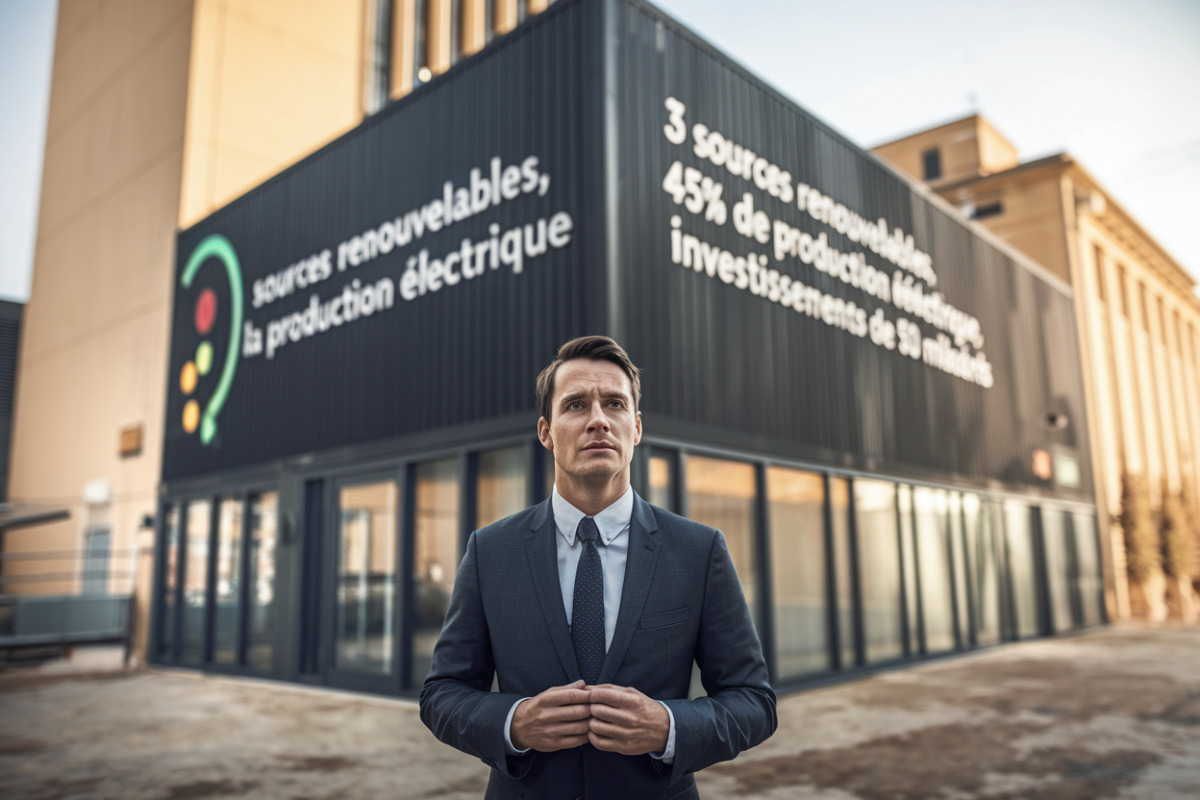
France is trying to sprint through an energy transition that, until recently, it treated like a long jog. And now Paris is doing what Paris always does when it gets serious: it’s reorganizing the bureaucracy and telling the rest of the country to get on board.
Two heavyweight ministries—the one in charge of regional planning (think land use and development) and the one running the ecological transition—are teaming up to push renewables harder. Translation for Americans: France is admitting wind and solar don’t just live in climate policy memos. They live in somebody’s backyard, on somebody’s ridgeline, next to somebody’s farm road.
Paris has a renewables problem: the projects die locally
On paper, wind farms and solar arrays are easy: pick a site, file permits, build, connect to the grid. In real life, they run into local resistance and administrative obstacle courses that can stretch for years.
That’s why the land-planning ministry is now in the room. The idea is simple: if the state wants more turbines and panels, it has to deal with zoning fights, landscape concerns, and the kind of town-by-town blowback that can quietly kill national targets.
Local governments are stuck in the middle. They’re expected to deliver megawatts while keeping residents from feeling like they’ve been steamrolled. Paris is signaling it’ll “support” them—because without mayors and regional officials, the whole plan turns into a PowerPoint.
The new buzz inside government is territorial energy planning: each region maps what it can realistically produce, where it can build, and what it refuses to sacrifice—tourism views, farmland, local industry, you name it.
Climate deadlines—and energy insecurity—are forcing France’s hand
This isn’t happening because French ministries suddenly fell in love with windmills. It’s happening because Europe’s climate commitments are tightening the screws. France is on the hook for carbon neutrality by 2050, and that timeline doesn’t care about slow permitting.
And then there’s the other motivator: energy shocks. When global markets seize up, countries that import fossil fuels get reminded—loudly—how exposed they are. Renewables are being sold not only as climate policy, but as a national security hedge against imported oil and gas.
The political subtext is blunt: the transition can’t be treated as a “someday” project anymore. Paris wants every layer of government—national, regional, local—pulling in the same direction, whether they like it or not.
The messy part: wind and solar don’t show up on schedule
Here’s the catch that never fits neatly into a press release: intermittency. Wind and solar output rises and falls when nature feels like it. That means France can’t just build generation—it has to build the boring, expensive stuff too: grid upgrades, smarter distribution, and serious storage.
Yes, the cost of renewable generation has dropped a lot. But plugging variable power into a national system creates indirect costs—balancing, backup capacity, transmission—that governments have to budget for instead of pretending they’ll magically disappear.
And there’s a human bottleneck. Local elected officials, municipal engineers, and even citizen groups need training to evaluate projects, negotiate terms, and manage the trade-offs. Otherwise, every new wind or solar proposal becomes a shouting match where the loudest person wins.