

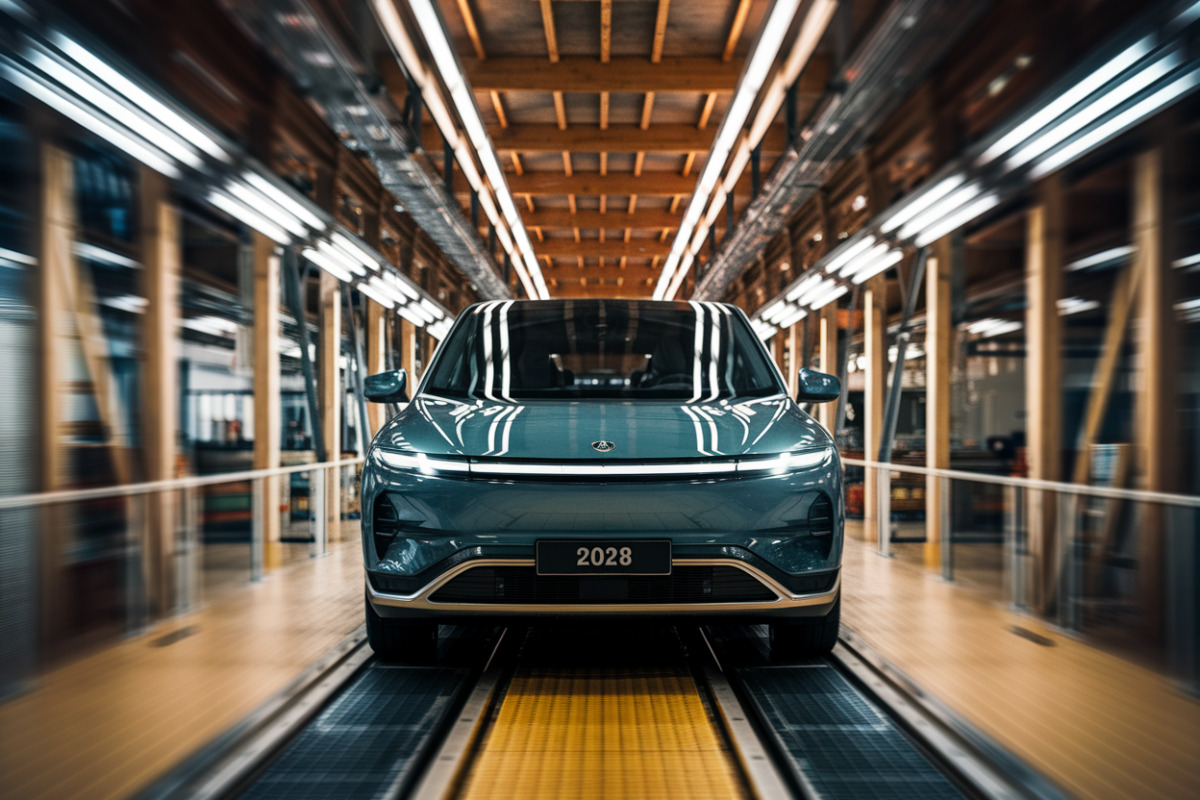
While a lot of electric-vehicle dreamers are quietly backing away from their big promises, one EV startup is doubling down: it says its brand-new factory will start producing vehicles in 2028, on schedule.
That’s a bold line to hold in a business that’s been handing out delays like parking tickets. Since 2024, EV growth has cooled—especially for newcomers without deep pockets, dealer networks, or a century of manufacturing muscle.
2028 is the date. The industry chaos is the backdrop.
The company’s message is simple: the industrial timeline hasn’t changed. Production begins in 2028. Period.
And that’s exactly what makes it interesting. Across the EV sector, the mood has shifted from “build everything now” to “maybe we should slow down and stop lighting cash on fire.” Supply-chain headaches, raw-material price swings, and old-school automakers flooding the zone with their own EVs have made life miserable for startups trying to break through.
By the time 2028 rolls around, the market may look a lot less welcoming. Consolidation tends to reward the giants and squeeze the little guys. Tesla and Volkswagen won’t be “transitioning” by then—they’ll be entrenched, with mature platforms, tighter costs, and more leverage over suppliers.
A new EV factory isn’t a building—it’s a financial cliff
Putting up a fresh EV plant from scratch is the kind of decision that makes CFOs age in dog years. These projects routinely run into the hundreds of millions of euros—which, in American terms, is hundreds of millions of dollars. And that’s before you start discovering all the ways reality punishes spreadsheets.
EV factories aren’t generic auto plants with a few extra extension cords. You’re talking heavily automated assembly lines, battery testing stations, thermal-management systems, and the quality-control infrastructure needed to ship something that won’t turn into a recall headline.
Where the factory lands matters almost as much as what it builds. Battery suppliers nearby? Good rail and highway access? Labor costs that don’t eat you alive? Government incentives that actually show up? Those variables can make the difference between “competitive” and “dead on arrival.”
And here’s the startup problem in one sentence: they have to invent the product and the production system at the same time. Legacy automakers can convert existing plants and reuse decades of manufacturing know-how. Startups get a blank sheet of paper—and a long list of ways to screw it up.
They’re betting the EV market will be friendlier by then
Sticking with 2028 is a wager that the market will look better in a couple years than it does right now. Forecasts in the industry still assume EVs could top 50% of new-car sales in several regions by that point, which would mean a bigger customer base and a more mature supply chain.
There’s upside to arriving later: better battery tech, more standardized components, and fewer “first wave” bottlenecks. But the downside is obvious—regulations can shift, consumer tastes can swing, and competitors can lock up the best suppliers and the best pricing long before a newcomer ships its first car.
For this startup, the calendar is about more than scheduling. It’s credibility. Investors and future buyers have heard enough EV promises to last a lifetime. Hitting a date—any date—has become its own product feature.