

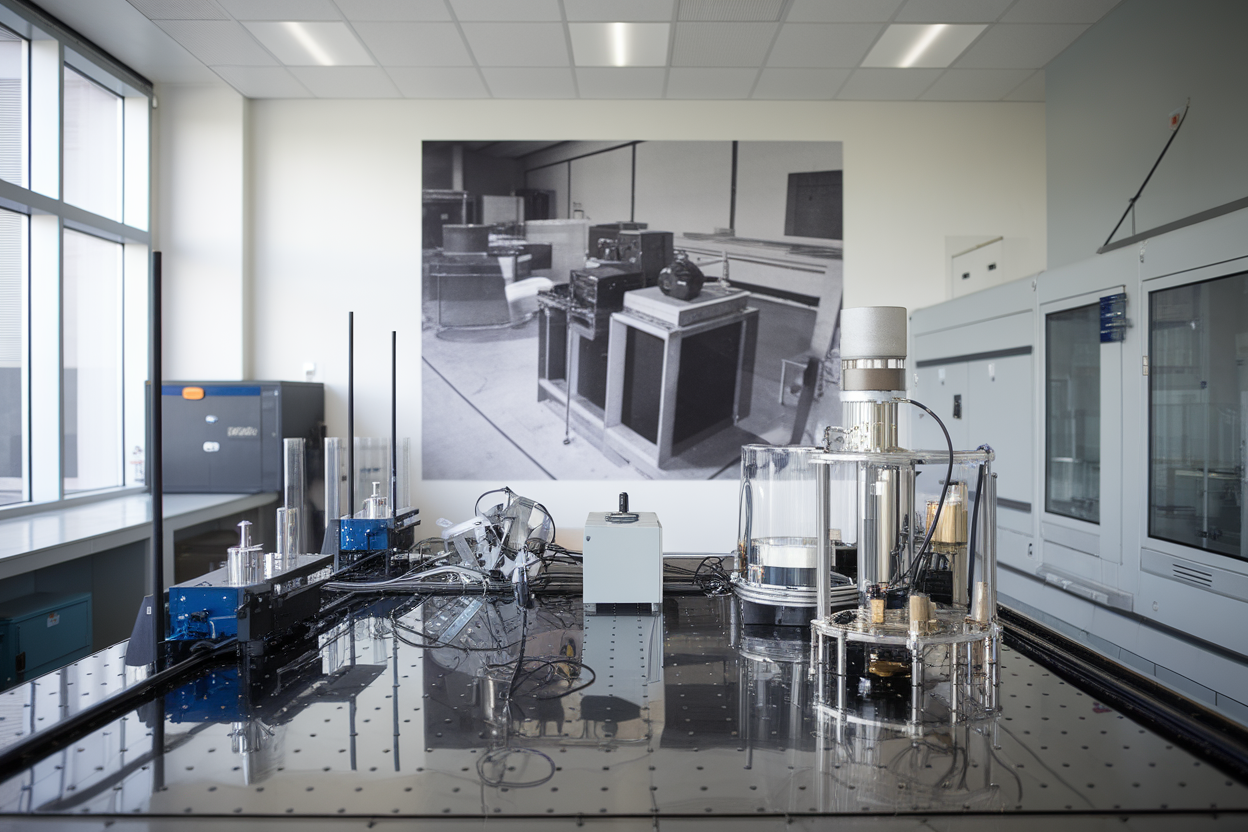
Computing started with electrons. Now electrons are starting to feel like the problem.
In a lab at the University of Pennsylvania—yes, the same Penn that helped kick off the computer age—physicists are chasing a different kind of workhorse: hybrid particles made from both light and matter. The pitch is simple and a little heretical: if you want faster computing without cooking the hardware, stop relying on tiny charged bullets slamming through crowded materials.
And if you like your tech history with a bit of symmetry, Penn is leaning into that, too.
Penn helped invent the electronic computer. Now it’s poking at what comes after it.
Decades ago, two Penn researchers—J. Presper Eckert and John Mauchly—built ENIAC, widely credited as the first general-purpose electronic computer. ENIAC was a brute by modern standards, but it nailed the core idea that still runs the show: use electrons to represent information and do math by pushing those electrons through circuits.
That basic architecture has been refined, shrunk, and commercialized into everything from iPhones to data centers. But the underlying deal hasn’t changed much: computation equals moving charge around.
That deal is getting expensive.
Electrons don’t move for free—and the bill shows up as heat
Here’s the part chipmakers live with every day: electrons carry electric charge, and charge moving through material runs into resistance. Resistance turns energy into heat. Heat forces engineers to throttle performance, add cooling, burn more power, and accept that physics—not ambition—sets the speed limit.
The French piece lays out the three headaches in plain language:
Heat: moving electrons wastes energy as heat. That’s not a side effect; it’s baked in.
Resistance: electrons don’t glide. They collide, scatter, and lose signal quality as they travel through real-world materials.
Complexity: pack in more transistors and shove around more data, and managing all those charges gets harder—fast.
This isn’t nostalgia for vacuum tubes or a funeral for silicon. It’s a recognition that the electron, heroic as it’s been, comes with a tax that keeps rising as chips get denser.
The alternative Penn’s physicists are chasing: hybrid “light-matter” particles
So what’s Penn looking at instead? Particles that sit on the border between light and matter—hybrids that borrow traits from both.
The original French article doesn’t get into the nuts and bolts of the experimental setup or name the exact species of hybrid particle. But the direction is clear: use these light-matter hybrids to encode and manipulate information in ways that don’t automatically inherit the electron’s worst habits.
Light is fast and doesn’t carry electric charge the way electrons do. Matter, meanwhile, is where you can anchor, control, and make things interact. The bet is that combining the two gets you something useful for computation—without turning every serious workload into a space heater.
Why this matters: the “same old architecture” is solid, but the materials are tapped out
For years, the industry’s playbook has been: shrink transistors, improve manufacturing, squeeze more performance out of the same basic approach. That approach still dominates, and it’s not going away tomorrow.
But the pressure is obvious. More transistors and more data mean more heat and more engineering gymnastics. At some point, “just optimize it” starts sounding like telling a marathon runner to win by tying their shoes tighter.
Penn’s narrative hook is almost too perfect: the place that helped launch electron-based computing is now exploring what computing looks like when electrons aren’t the only option—or aren’t doing all the heavy lifting.
The hard part, of course, is turning a clever lab result into an architecture, and turning an architecture into something you can actually build, scale, and sell. But the motivation is brutally practical: electrons are running into the wall, and physics doesn’t negotiate.