

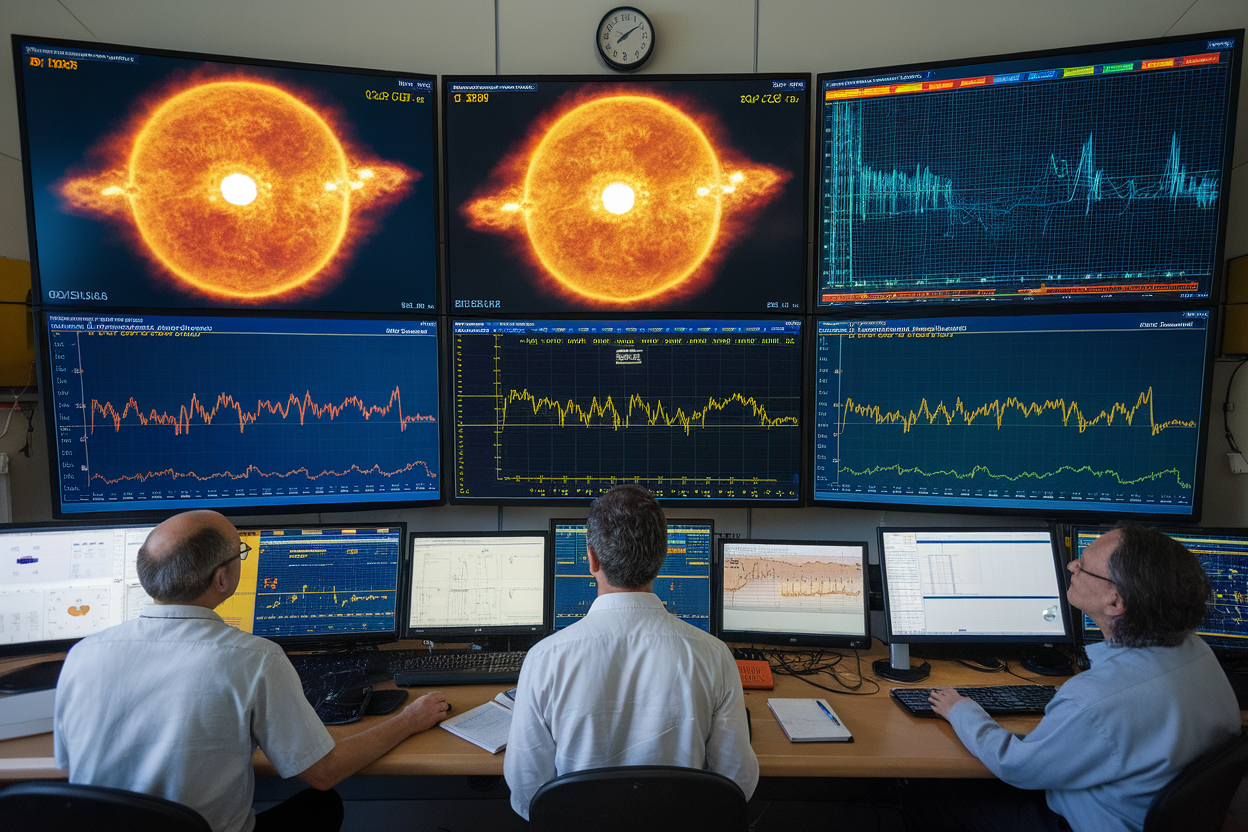
NASA scientists spotted what looked like a run-of-the-mill radio burst coming off the Sun in August 2025. The kind of blip you log, label, and move on from.
Except this one didn’t get the memo about moving on.
Hours turned into days. Then more days. The signal just kept hanging around—steady enough, persistent enough, annoying enough that it stopped being “another data point” and became the whole story.
When it finally faded out, the number landed with a thud: 19 days. The previous record for this kind of solar radio burst was five.
A routine August 2025 detection that turned into a real anomaly
This started the way a lot of space-science stories start: quietly. Teams monitoring the Sun saw a radio signature they already knew how to recognize. Solar radio bursts aren’t rare, and NASA’s instruments are built to catch them.
So nobody hit the panic button on day one.
But the Sun has a way of turning “normal” into “wait, what?” without changing the volume—just the timeline. These bursts typically last a few hours to a few days. That’s the expectation baked into decades of observations.
This one didn’t cooperate. It kept going past the point where experience says it should’ve fizzled. And once you’re staring at the same event day after day, the question shifts from “what was that?” to “what on Earth—or rather, what on the Sun—keeps this thing alive?”
Nineteen days: a new record that bulldozes the old five-day ceiling
The headline number is brutally simple: 19 days. No fancy interpretation required. Start time, end time, do the math.
And compared to the old benchmark—five days—it’s not a close shave. It’s a blowout.
That’s why this episode matters to the people who track solar behavior for a living. A burst that lasts a day is an “event.” A burst that lasts nearly three weeks starts to look like the Sun settling into a weird mood and refusing to snap out of it.
The available reporting doesn’t pin down a specific cause. What it does make clear is that this wasn’t just “long.” It was outside the category NASA thought it was watching.
Why duration is the detail that messes with scientists’ assumptions
When you’re studying the Sun, duration is as telling as intensity or frequency. A short-lived burst fits the usual script: something flares up, energy gets dumped, the system relaxes.
But a 19-day radio emission forces a different kind of thinking. It suggests persistence—either a mechanism that stays switched on, or a repeating process that keeps re-upping the signal without letting it die.
And the surprise here wasn’t cinematic. It was slow-burn. NASA scientists didn’t “discover” a record on day one because day one looked ordinary. The shock accumulated the way overdue rent does: each extra day made the situation harder to ignore.
Practically speaking, a burst that drags on for nearly three weeks also changes the grind of monitoring. You don’t just detect it—you babysit it. You keep confirming it’s still there, still the same phenomenon, still continuous enough to count as one long event. A record like this only exists because someone watched carefully enough to nail down the beginning and the end.
A record built one stubborn day at a time
The most striking part of this story is how un-dramatic it was at the start—and how dramatic it became purely through endurance.
Each day the signal stayed alive, it rewrote what “normal” looks like for this class of solar radio bursts. By the time it finally stopped, it hadn’t just beaten the old record. It had made the old record look quaint.
NASA hasn’t publicly wrapped this up with a neat explanation in the material described here. But the takeaway is clear enough: the Sun just demonstrated it can keep a radio burst going for 19 days. That single fact expands the range of what scientists now have to treat as possible—whether they like it or not.