

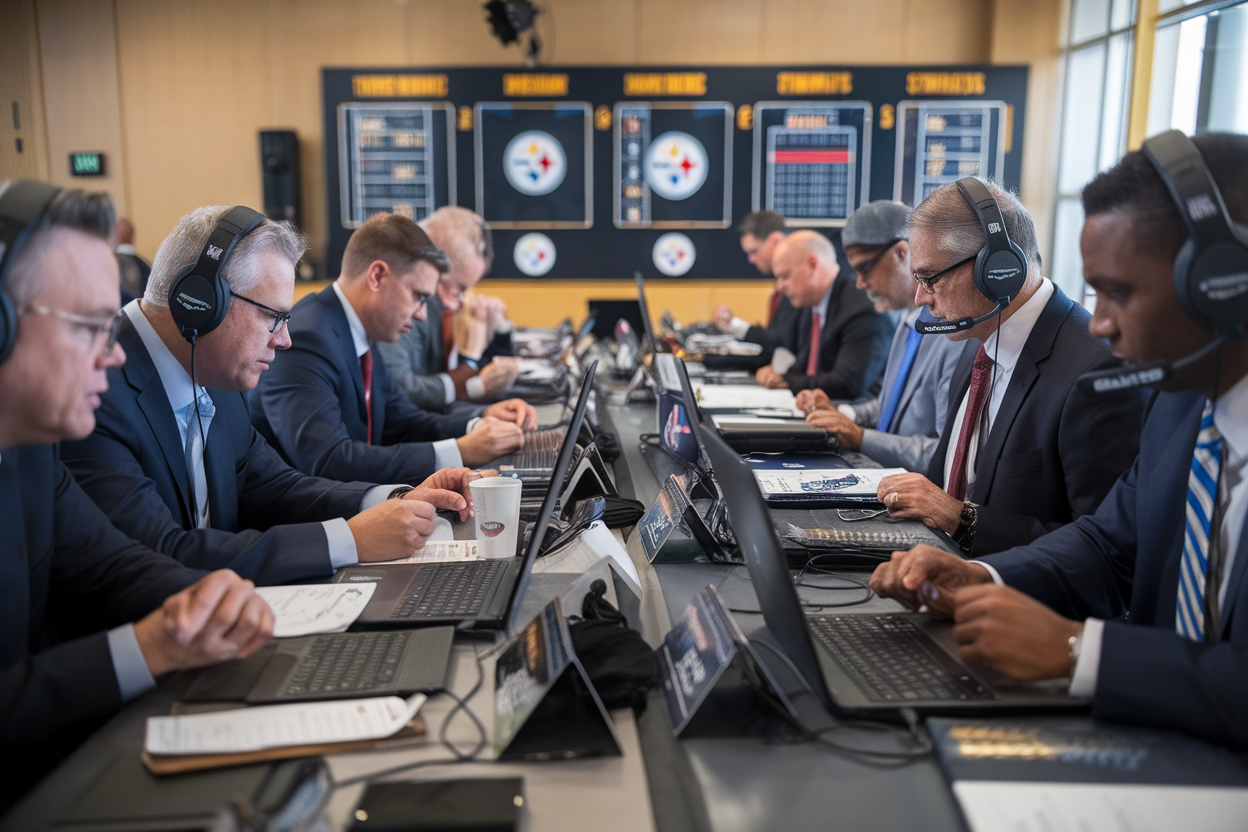
The Steelers don’t usually do “splashy.” They do “patient,” “disciplined,” and “we’ll take the guy who falls to us.”
But heading into the 2026 NFL Draft, Pittsburgh is sitting on a small mountain of ammo—12 total picks, a stash the franchise hasn’t had since 1992. And according to longtime Steelers reporter Gerry Dulac, the odds of Pittsburgh trading up into the first round are as high as he’s ever seen.
Gerry Dulac drops the hint—and the league starts listening
Dulac doesn’t traffic in wild message-board fantasies. When he says the trade-up chances are “at their highest,” that’s not a throwaway line—it’s a flare.
The Steelers have built their brand on stability: draft where you’re slotted, develop your own, don’t get cute. But the modern NFL has a way of bullying even the most stubborn franchises into changing their habits. Rookie contracts are gold. Quarterback pressure is relentless. And if a team thinks it’s one premium player away, it’s a lot harder to sit on your hands and “trust the board.”
This year’s wrinkle: the top of the 2026 class is being talked about as less “locked in” than usual. When the gap between prospects is tighter, teams with a specific need get itchy—because one position run can jack up prices in minutes. If you’ve got extra picks, you can overpay a little without gutting the rest of your weekend.
That’s the whole equation. Trade up and you buy certainty on a target. Stay put and you keep volume—but you’re also letting 31 other teams steer your fate.
Twelve picks changes the math—and Pittsburgh hasn’t had this kind of stash since ’92
12 picks isn’t just a fun trivia stat. It’s leverage.
In a league where contenders are built as much through cheap starters as through big free-agent checks, draft capital gives you two powers: you can select more players, and you can move. Packages. Sweeteners. Future picks. The whole menu.
And the “since 1992” angle matters because it underlines how rare this is for Pittsburgh. The Steelers typically aren’t the team with spare change rattling around in its pockets. This time, they are—which means a trade-up doesn’t automatically translate into a barren middle draft where you’re skipping the kind of depth that keeps you alive in December: rotational pass rushers, offensive line competition, special teams demons.
Real trade-ups rarely happen for a single pick swap. They’re bundles—this year’s third, next year’s fourth, maybe a mid-rounder tossed in to close the deal. Having a dozen selections lets Pittsburgh build those bundles without lighting the whole draft on fire.
The trade value chart: move into the top 10 and the price gets stupid fast
Every negotiation eventually runs into the same shared language: the trade value chart.
The example floating around is blunt. The Commanders’ pick is valued at about 1,500 points. Pittsburgh’s is around 800. That’s nearly double. Teams don’t follow the chart like scripture, but they use it to frame reality—especially when two front offices have different appetites for risk.
And here’s the part fans always underestimate: the cost doesn’t rise in a straight line. It spikes. Jumping from late first to mid-first already hurts. Trying to sniff the top 10 usually means coughing up a second-rounder, and sometimes more, depending on how many teams are bidding and how desperate the seller feels.
Position matters, too. If you’re moving up for a quarterback, a blue-chip tackle, or a high-end edge rusher, the tax goes up because those guys can tilt a franchise. Trade up for a “non-premium” spot and you’d better be right—because you’ll get roasted twice: once for the price, and again if the player isn’t a fast starter.
Also: having 12 picks doesn’t mean you can pay any price you want. You still need roster spots, coaching bandwidth, and enough swings to fill multiple needs. Miss on a trade-up and you don’t just lose the player—you lose the two or three cheap contributors you could’ve drafted instead.
So who’s worth it—and why Pittsburgh might actually pull the trigger
Dulac has floated the idea that certain prospects could justify a move, while others probably wouldn’t. The names matter less than the pattern: Pittsburgh only jumps when a player they’ve graded as rare slips into a range that feels like theft—or when they see a position run coming and don’t want to get boxed out.
The logic is pretty simple, even if the execution isn’t. Teams trade up for three reasons: the position is valuable, they think their competitive window is open, and they’re willing to concentrate risk on one evaluation instead of spreading it across five picks.
And yes, there’s a cultural angle here. The Steelers sell continuity, and mostly live it. But they’ve also shown they can be opportunists when the board gifts them something too good to ignore. If the top of this draft really is flatter than usual, that’s how “unexpected slides” happen—and that’s when disciplined teams suddenly look aggressive.
The AFC arms race doesn’t help, either. You don’t get to be patient forever when your conference is packed with teams hunting immediate impact players on cheap deals. Sometimes the smartest move is grabbing the steering wheel instead of letting the draft drag you behind it.
Whether Pittsburgh actually moves will come down to three things in the moment: the seller’s asking price, how the board breaks live, and whether the Steelers are truly convicted on one or two guys. Dulac’s line suggests they’re at least ready to play offense for once.