

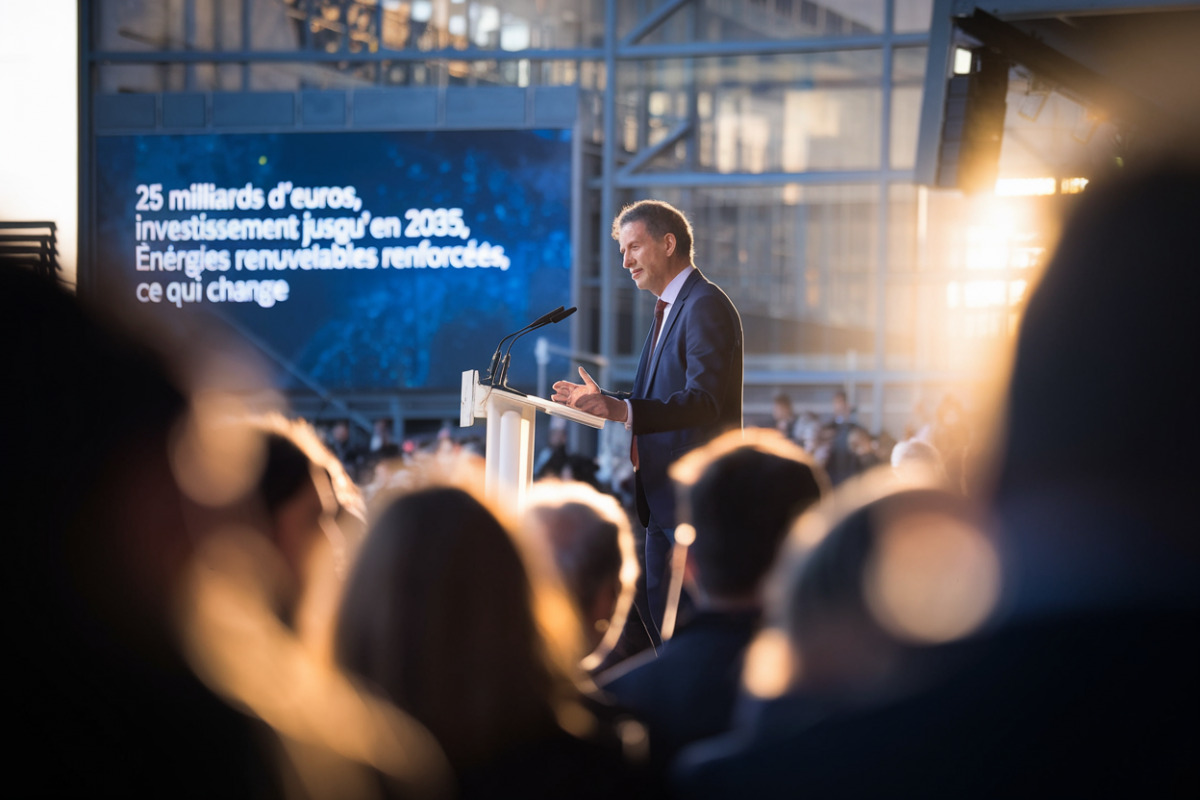
Europe just put a price tag on its clean-energy ambitions: about €25 billion—roughly $27 billion—to be steered into renewables through 2035. The pitch from Brussels is simple: build more wind and solar, add storage, cut carbon, and stop getting jerked around by imported fossil fuels.
It’s a serious political signal at a time when voters are cranky about energy bills and governments are juggling defense spending, inflation, and everything else. Europe’s message: the green agenda isn’t getting tossed overboard.
$27 billion sounds huge—until you do the math
Spread over the period to 2035, the plan averages around €1.8 billion a year—about $2.0 billion annually. For a continent-sized economy, that’s not some blank-check moonshot. It’s more like a steady drip meant to keep projects moving: rooftop solar, onshore and offshore wind, and the unglamorous but crucial stuff—batteries and other energy storage.
Brussels is framing this as part of the EU’s European Green Deal—their flagship strategy to hit climate neutrality by 2050. The underlying argument is blunt: clean-energy investment isn’t charity, it’s industrial policy and national security rolled into one.
Energy security: the 2022 hangover still hurts
If you want to understand why European officials keep talking about “sovereignty” when they talk about wind turbines, rewind to 2022. The energy shock that followed Russia’s war in Ukraine hammered households and industry and reminded Europe—loudly—that importing gas and oil comes with strings attached and price spikes you can’t vote away.
Every new solar farm or offshore wind project is supposed to shave down that exposure. Less imported fuel, fewer geopolitical migraines. That’s the theory, anyway.
And yes, there’s a jobs angle: construction, installation, maintenance—work that can land in places that have been bleeding factories for decades. Politicians love that part. Voters do too, right up until a project shows up near their town.
The real fight: money is hard, permits are harder
Getting to €25 billion means stacking funding from EU-level programs, national budgets, and private capital. That’s doable. The bigger problem is speed: Europe’s renewable buildout has a chronic enemy, and it isn’t physics—it’s paperwork.
Member states will have to loosen the regulatory knots that slow down approvals. The article’s point is dead-on: faster permitting could matter as much as the cash itself. If governments can’t get projects approved and connected to the grid, the money just sits there looking pretty in a press release.
Europe also isn’t operating in a vacuum. It’s competing with the United States (where the Inflation Reduction Act has been vacuuming up clean-tech investment) and China (which dominates chunks of the supply chain). The next tell won’t be another speech in Brussels—it’ll be the fine print from each member state: who pays what, and when steel actually hits the ground.
Sources
Kurzy.cz; Agence Europe; L’Echo du Solaire; European Commission representation in France; European Investment Bank (EIB).