

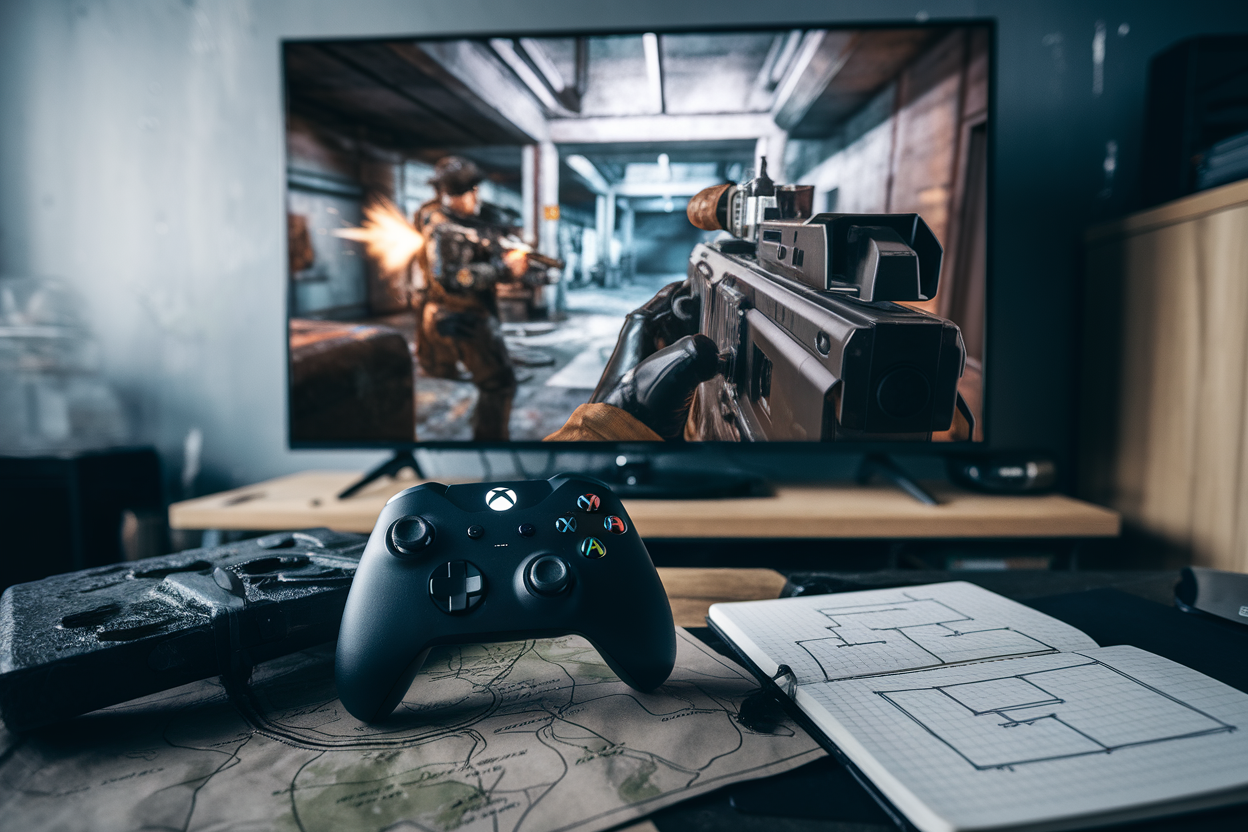
Forget the explosions and the Marcus Fenix hero shots. The most interesting thing in the Gears of War: E-Day footage from the Xbox Games Showcase is quieter—and it messes with how you read every firefight.
Low cover is back at the center of the series’ DNA, but The Coalition appears to be stretching the idea until it snaps into something new: cover you can take almost anywhere, including behind stuff so low that crouching doesn’t cut it. The ground itself becomes protection. That changes sightlines, risk, and the whole rhythm of “safe vs. exposed.”
Low cover now means going prone—and it changes the whole gunfight grammar
The standout moment people keep circling: the character ducks into a shallow recess and doesn’t just press against a waist-high barrier. He lies down, weapon across his chest—less “I’m about to pop up and trade shots,” more “I’m trying not to die.”
And crucially, it’s not a helpless animation. From that prone-ish posture, the footage suggests you can still fire without fully exposing yourself, or shift position to aim more precisely. That’s a big deal in a genre where everyone has learned to read intent by silhouette: glued to a wall means “incoming peek.” Here, low cover creates a third state—something closer to a survival posture than a shooting stance.
For players, that’s a new reflex under pressure: dive into a dip in the terrain, stay small, reset the fight. For level designers, it’s a permission slip to turn tiny “nothing” spaces—cracks, craters, broken slabs—into meaningful combat tools instead of set dressing.
The chatter around the demo frames this as part of a broader rethink: not just high and mid cover, but very low cover as a first-class mechanic. Gears helped write the cover-shooter rulebook. This looks like an attempt to update the rules without burning the book.
The Coalition’s real bet is level design, not a flashy new button
If this works, it won’t be because someone added a “go prone” animation and called it a day. The interesting claim floating around is that The Coalition is building levels around low cover—designing for it the way classic Gears arenas were designed for chest-high walls and clean lanes.
One described example: a recess wide enough to allow lateral movement while staying down. That’s the sneaky part. In most cover shooters, cover is a brake pedal—you lock in place, maybe slide along a wall. A crawl-like sideways shift turns cover into a protected route. In a firefight, that’s the difference between getting pinned and quietly stealing a better angle.
It also messes with how you visually parse the environment. Ultra-low cover isn’t a “thing” like a pillar. It’s terrain relief—damage, fractures, debris blended into the ground texture. The talk around the footage ties these dips to in-world events like tremors and Locust eruptions that chew up the earth. That’s smart: if the ground looks broken, players accept that broken ground can save your life.
Plenty of cover shooters “evolve” by making wall-sticking smoother or transitions faster. This is harder. New cover types mean new camera problems, new AI behaviors, new readability tests, and a whole lot of tuning so players don’t feel cheated by invisible geometry or janky snapping.
Mobility, timeline, modes—E-Day looks like it’s being rebuilt from multiple angles
The low-cover talk isn’t happening in a vacuum. The same discussion points to a wider set of changes hinted at in the footage: mood and visuals, where the story sits in the saga’s timeline, and mobility upgrades—climbing, jumping, sliding—plus mode-related tweaks.
That matters because low cover only sings if you can reach it fast and exit it cleanly. A slide becomes a way to dive into a crater. A jump or climb becomes your escape hatch back to higher ground. This isn’t one mechanic—it’s a knot tying movement, aiming, and risk management together.
And yeah, people are obsessively rewatching the same clips—an opening gameplay slice, then a post-show Direct—because that’s how system-heavy games work. A “small” design change looks cosmetic until you realize it rewires strategy and tempo. Gears players have muscle memory for how cover works. Touch that, and you’ve got a fight on your hands—in a good way.
Why “cover in the dirt” could freshen the genre without changing what Gears is
The spicy idea here is that even franchises synonymous with cover never really did this: treating a depression in the ground as legitimate cover, not just another conveniently placed half-wall. Cover shooters standardized the same props for 15 years—waist-high barriers, pillars, chest-high rubble. This pushes cover toward something more organic and terrain-driven.
It also creates new vulnerabilities. A prone target might be safer from direct fire but easier to punish with grenades, area attacks, or flanks—if the enemy AI is built to understand what you’re doing. If enemies can’t respond to a player hugging the ground, low cover becomes a cheesy dominant strategy. If they can, it becomes situational—and interesting.
One more thing: feel. In cover shooters, control is religion. If snapping into low cover is sluggish, if the camera fights you, if the animation looks like your character is wrestling the floor, players will ignore the mechanic. The fact that early reactions fixate on how “fluid” the movement looks tells you the promise isn’t just conceptual—it’s physical.
The real test is how widely E-Day commits: indoor fights, open arenas, scripted sequences—and whether low cover plays nicely with traditional cover instead of turning every battle into whack-a-mole from a ditch. Nail that balance, and Gears gets a new combat language while keeping its identity: readable, brutal, and built around taking cover, stealing angles, and surviving long enough to push forward.
Sources
Links referenced in the original French write-up:
- Reddit discussion (Spanish): “Gears of War E-Day acaba de mostrarse…”
- Facebook video (Spanish): “Gears of War: E-Day se atrasa…”
- YouTube video (Spanish): “GEARS OF WAR E-DAY ESTÁ EN PELIGRO…”
- Reporte Indigo (Spanish): “Gears of War 6 no fue olvidado…”
- TikTok (Spanish): “Gears of War: E-Day: ¿Ya se jugó?”