

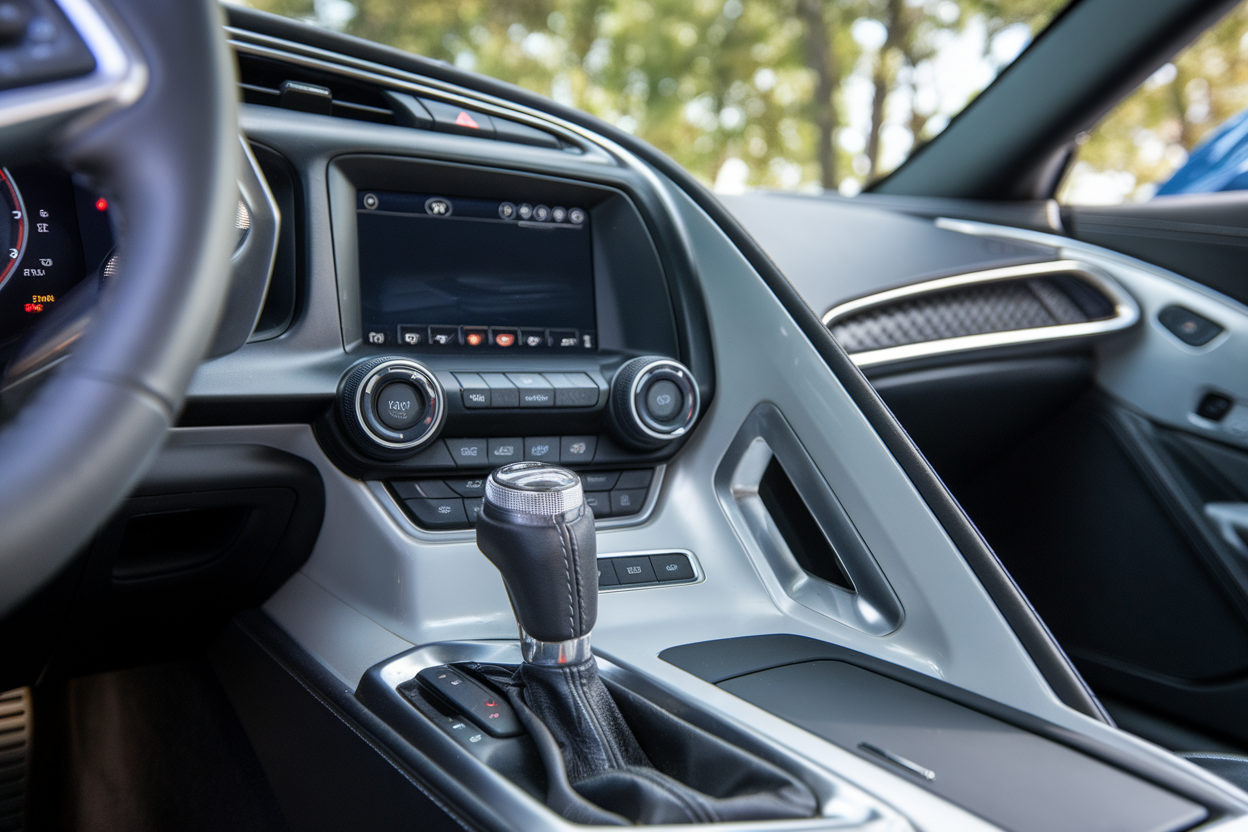
General Motors is about to do something wildly sensible: it’s putting physical buttons back in the Corvette.
Yes, that Corvette—the American sports car that can run with exotics—has been flirting with the same “everything lives in a screen” nonsense that’s infected the rest of the industry. Now Chevy looks ready to walk it back, starting with the stuff you use constantly, like climate controls. Not because it’s “retro.” Because at 124 mph, hunting through menus is a bad joke.
Climate buttons are coming back, and the dash gets cleaned up
The update being teed up for the Corvette points to dedicated physical controls—especially for heating and A/C—paired with a dashboard layout that’s supposed to be cleaner and easier to read.
That’s the key part: this isn’t “let’s sprinkle in a few buttons for the nostalgics.” It’s a shift away from burying basic functions under layers of touchscreen menus. Climate, defrost, volume—these are high-frequency actions. You do them while moving, sometimes while driving hard. Making them touchscreen-only forces slower inputs, more eyes-off-road time, and more mental load.
And a “cleaner” layout doesn’t just mean fewer fingerprints on glossy glass. It means better visual hierarchy: fewer interface layers, smarter grouping, and a clearer separation between driving and infotainment. A sports car cockpit should feel like a cockpit, not an iPad kiosk.
At 124 mph, ergonomics isn’t a luxury—it’s survival
The touchscreen takeover got sold as “modern,” plus the promise that software updates could keep improving the experience. Fine—for a commuter crossover crawling through traffic.
In a sports car, the math changes. Low seating position. Vibration. Acceleration. Real steering inputs. Real consequences. Touchscreens demand precision: aim, tap, confirm, correct. Physical controls have advantages screens still can’t fake: tactile landmarks, muscle memory, and the ability to operate them without staring.
After a week with a real temperature knob or fan switch, your hand finds it automatically. A touchscreen makes you look. In a Corvette, that difference stops being theoretical fast.
There’s also the brand promise problem. The Corvette sells itself as driver-first, sharp-edged, built for people who actually like driving. A cockpit that makes you “negotiate” with an interface to do something simple clashes with that whole pitch. Bringing back climate buttons is basically Chevy admitting that performance includes how quickly you can interact with the car.
GM is feeling the industry’s touchscreen backlash
Chevy’s move fits a broader mood: the all-screen religion is losing followers.
Drivers have tolerated giant displays, sure. But they’re also sick of basic functions being buried, sick of smudgy glare-prone panels, and sick of interfaces that change after an update like someone rearranged your kitchen overnight.
For automakers, this isn’t just aesthetics. It’s cost, perceived quality, and reliability. One big screen can reduce parts count—but it also concentrates risk. When it glitches, suddenly half the car is “down.” Physical controls, done well, feel robust. They signal competence. And in an emotional purchase like a sports car, that matters.
GM’s timing here is telling. The company has been rethinking big-ticket plans—reportedly delaying its next-generation full-size electric pickup program that had been eyed for production around 2028, and considering a pause on developing future large EVs while focusing on a new technical base for upcoming gas and electrified pickups. In that environment, polishing the Corvette’s day-to-day usability is a relatively cheap way to show the company is listening—without leaning on some hazy tech prophecy.
“Analog” vibes, without ditching the digital stuff people actually want
Don’t confuse “buttons are back” with “welcome to 1997.” Nobody’s saying dump the screen entirely.
The smarter approach—and what most brands are drifting toward—is balance: keep the display for navigation, deeper settings, connectivity, and updates. But pull the repetitive, time-sensitive stuff out of the touchscreen and put it back where your fingers can find it.
There’s an image angle too. Sports cars sell sensation and theater. A cabin that looks like a giant tablet glued to the dash kills the mood. Well-designed switches and knobs—tight, precise, satisfying—make the car feel engineered, not merely “user-interfaced.”
Luxury brands figured this out ages ago: premium isn’t just screen size. It’s the resistance of a dial, the click of a switch, the feel of materials. The Corvette—straddling performance, prestige, and relative affordability—has every reason to sweat those details.
The Corvette gets to make its own rules—and other GM models may follow
Icon cars have a privilege: they can bend trends instead of obeying them.
The Corvette isn’t a mass-market SUV where GM can standardize one screen-heavy interior across a million units. It’s a halo car. People obsess over it. The press dissects it. It gets compared to European rivals that still understand the value of tactile controls. So when the Corvette changes course, it sends a message.
If Chevy confirms this direction, it’ll read like a quiet confession: “more screen” wasn’t the same thing as “better.” In a real driver’s car, the best interface is the one that disappears. You should be feeling the road—not scrolling through submenus.
The only real question is how far GM goes. Is this just climate controls, or do we get physical shortcuts for drive modes, audio, key driver-assist toggles—the stuff you actually touch while driving? That answer will tell you whether this is a genuine course correction or just a small concession to annoyed owners.