

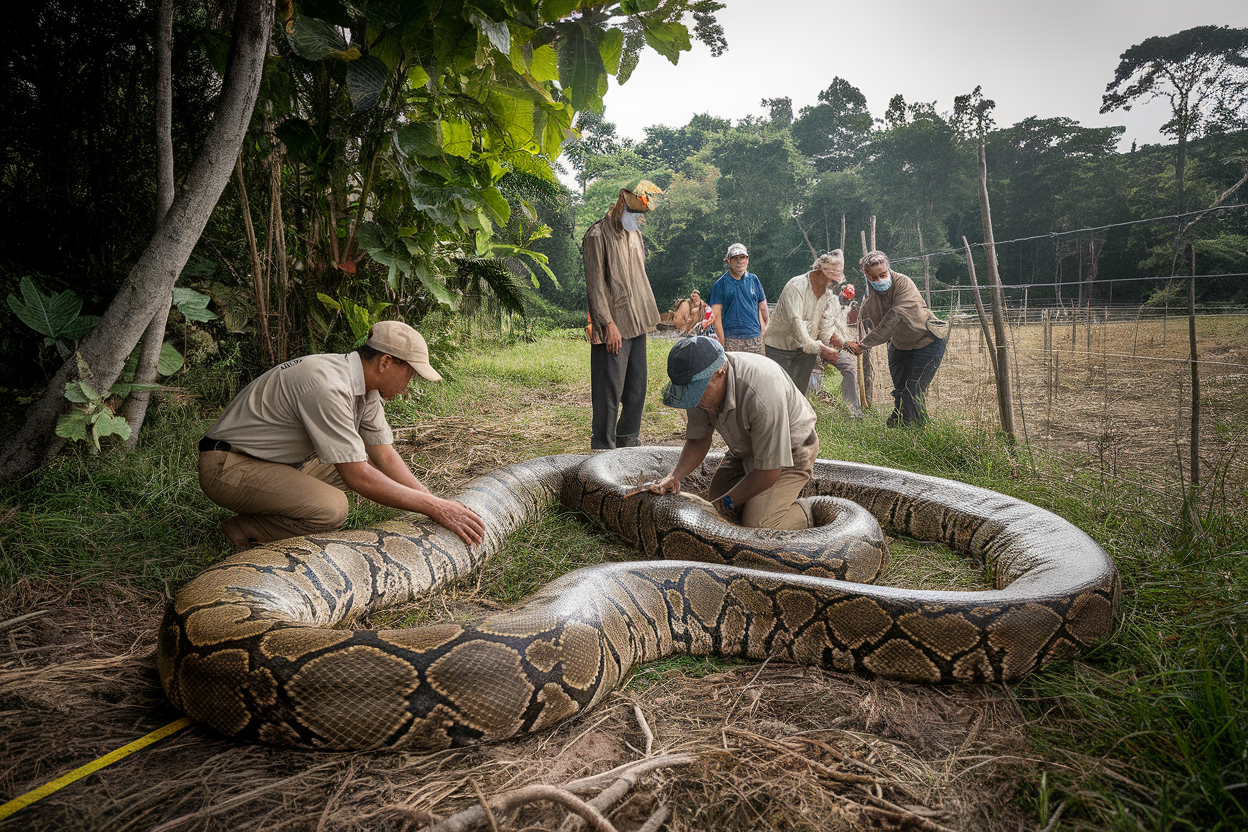
A wild python in Indonesia just got the Guinness seal of approval as the longest ever measured in the wild: a female reticulated python nicknamed Ibu Baron, clocking in at 7.22 meters—about 23 feet 8 inches. That’s “longer than a pickup truck” territory. But the real story isn’t the bragging rights. It’s why a snake that size is turning up close enough to people that it had to be captured, measured, and hauled off before the situation got stupid.
This happened in the Maros area of South Sulawesi (an Indonesian island most Americans couldn’t place on a map, but it’s east of Borneo and big enough to have its own problems). The record is flashy. The backdrop is grim: shrinking habitat, fewer wild prey animals, and villages pressed right up against what’s left of the forest. When that happens, “wildlife encounter” stops being a nature documentary and starts being a Tuesday.
Guinness didn’t take anyone’s word for it—this snake was measured alive
Guinness World Records says Ibu Baron—species: Malayopython reticulatus, the reticulated python—was measured alive on January 18, after being reported in the area late last year. That “alive” part matters, because giant-snake stories are usually a stew of tall tales, stretched skins, bad estimates, and animals killed before anyone can verify anything.
Guinness says the team used a tape measure that followed the snake’s body curves (not some straight-line fantasy), backed by photo and video evidence reviewed by the organization. In other words: this isn’t your cousin’s “I swear it was 30 feet” campfire story. It’s documented.
The measurement was carried out by Diaz Nugraha, described by Guinness as a licensed snake handler and wildlife rescuer, alongside Radu Frentiu, an explorer and nature photographer who’s lived in Indonesia for years. And yes, it took multiple people—because handling a 23-foot constrictor isn’t a solo hobby. Stress the animal out and you’ve got a powerful, unpredictable coil of muscle on your hands.
They moved fast—because a “record snake” attracts the wrong kind of attention
After the measurement, Guinness says the python was placed in the care of local conservationist Budi Purwanto. That quick handoff is the part that sounds boring—until you think about what happens when the internet learns there’s a record-breaking snake nearby.
Attention brings tourists. It also brings panic, macho nonsense, and trophy-hunter impulses. In rural areas where homes and forest edges practically touch, a rumor about a monster snake can set off a chain reaction. People aren’t debating ecology over coffee; they’re thinking about the goat pen, the dog that didn’t come home, the chickens that suddenly feel like a liability.
And “just release it back into the wild” isn’t the clean fix it sounds like. Drop a big predator near a village without enough natural prey around, and you may be scheduling the sequel. Same snake, same path, same terrified neighbors—just a few weeks later.
This is where local responders matter more than any international headline. Guinness can shine a spotlight, but the real decisions get made at the level of a village road kids walk to school and farmers use before dawn.
Why villagers are seeing more big pythons: less forest, fewer prey animals
Guinness relays Diaz Nugraha’s on-the-ground explanation: sightings of large pythons are rising because their habitat is shrinking and their natural food supply is thinning out. Guinness points to prey animals like wild boar and the anoa—a small, endemic wild cattle species from Sulawesi—and notes that poaching may be part of why those animals are harder to find.
The math is brutal and simple. Break a forest into smaller chunks and wildlife gets funneled through narrower corridors. Reduce prey and predators range farther. Push farms, roads, and homes closer to the tree line and you get more collisions—sometimes literally.
For residents, “coexistence” means practical, unglamorous changes: locking up poultry earlier, keeping dogs close at night, reinforcing fences, avoiding certain paths at dusk. For local officials and wildlife rescuers, it’s a constant balancing act—protecting a wild animal without dismissing the very real fear of people who live next door to it.
And the Guinness angle adds another complication: viral fame. A video can draw crowds or spark hysteria. Either way, the snake becomes a public spectacle—while still being a wild predator that reacts badly to noise, stress, and humans getting too close for a selfie.
Reticulated pythons don’t have venom—don’t let that lull you
Ibu Baron is a reticulated python, a species found across parts of South and Southeast Asia, known for the net-like pattern on its scales that helps it disappear into leaf litter and broken forest light.
These snakes are constrictors. No venom. They kill by biting to hold on, wrapping, and squeezing. People hear “nonvenomous” and relax. That’s a mistake. A large constrictor is basically living industrial-strength rope with teeth—fast at short range and strong enough to turn a bad decision into a tragedy.
Guinness also lists Ibu Baron’s weight at 213 pounds and notes she didn’t appear to have recently eaten a big meal—an attempt to head off the “it was only huge because it just swallowed something” argument. The point: this snake is legitimately massive, not temporarily inflated.
For communities near the forest edge, that size changes everything. A snake like this can hide, surprise, and slip over low barriers. The anxiety isn’t about whether Guinness certified it. It’s about what happens if it shows up again by the houses.
If there’s a takeaway here, it’s not “wow, big snake.” It’s that conservation isn’t happening in press releases or national parks. It’s happening in rushed phone calls, careful captures, proper documentation, and convincing scared people not to grab a machete. A world record can grab headlines. Living next to the wild is measured in feet, fences, and nerves.
Sources
Guinness World Records; EcoTicias; Moneycontrol; Times of India; UPI