

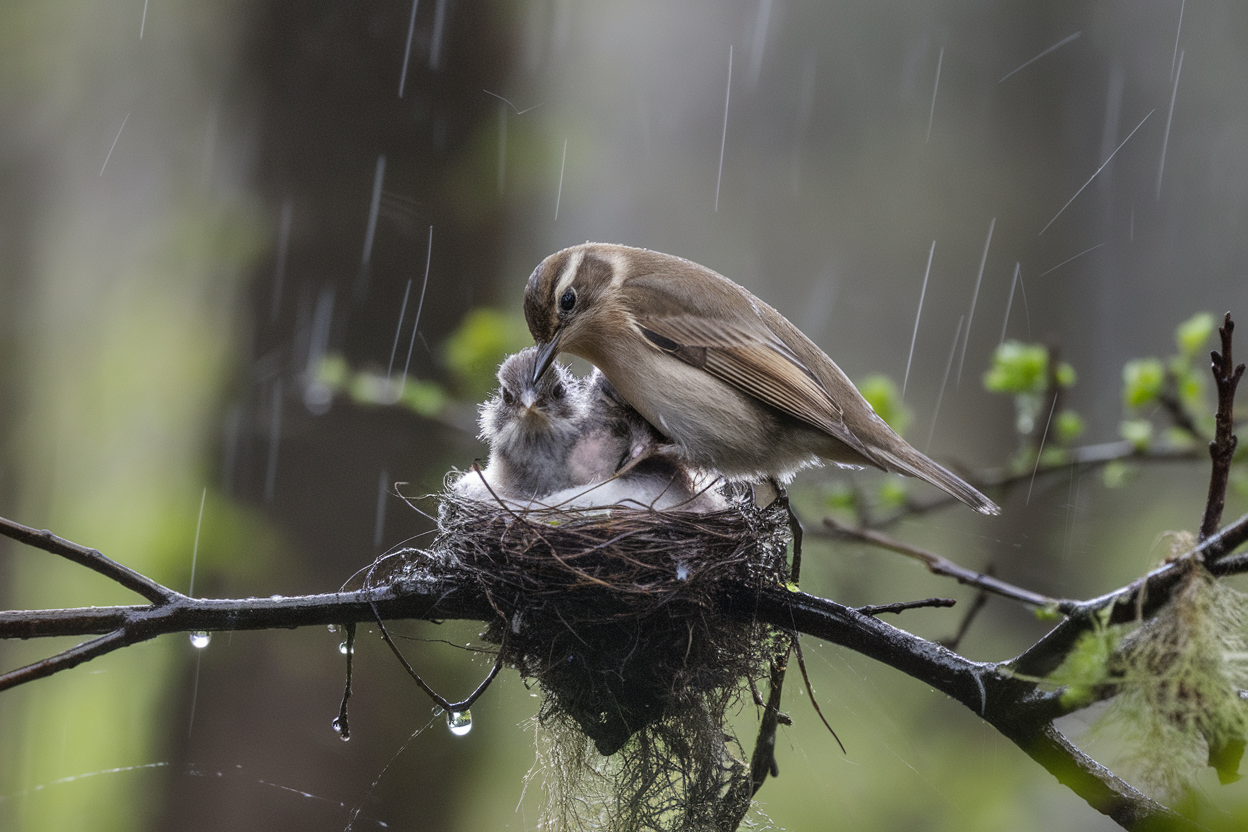
Forget the fuzzy “warmer springs” talk. An Oxford team just did the kind of painstaking, long-haul science that actually tells you how climate chaos hits living things: they tracked 83,000 individual nestling records across 60 breeding seasons in a patch of English woodland called Wytham Woods—then matched those bird-by-bird outcomes to daily weather data.
The punchline is brutally simple: the same cold snap or downpour can be a shrug—or a death sentence—depending on which week it lands after the chicks hatch. Timing, not seasonal averages, is the killer.
A rare data goldmine in an English forest most Americans have never heard of
Wytham Woods sits in Oxfordshire, about an hour northwest of London. It’s famous in ecology circles because it’s been monitored forever—one of the oldest wildlife tracking programs on the planet. That matters because short studies miss the stuff that really wrecks populations: the weird, violent weather days that don’t show up often, until they do.
Oxford’s researchers, writing in Global Change Biology (published March 11), used that six-decade archive to connect the dots between growth, body mass, and survival and the exact temperature and rainfall on the exact days those chicks were in the nest.
And because the dataset is huge—again, 83,000+ individual observations—they could tease out the impact of rare extremes without confusing them with everything else going on in the woods (food supply, crowding, disease, you name it).
Week 1: a hard freeze hits like a hammer
The most dangerous time for a nestling is the first week after hatching. At that point, chicks are basically little biological liabilities: no real feathers, lousy temperature control, totally dependent.
Oxford’s finding: when extreme cold hits in that first week, chicks’ growth takes a major hit. The mechanism isn’t mysterious—it’s physics and calories. When it’s cold, energy goes into staying warm instead of adding weight. And if you fall behind early, you often don’t catch up by the time you’re supposed to fledge.
The French summary of the study flags -5°C as an example of the kind of cold that matters. That’s 23°F—the sort of “wait, it’s spring, why is it freezing?” day that doesn’t look dramatic on a seasonal chart but can wreck a nest.
Parents can try to compensate by bringing more food. But cold can also make foraging harder, and the clock is ruthless: a few bad days can carve a deficit that sticks.
Week 2: the real threat shifts to soaking rain—and empty stomachs
Once chicks hit their second week, the main danger changes. They’re a bit better insulated. But now their energy needs are exploding as they bulk up and build feathers.
That’s when intense rain becomes the bigger problem. Sure, rain can chill chicks directly. But the nastier effect is indirect: heavy rain keeps parents from hunting efficiently, knocks down insect activity, and turns food delivery into a slog.
In a system where chicks need more food every day just to keep up with their own growth, a sudden drop in deliveries can be fatal. Same storm, different week, totally different outcome.
The original French headline points to “extreme rains multiplied by 3.” The study’s broader point is that as weather swings get wilder, a handful of brutal days—especially during that narrow nesting window—can crater an entire cohort even if the rest of the season looks fine.
Climate change isn’t just about averages—and birds don’t live in averages
This is where the study lands a clean shot on the way climate change is often discussed. Monthly “anomalies” and seasonal averages are useful for big-picture climate accounting. They’re lousy at explaining why a local bird population suddenly has a terrible year.
A “mild” month can still contain two or three days of punishing cold. A “normal” spring can still get hammered by a stretch of drenching rain right when chicks are hungriest. The Oxford work argues—implicitly, and pretty convincingly—that conservation and climate risk tracking need to focus harder on extremes and when they hit, not just how the season pencils out overall.
Habitat protection still matters: better cover, better microclimates, more sheltered nesting spots can blunt some damage. But nobody should pretend woodland management can “fix” repeated extreme rain events landing at the worst possible moment.
And here’s the uncomfortable truth underneath all of it: baby birds can’t evolve feathers faster on a political timetable. When extremes pile up, adaptation comes with a body count—especially for species already squeezed by habitat fragmentation and the broader decline in insects.
What this changes for conservation—and what it doesn’t
If you’re running a conservation program, this study is a warning label. Planning around “earlier springs” or “warmer averages” misses the point if the real damage comes from a few nasty days that line up with a biological bottleneck.
But it’s also a reminder of what good science looks like: long-term monitoring, daily-resolution data, and enough sample size to separate real effects from noise. Sixty years of records isn’t glamorous. It’s just the difference between guessing and knowing.