

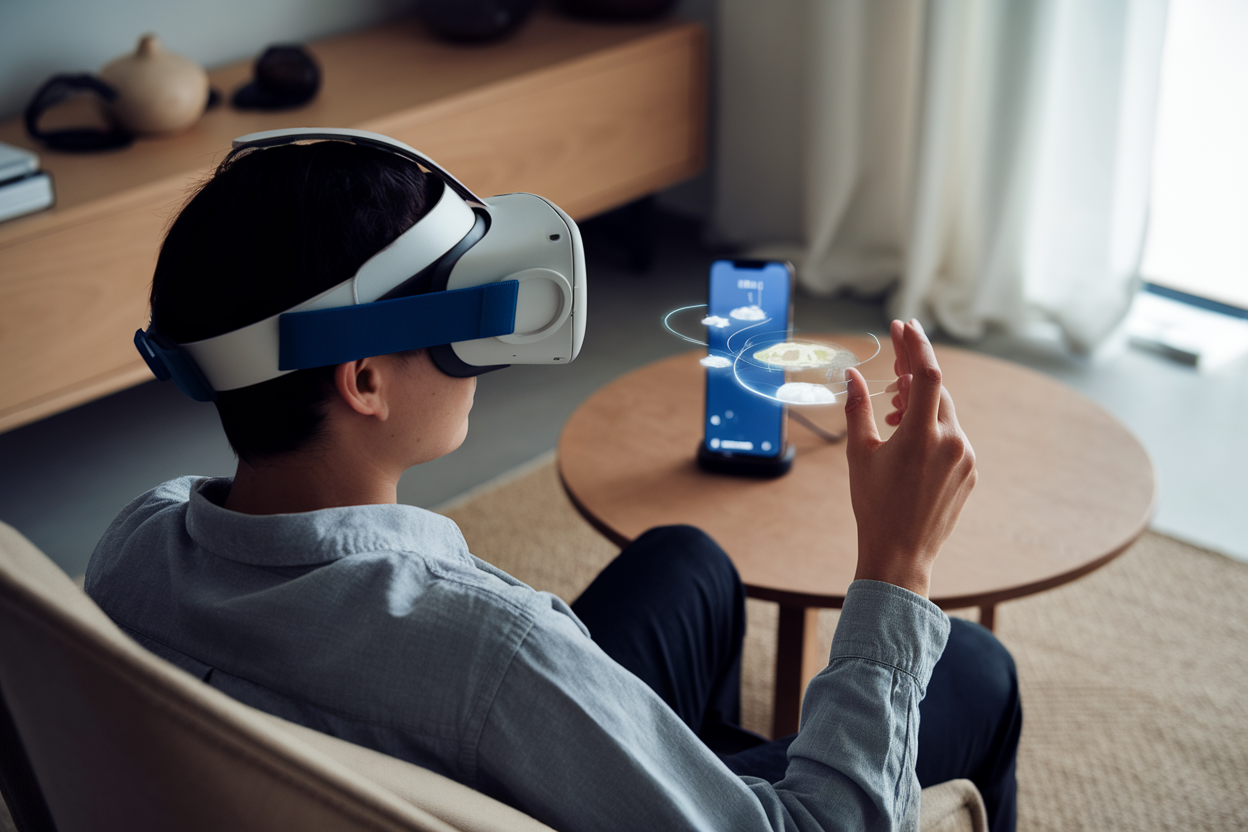
Meta flirted with pulling Horizon Worlds off its Quest headsets—then slammed the brakes and reversed course in under 48 hours. The whiplash, sparked by a March 18 post on the Quest community forum, is the kind of messy, public indecision you don’t see from a company that’s supposedly steering the future of computing.
And it’s a pretty loud tell: whatever Meta calls it these days (they’ve gone shy about saying “metaverse” out loud), the whole Reality Labs project still can’t decide what it wants Horizon Worlds to be—VR’s killer social hangout, or a mobile app chasing scale like everything else on your phone.
Meta has said Horizon Worlds topped 1 million active subscribers in 2025. That’s not nothing in VR. But it’s also nowhere near the “everyone will live here” vibe the company once sold with straight faces and billion-dollar budgets.
March 18: Meta floats a Quest breakup for Horizon Worlds
On March 18, Meta posted on the Quest Community Forum that it planned to separate Horizon Worlds from Quest. The corporate rationale was the usual: let each product “develop with more focus,” move faster, untangle roadmaps.
In plain English, the pitch looked like this: Quest stays the hardware and operating system lane, while Horizon Worlds shifts toward a mobile-first experience—meaning people without a headset could still use it.
If Meta had actually followed through, the symbolism would’ve been brutal. Horizon Worlds is one of the most visible “look what we’re building” demos Meta has in VR. Pulling it from Quest would’ve read like an admission that the company’s flagship social VR world isn’t a priority on its own flagship VR device.
Creators would’ve gotten the message too: stop building for native VR and start thinking touchscreen-first. That’s not a minor tweak. That’s a different product, a different audience, and a different kind of competition.
Meta also leaned on a familiar line: VR hasn’t grown as much or as fast as the company hoped—though it’s “still growing” thanks to developers. That’s the XR industry’s standard shrug. But pairing that line with “we’re taking Horizon off Quest” would’ve turned the shrug into an action: VR isn’t the main stage anymore.
Less than 48 hours later, Meta reverses—because the blowback was obvious
In under 48 hours, Meta walked it back and kept Horizon Worlds on Quest.
That reversal matters more than the original idea. Big platforms don’t usually “oops” their way into distribution decisions like this. Pulling a major first-party app from your own hardware ecosystem touches product teams, comms, developer relations, and a pile of internal politics. When it flips that fast, it screams either (a) somebody didn’t think through the consequences, or (b) somebody higher up saw the reaction and hit the emergency stop.
The product problem is pretty simple. Mobile offers scale—hundreds of millions of potential users versus a comparatively small headset base. But Horizon Worlds is supposed to make sense in VR, where immersion is the whole point. Strip it from headsets and you risk turning it into just another social app on a phone, fighting for attention against TikTok, YouTube, iMessage, and every game with a battle pass.
There’s also reputation management here. Meta spent years hyping the metaverse like it was the next internet. Announcing “we’re pulling our metaverse world off our VR headset” would’ve handed critics a clean headline: Meta’s giving up on social VR. The quick reversal keeps the company’s story muddier—VR and mobile, both, somehow, together.
Muddy stories are comforting to executives. They’re poison for creators. Social platforms don’t grow on software updates alone; they grow on predictability. People build where they think the company will still care six months from now.
That “1 million active” number: decent for VR, awkward for Meta’s ambitions
Meta has claimed Horizon Worlds had more than 1 million active subscribers in 2025. Without details—daily? monthly? “logged in once and didn’t hate it”?—it’s a number that can mean a lot or very little.
Still, two things can be true. First: for VR, a million active users is a real milestone. Second: Meta didn’t pour money into Reality Labs to build a niche product. The original sales pitch was mass adoption—a central social destination with the gravitational pull of a major platform.
And VR’s friction is real. Headsets are still a commitment: you wear the thing, you clear space, you deal with comfort, battery life, and the fact that you look ridiculous. Phones don’t ask that much of people. That’s why Meta keeps eyeing mobile as the escape hatch.
But mobile also forces a hard question: what exactly is Horizon Worlds when it’s not immersive? A 3D social space on a phone doesn’t automatically feel magical. It can just feel like a clunkier way to do what people already do faster elsewhere.
Reality Labs’ 2026 roadmap bets on mobile—without killing the headset pitch
Earlier in 2026, Meta had already laid out a Reality Labs roadmap pointing toward more separation between Quest and Horizon Worlds, with Horizon leaning harder into mobile. The logic is obvious: phones are everywhere, headsets aren’t. If you want bigger numbers, you go where the people are.
The risk is identity. If Horizon is designed “mobile-first,” it has to obey mobile rules: simpler controls, shorter sessions, tighter performance constraints, and a brutal attention economy. That can leave you with a weird hybrid—too compromised to feel like VR, too awkward to feel native on a phone.
And Quest has its own problem: hardware needs “must-have” experiences to justify the purchase. Meta can’t afford to make its own headset look like it’s losing first-party support. Keeping Horizon Worlds on Quest—even while talking up mobile—protects the headset’s value proposition.
The funniest part is how quiet Meta has gotten about the word “metaverse.” The ambition didn’t vanish; the branding did. This March mini-fiasco makes the situation pretty clear: Meta is still trying to find a stable balance between VR and mobile, and it’s doing it in public, with all the confidence of a company that’s not confident at all.