

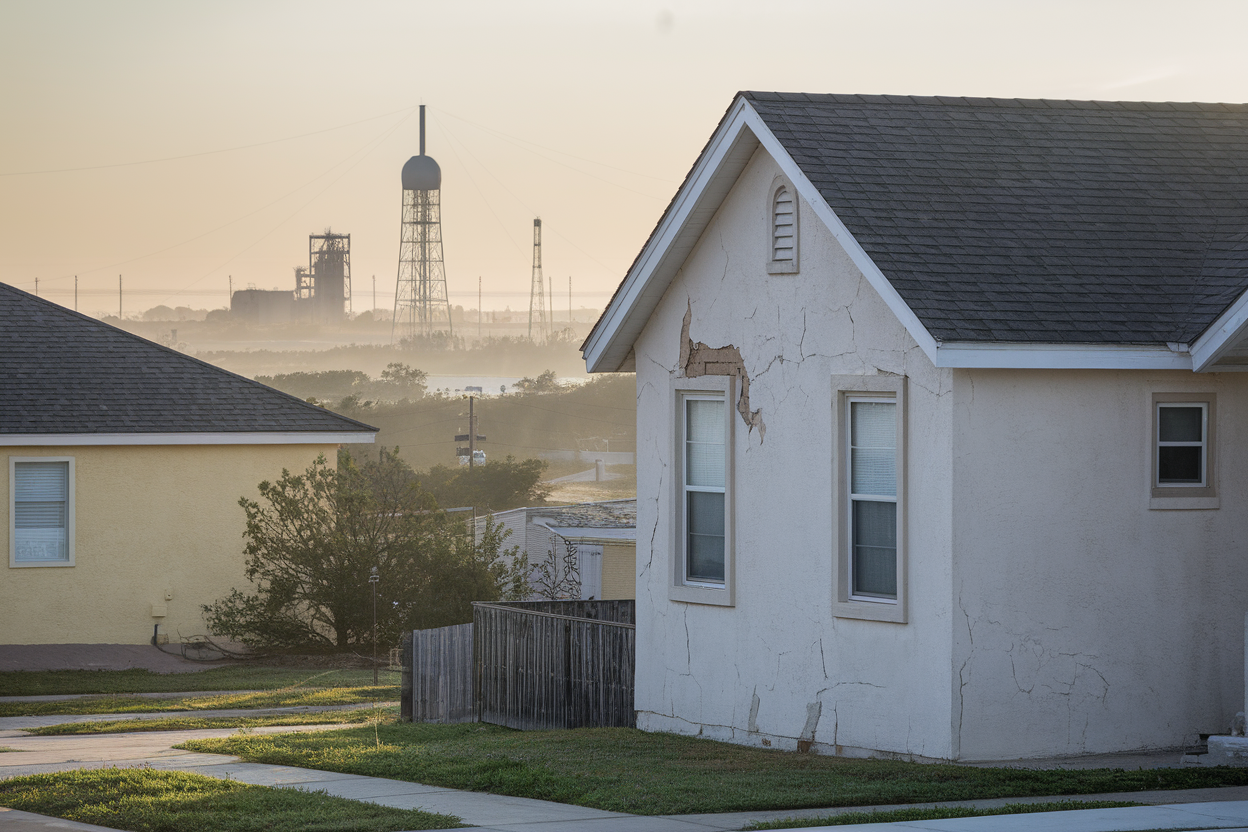
If you live near SpaceX’s Starbase in South Texas, the Starship program doesn’t sound like the future. It sounds like your drywall cracking.
A group of 80 residents has filed a federal class-action lawsuit accusing SpaceX of shaking, blasting, and basically battering their homes with rocket tests and launches, according to Reuters. They’re not just complaining about noise. They’re alleging property damage—cracks, warped floors, busted windows—caused by repeated waves of vibration and overpressure from Starship activity.
And here’s the part that gets lost in the “rah-rah private space race” storyline: rockets don’t merely roar. They punch the air and the ground. Over and over. Like a sledgehammer you can’t see.
80 residents say their houses in Port Isabel and South Padre took the hit
Per Reuters, the plaintiffs live in communities near Starbase, including Port Isabel and South Padre Island—places better known for beach weekends than industrial-scale rocket testing.
One homeowner in Port Isabel—less than 6 miles from the launch site—described a home that started coming apart at the seams: doors that won’t close right, cabinets knocked out of alignment, and a warped floor after a pipe rupture that she says happened during a particularly violent launch episode. She pegged foundation repairs at roughly $100,000—money she says could exceed what the house is even worth.
Other outlets describing the filing say it’s a hefty complaint—reported as 59 pages (WJCL, Law Commentary). The legal fight won’t just be “are these people annoyed?” It’ll be “can they prove SpaceX caused the damage—and did SpaceX take the kind of precautions a serious industrial operator is supposed to take?”
Eleven tests, 110+ decibels, and the physics of “noise” that breaks stuff
Reuters reports the lawsuit points to blasts tied to 11 rocket tests that the residents say were powerful enough to damage homes. WJCL says the complaint accuses SpaceX of repeatedly subjecting surrounding areas to extreme “acoustic energy”—noise, vibrations, sonic booms.
That phrase—acoustic energy—sounds like something a consultant would bill you for. But the idea is simple: there’s a difference between loud and destructive.
First, there’s straight-up sound level—the decibel number—that can rattle lighter parts of a house. Then there are short, sharp overpressure events that behave less like a steady roar and more like a series of concussive hits. And then there’s ground-transmitted vibration, the kind of thing you feel when a heavy truck rolls by—except this is a rocket program running repeated tests with energy on a different scale.
Law Commentary says the complaint cites measurements from an October 2024 launch showing noise above 110 decibels, which the plaintiffs connect to the kinds of damage they’re reporting. That same source says the filing includes a chart laying out potential damage from repeated exposure to sonic booms and overpressure events.
Translated into normal human language: they’re arguing their homes weren’t built to take this kind of beating, this often.
Negligence, “gross negligence,” and even trespass—plus a 1984 law with teeth
Reuters says the suit accuses SpaceX of negligence, gross negligence, and trespass. Trespass, in this context, isn’t about someone hopping a fence—it’s about physical intrusion: shockwaves and vibrations allegedly crossing property lines and causing harm.
The complaint also leans on the Commercial Space Launch Act of 1984, which gives the Secretary of Transportation authority to suspend or stop commercial launches if operations threaten public health and safety.
That’s a strategic move. The plaintiffs aren’t trying to win a neighborhood squabble over “too loud.” They’re trying to frame Starbase as a public-safety problem—and force the government’s regulatory muscle into the conversation.
WJCL reports SpaceX hasn’t responded to the complaint. The case also carries an obvious political charge: one of the world’s richest men running a high-intensity launch site near communities that aren’t exactly swimming in spare cash. In a WJCL-cited report, Bekah Hinojosa, founder of the South Texas Environmental Justice Network, pushed the environmental-justice angle, even though she isn’t listed as a plaintiff.
SpaceX can argue it operates under permits and oversight. Civil court, though, has a way of dragging things back to basics: Did you warn people? Did you mitigate? Did you monitor? And when damage showed up, did you pay—or shrug?
A company-town vibe, rising home prices, and a coastline that feels less public
The broader reporting around the lawsuit describes a Starbase ecosystem that looks a little like a modern company town: subsidized housing for employees, a medical clinic, and a staff-only dining spot. Great for recruitment. Not so great for the neighbors watching a protected “inside” form next to an “outside” that eats the noise.
Then there’s housing pressure. Moneywise, cited in the original roundup, claims the average home price in Cameron County jumped from $131,000 in 2014 to more than $281,000 by 2026. Even if the lawsuit is mainly about physical damage and nuisance, that kind of price surge changes the stakes. If your quality of life drops because your house keeps getting rattled—but the market gets hotter because money is pouring in—people get angry fast.
Access to the coast is part of the resentment, too. The reporting references criticism that public recreation has been squeezed. An ABC interview in 2025 quoted Rene Medrano describing Boca Chica Beach—long a local hangout—as diminished in feel and usability. The lawsuit itself focuses on homes, but the backdrop is bigger: a place shifting from public shoreline to industrial launch corridor.
This isn’t a simple “pro-technology vs. anti-technology” food fight. It’s a collision between SpaceX’s rapid-test culture and the reality that houses—and communities—have limits. If this case goes the distance, a federal court is going to have to translate decibels, overpressure, and cracked foundations into liability. And that’s a language SpaceX can’t just engineer its way out of.
Sources
Reuters; WJCL; Law Commentary; Texas Tribune; Moneywise; ABC (2025 interview referenced in reporting).