

Five seconds. That’s all Kelonia Games needed to light up the internet.
The studio’s new indie puzzle game, Fresco, popped up in a blink-and-you’ll-miss-it clip, and people immediately started saying the same thing: it looks like DreamWorks’ The Prince of Egypt—specifically that fever-dream sequence where Moses is swallowed by living wall art while Hans Zimmer cranks the dread to eleven.
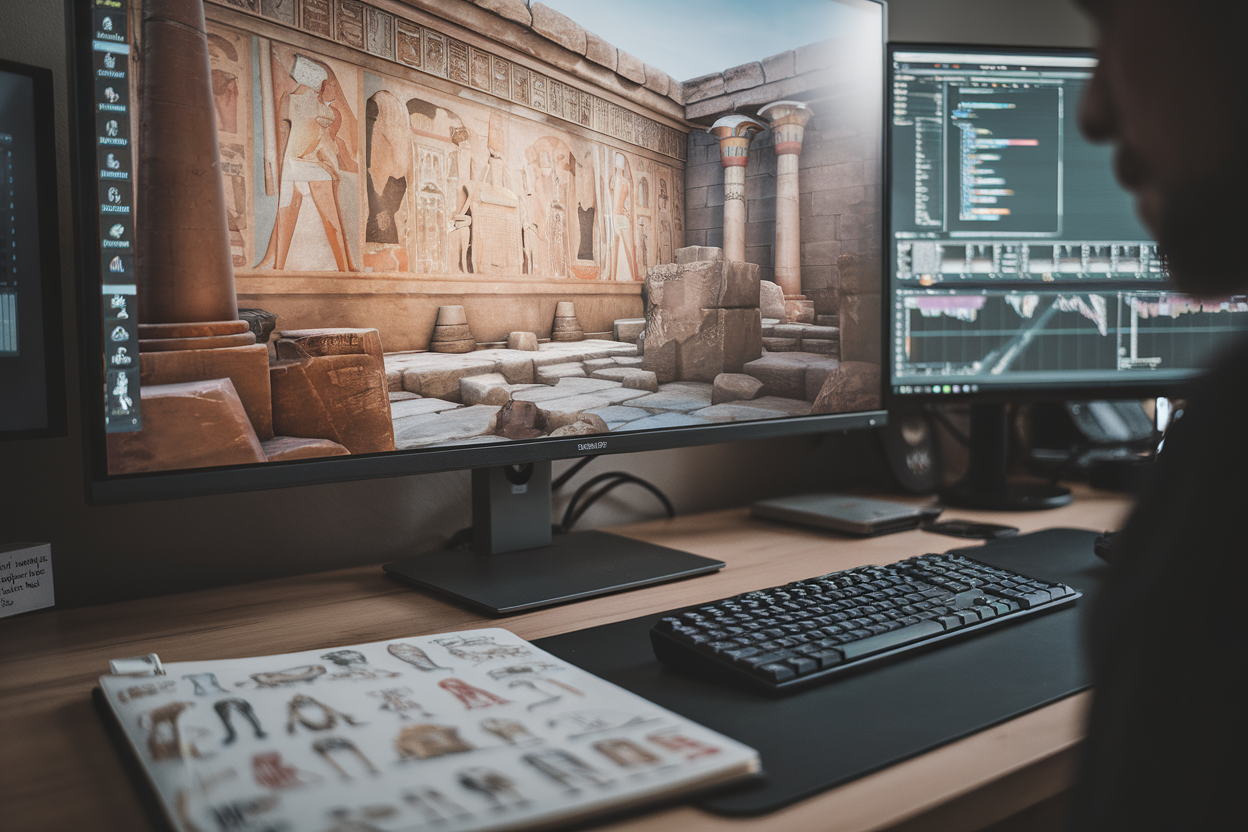
This isn’t your usual “oh, the colors are similar” nostalgia bait. The resemblance is structural. Fresco is built around the idea that Egyptian murals aren’t background decoration—they’re a playable space. Characters don’t stand in front of a painting. They become part of it.
A 1998 animated nightmare is doing heavy lifting in 2026 game hype
The Prince of Egypt hit theaters in 1998, back when DreamWorks was still trying to prove it could do “serious” animation. They stacked the voice cast—Val Kilmer, Ralph Fiennes, Michelle Pfeiffer, Steve Martin—and treated the whole thing with the kind of cinematic muscle usually reserved for live-action epics.
But the scene people keep dragging into the Fresco conversation isn’t the big musical numbers. It’s the nightmare: Moses staring at Egyptian carvings, then slipping into a horror show where the wall imagery moves, breathes, and turns accusatory. The trick works because the visuals aren’t just pretty—they’re storytelling. The environment becomes Moses’ conscience.
Fresco is borrowing that visual grammar and trying to turn it into gameplay: controlling figures inside murals, shifting between viewpoints, and treating painted surfaces like interactive stages inside ancient ruins.
Here’s the catch: that DreamWorks sequence is loaded—violence, oppression, guilt, the whole biblical freight train. A puzzle game set in ruins can go meditative and abstract, sure. But if you’re going to wear that aesthetic, you’re also inviting expectations that the game has something to say, not just something to show.
Unreal Engine 5 “decals”: the nerdy trick behind the magic
A lot of the early chatter around Fresco isn’t even about puzzles—it’s about tech. Developers have been pointing at one specific tool in Unreal Engine 5: decal projection.
In plain English, decals are projected details you slap onto surfaces without rebuilding the whole 3D geometry—cracks, symbols, stains, inscriptions. Kelonia’s twist is using that same idea to “place” characters and interactive elements onto a wall painting so they look fused into the plaster, not pasted on top like a sticker.
That’s why the clip reads so cleanly in motion. The wall isn’t set dressing. It’s a board. And the pieces on it can animate while still feeling like they belong to the paint itself.
But there’s a practical problem hiding under the artistry: puzzles live and die on readability. If your character blends too well into the mural, players won’t feel clever—they’ll feel annoyed. The win here won’t come from UE5’s toolset. It’ll come from unsexy decisions: contrast, silhouettes, visual hierarchy, and feedback that tells your brain, instantly, what’s interactive and what’s just gorgeous texture.
Two perspectives, one set of ruins—and a lot of room to mess it up
Kelonia says the game explores ancient Egyptian ruins from two viewpoints. That usually means a layered setup: a 3D space you walk through and a second “space” represented on walls—reliefs, murals, painted registers—where different rules apply.
The interesting part is the implied cause-and-effect between those layers. Move something in the mural, and a passage opens in the physical ruin. Change the ruin, and the mural’s logic shifts. That’s a solid modern puzzle foundation, and it’s been done well before.
The difference here is the cultural specificity. Egyptian wall art has rules—profile figures, stacked narrative bands, symbolic scale. If Fresco respects those conventions, the whole thing could feel like you’re solving puzzles inside a living archive. If it doesn’t, you’re left with the oldest trick in entertainment: “Egypt” as postcard wallpaper.
And there’s another danger: two-mode puzzle games can turn into tedious ping-pong if every solution is “flip view, do thing, flip back.” The concept needs escalation—new rules, new surprises, new ways the mural can betray your assumptions—otherwise the wow-factor becomes a loop.
The indie puzzle market runs on vibes—until it doesn’t
Fresco is landing in a crowded genre where difficulty isn’t the main selling point. Identity is. The puzzle indies that break through usually have a pitch you can explain in one breath: impossible architecture, shadow worlds, hand-drawn oddities, typography you can manipulate.
Kelonia’s pitch is equally clean: playable Egyptian frescoes brought to life.
That’s perfect for the modern attention economy, where a five-second clip can do more work than a three-minute trailer. And the Prince of Egypt comparison is a cheat code—instant emotional context, instant “I know what this feels like.”
But it’s also a trap. When you hook people with a reference that strong, you’re promising polish and purpose. Gamers have seen plenty of stylish concept projects that look like a million bucks and play like a student demo.
One more wrinkle: Unreal Engine 5 has become the default flex engine—often with the same glossy lighting and photoreal rubble that makes half of new games look like they share a wardrobe. Fresco seems to be pushing against that, using UE5 to chase a painted, tactile look instead of realism. That’s smart. It’s also expensive in performance terms if you’re leaning hard on materials and projection tricks.
Right now, Kelonia has shown a promise: the thrill of manipulating a living painting, with a visual hook that instantly drags Americans back to a very specific 1998 animated gut-punch. The real test is whether they can stretch that idea into hours of play without the whole thing collapsing into “pretty, but thin.”
FAQ
Why are people comparing Fresco to The Prince of Egypt?
Because the game’s animated mural style looks a lot like the film’s famous nightmare sequence where wall carvings come alive and swallow the character into the art.
What tech is Fresco using to pull off the mural effect?
Kelonia is highlighting Unreal Engine 5 and decal projection—a method for projecting details (and here, animated figures) onto surfaces so they feel embedded in the wall.
What kind of game is Fresco?
An indie puzzle game set in ancient Egyptian ruins, built around switching between two perspectives and manipulating interactive frescoes as part of the puzzle logic.