

POCO just did what a lot of phone brands only hint at: it picked a lane and floored it.
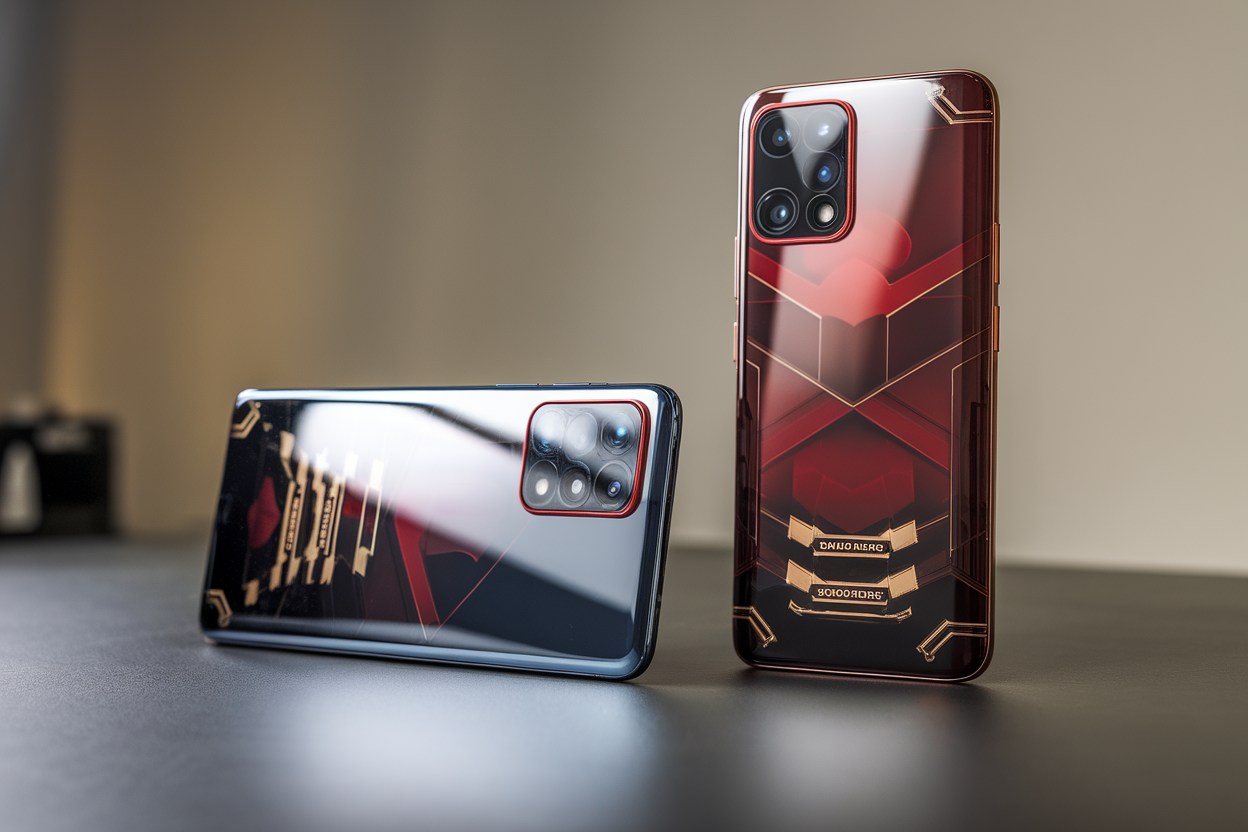
The company is expanding its X8 Pro line with a second model, the X8 Pro Max, and the pitch is blunt—midrange pricing, high performance, and battery life POCO is basically daring you to kill. And because it’s 2026 and nothing ships without a fandom hook, there’s also an Iron Man edition meant to turn a phone launch into a collector drop.
This is the same playbook POCO ran last year: two closely related phones built around “performance DNA,” split by priorities. The regular X8 Pro is the “balanced” one. The Max is the “I don’t want to see a charger until tomorrow” one. While rivals usually try to justify price jumps with camera tricks or fancy screens, POCO’s talking points are simpler: processor + battery, with AnTuTu benchmark numbers doing a lot of the heavy lifting.
A new MediaTek chip, a 4nm process, and a very loud AnTuTu number
The headline spec is the processor. POCO says the X8 Pro is the first phone globally to launch with the MediaTek Dimensity 8500-Ultra, built on a 4-nanometer process. Translation: it’s supposed to be faster without guzzling power—or use less power without feeling sluggish. That’s the whole point of modern chip shrinks, and it matters most when you’re gaming or hammering multitasking for more than five minutes at a time.
POCO is also waving around a benchmark score: more than 2.2 million points on AnTuTu. If you follow Chinese phone marketing, you’ve seen this movie. AnTuTu is popular because it spits out a clean, shareable number that looks great in a slide deck.
But benchmarks are a little like dyno charts for cars: useful, not holy scripture. Scores swing based on test version, performance modes, ambient temperature, and how long the run lasts. And yes, manufacturers can tune devices to look heroic in standardized tests. The stuff that actually decides whether a “performance phone” is fun to own is messier—frame-rate stability after 15–30 minutes, whether the phone throttles when it heats up, and whether the whole thing turns into a hand warmer.
MediaTek’s presence here is also a market signal. Over the last few years, the Taiwanese chipmaker has clawed back credibility in the upper-midrange by delivering strong performance per dollar and, crucially, reliable supply. For POCO—long known for aggressive pricing—the goal is obvious: deliver a spec sheet that sounds premium without drifting into premium costs. The “Ultra” label helps with that, even if “Ultra” often means “tweaked variant” more than “brand-new silicon miracle.”
And then there’s software. A fast chip doesn’t mean much if memory management is sloppy, scheduling is weird, or games aren’t optimized. POCO hasn’t said much about system-level tuning here, which makes the AnTuTu-first messaging feel like it’s aimed at comparison shoppers—the folks who buy with a spreadsheet open and a YouTube benchmark loop playing in the background.
The X8 Pro Max goes all-in on battery—without giving the number (yet)
The other pillar is endurance, and POCO wants the X8 Pro Max to be the battery champ of the lineup. The company is calling it “record” level stamina in its launch messaging—while, notably, not spelling out the battery capacity in mAh in the material referenced here.
Still, the intent is crystal clear: the Max is for people who game, stream, doomscroll, and bounce between apps all day without wanting to babysit a charging cable.
That’s not a gimmick. Performance gains often come with nastier power spikes—especially in gaming and video. Even with a 4nm chip, sustained load hits the battery and the charging system hard. Plenty of buyers will happily accept a thicker or heavier phone if it means getting a realistic day and a half—or even two days—without playing “find the outlet.” In the midrange, battery life is a more universal selling point than camera quality because everyone feels it.
But there’s a catch POCO will have to answer for: long-term battery health. Bigger batteries aren’t just “more battery.” They change internal layout, thermal design, and sometimes charging strategy. Push charging too aggressively, combine it with heavy daily cycles, and you can age a battery fast. POCO needs to show that “record endurance” doesn’t turn into “why is my battery cooked after 12–18 months?”
Until we see standardized tests—screen-on time, looped video playback, consistent brightness settings—this is still marketing posture. The real question is whether the Max meaningfully outlasts the regular X8 Pro under punishing use, or whether the difference gets lost in the chaos of real-world settings and usage habits.
Iron Man edition: a phone launch that wants to be merch
Then comes the loudest non-technical move: an Iron Man special edition, licensed through Marvel. POCO has played the collaboration game before, and it’s doing it again for a simple reason—midrange phones are a crowded aisle, and fandom cuts through noise.
These editions aren’t really about specs. They’re about scarcity, social media, and unboxing bait. A recognizable design gets photographed, filmed, and shared. That attention is marketing you don’t have to buy the old-fashioned way.
It also shifts the pricing conversation. When the differences between competing phones are measured in small performance percentages or an extra half-hour of battery, a licensed collab gives brands a story—and sometimes cover to charge more without starting a straight-up price war.
But collectors are picky now. A case and a wallpaper won’t cut it. People expect custom design touches, themed accessories, UI tweaks, and packaging that doesn’t look like an afterthought. If POCO nails the details, it’ll sell. If it phones it in, it’ll look like a sticker job.
Midrange “performance” phones live or die on credibility, not one big number
With the X8 Pro series, POCO is picking a fight in the most brutal part of the market: the high-volume midrange, where everyone claims flagship-level speed and nobody wants to admit the compromises.
AnTuTu scores and “4nm” sound great in a headline. They don’t tell you whether the phone throttles, dims the screen during gaming to manage heat, or drains the battery fast under sustained load. And they definitely don’t tell you how the phone will feel after two years of updates—assuming it gets them.
POCO’s segmentation is smart, though. Instead of trying to build one phone that does everything, it’s offering a “balanced” model and an “endurance” model. That’s a grown-up approach in a world where component costs swing and buyers have different pain points.
Now the burden shifts to independent testing. If the X8 Pro can actually hold performance without cooking itself, and if the Max can deliver real battery dominance without long-term degradation, POCO will have something more valuable than a benchmark screenshot: a reputation boost. If not, the Iron Man paint job will feel like a distraction—because it will be.