

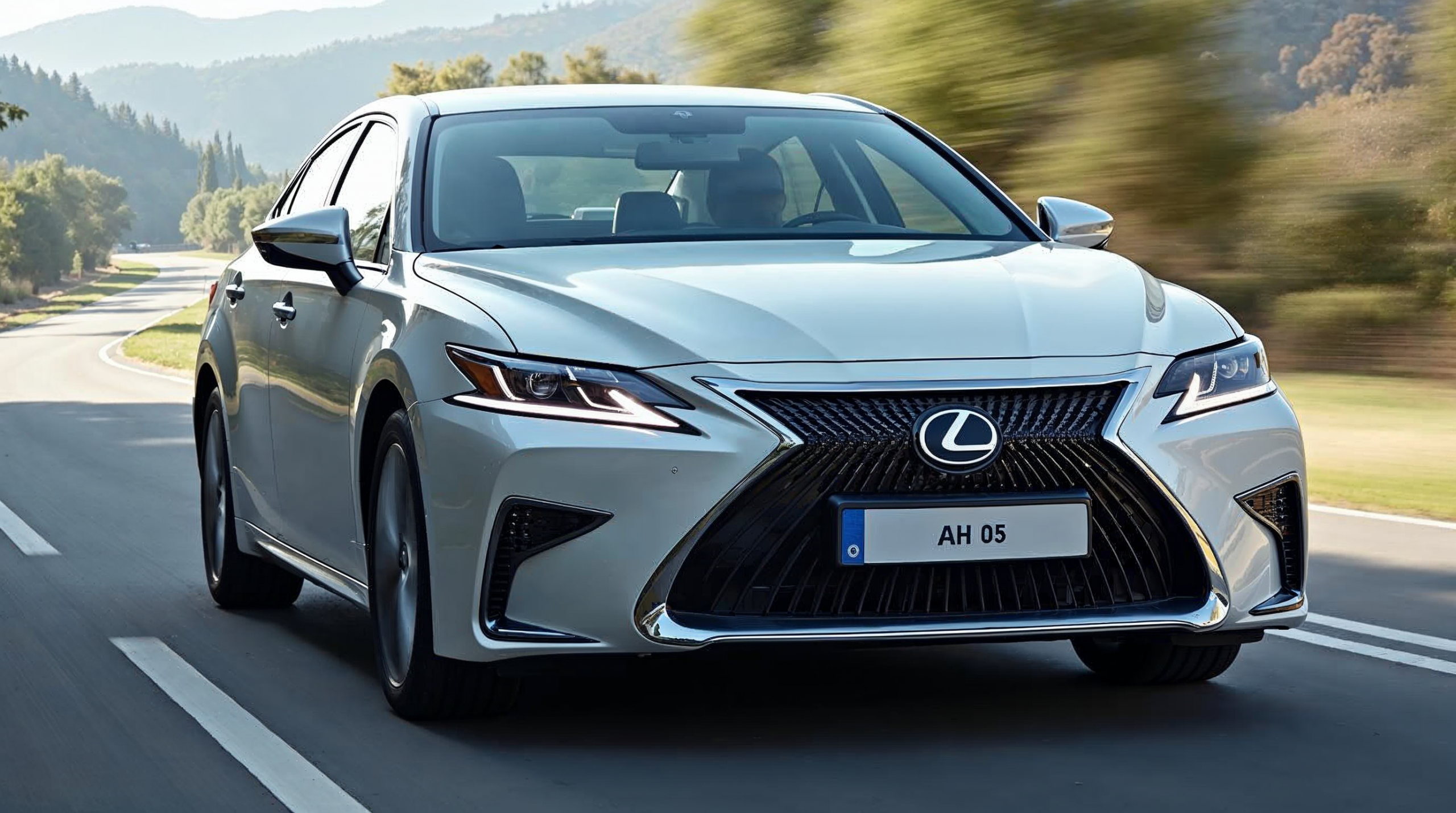
Lexus has a problem most luxury brands would kill for: it’s built a reputation on calm, quiet competence. The downside? Calm doesn’t trend on TikTok.
So when French outlet Actu.fr took the new Lexus ES out for a drive, they didn’t obsess over a spec-sheet cage match. They judged it the way real people judge big sedans: does it make your life easier at 70 mph, does it hush the world, and does it feel like the money went somewhere you can actually touch?
The twist is that Lexus is trying to sell one ES idea with two very different powertrains: a hybrid for the “I don’t want to think about charging” crowd, and a full EV for the “give me silence and instant shove” crowd. Same suit, two personalities.
One sedan, two powertrains—and two totally different lifestyles
Actu.fr frames the ES as a kind of compromise machine: one body style meant to satisfy two realities of driving.
The hybrid pitch is familiar in the U.S. by now. You fill up in five minutes, you don’t plan your day around plugs, and in stop-and-go traffic the electric assist can cut fuel use and smooth things out. It’s the “no drama” option—especially for people who rack up miles and don’t want homework.
The electric version flips the experience. You get the quiet, the immediate torque, the sense that the car is gliding instead of working. But you also inherit the EV routine: charging strategy, route planning, and the occasional moment of “wait, is this charger actually working?”
Lexus’ gamble here is simple: offer both, don’t force a single leap. That sounds comforting. It’s also risky, because the fastest way to poison a lineup is to make one version feel like the “real” car and the other feel like the consolation prize. Actu.fr’s takeaway suggests Lexus mostly avoids that trap—at least from behind the wheel and inside the cabin.
What the drive actually focused on: the cabin vibe and the way it settles you down
Actu.fr says the new ES “makes an impression.” In car-review speak, that usually means a bunch of small wins stacking up: ride comfort, perceived build quality, low noise, stable highway manners, controls that don’t make you curse.
This is the lane the ES has always lived in. Nobody buys it to flex at a stoplight. They buy it because they want the car to feel like it’s got its act together—suspension that rounds off ugly pavement, wind noise that stays outside, and a general sense that the engineers cared about fatigue.
And here’s the uncomfortable truth about the luxury-sedan segment: on paper, a lot of these cars blur together. Screens, driver assists, horsepower numbers—everybody’s got them. So the differentiator becomes the squishy stuff: how the car feels after two hours, how the interior materials read in real light, whether the whole thing feels coherent instead of “feature-stuffed.” That’s the territory this review keeps circling back to.
Electrification sounds great in ads; the road is less forgiving
“Hybrid” and “electric” have turned into marketing confetti—words that get tossed around like they automatically mean “better.” Actu.fr treats the new ES more like a reality check: the tech only matters if it behaves naturally.
They boil the experience down to the stuff drivers actually notice:
1) Smooth response: Does the car answer your right foot cleanly, without weird surges or hesitation?
2) Energy management: In a hybrid, does it switch between gas and electric without feeling clunky? In an EV, is regen easy to modulate so braking feels normal instead of like a carnival ride?
3) Mental load: A hybrid should fade into the background. An EV has to make charging and planning feel painless—through the interface, the driver aids, and the overall usability.
When a review leans hard on “overall impression,” it usually means those basics aren’t fighting each other. The car isn’t asking you to admire its technology; it’s using the technology to disappear.
The ES plays it safe—and that’s kind of the point
The way Actu.fr positions this car, the new ES is about continuity, not a grand reinvention. Offering both hybrid and EV versions is Lexus basically saying: we’re not going to shove you off the dock. Pick your comfort level.
That approach has a clear upside for American buyers who still think of a big sedan as a long-distance tool: it reduces the “lifestyle shock” of switching powertrains. But it also means Lexus has to win two arguments at once. Hybrid shoppers want flexibility and zero friction. EV shoppers want quiet speed and simpler mechanics, but they also need a charging ecosystem that doesn’t waste their time.
Actu.fr lands on a pretty blunt verdict: the ES works because it drags the conversation back to universal luxury-car basics—comfort, calm, and a cabin that feels properly finished—rather than trying to win with a single flashy headline feature.
And honestly? In a market drowning in tech promises, that might be the most modern move Lexus can make.