

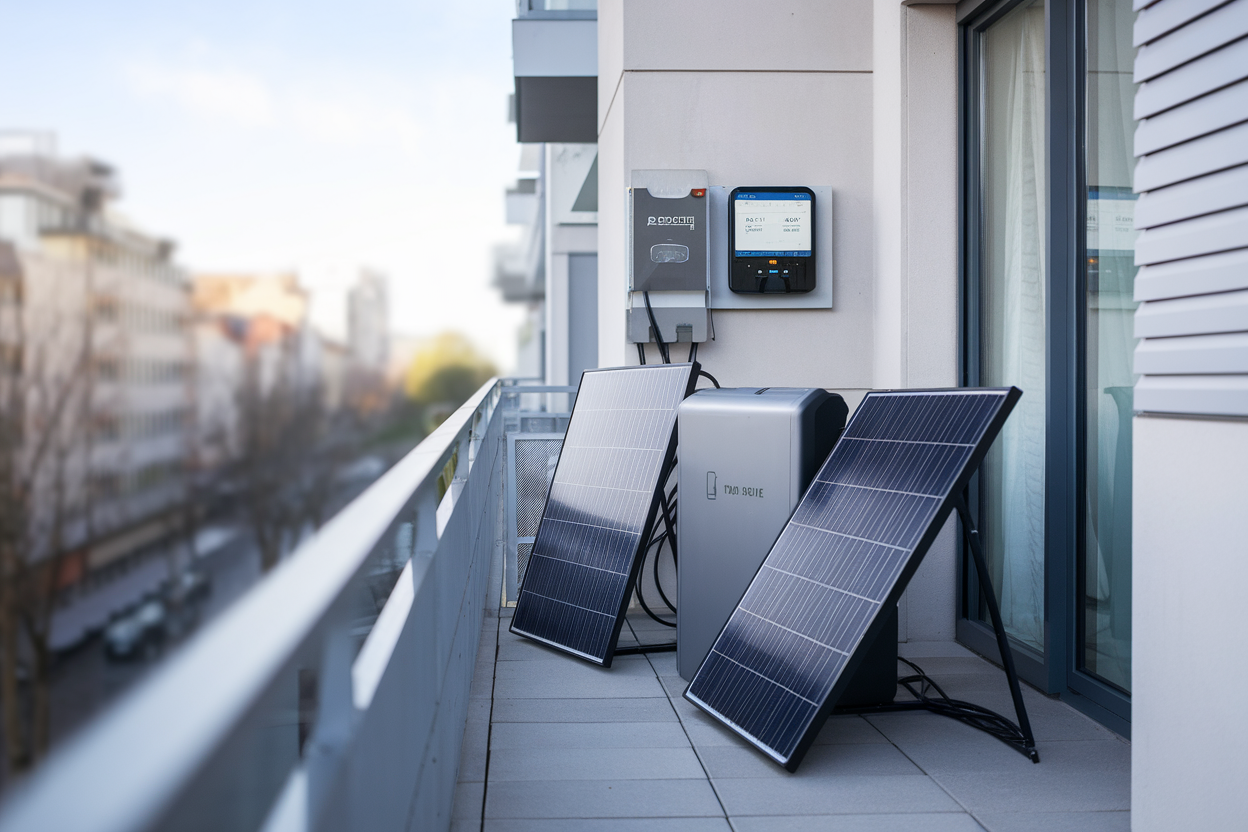
Powerness is dangling a familiar carrot for would-be solar DIYers: “complete” home solar bundles built around EcoFlow batteries, paired with JA Solar panels, and topped off with a smart meter to track what you’re making and using.
But the real hook isn’t the hardware. It’s the logistics. Powerness says you can skip delivery entirely by picking up your kit at one of eight locations in Germany—a not-so-subtle jab at the usual headaches of shipping big glass panels and heavy batteries.
The pitch is aimed squarely at Europe’s booming “balcony solar” crowd—people who want to generate power off a balcony railing or a small roof section, use it directly, and stash some in a battery so midday sunshine can cover evening demand.
Pickup at eight German sites: cheaper, faster—and not for everyone
Shipping solar gear is a pain. Panels are fragile. Batteries are heavy. And “last mile” delivery is where costs and damage claims go to breed.
Powerness is trying to turn that into a selling point: pick up your bundle yourself, avoid shipping fees, avoid waiting around for a freight truck, and (in theory) reduce the odds your panels arrive looking like they lost a bar fight.
There’s a catch, obviously. Pickup shifts the hassle onto the customer. You need to live close enough to one of those eight sites for it to make sense—and you need a vehicle that can safely haul awkward, bulky panels without cracking them on the way home.
Competitively, this is a classic move: remove a big cost line (delivery) so you can advertise a sharper “promo” price. Whether it’s actually a better deal depends on how far you’re driving and what your time is worth.
What’s in the bundles: EcoFlow storage, a smart meter, and 450W bifacial panels
Powerness describes these as ready-to-install mini power stations. The core components:
• EcoFlow battery storage
• JA Solar bifacial panels rated at 450 watts each
• A smart meter to monitor (and potentially optimize) power flows
The 450W panel spec is a lab rating, not a promise. Real-world output depends on orientation, shading, temperature, and how clean your setup is.
The “bifacial” angle means the panel can generate from light hitting the back side too—useful if you’ve got reflective surfaces and good clearance. Put it on a dark, shaded balcony and that extra backside production can shrink to a rounding error.
The smart meter is there to make the system feel modern and manageable: see production, see consumption, and decide when to lean on the battery. But meters vary. Some ecosystems let you automate behavior (limit export, prioritize self-consumption). Others mostly just show you charts.
Why spring is prime time for solar promos (and why sellers love it)
Spring sales aren’t random. Longer days mean more solar production, and buyers want systems up before the sun really starts paying rent.
There’s also a market shift behind the marketing. After the 2022 energy-price shock in Europe, plug-and-play solar took off. Now the demand is drifting from “cobble it together yourself” toward integrated kits: fewer compatibility headaches, more app-based monitoring, more storage.
And yes, pricing games are part of it. Solar hardware costs have swung around in recent years thanks to supply chain chaos and manufacturing adjustments. Promotions help clear inventory, grab market share, or juice a product push. “Exclusive bundles” and “limited-time” language are the usual urgency levers.
Before you buy: power ratings, grid rules, and whether the smart meter actually does anything
A bundle can be “complete” and still be wrong for your home.
First: panel wattage isn’t destiny. A 450W module won’t deliver 450W on your balcony just because the box says so. Shade, angle, and heat matter. Bifacial gains depend heavily on the environment.
Second: grid compatibility and local rules matter—especially for plug-in balcony systems. Limits on how much you can feed into the grid, required protections, permitted plugs, and registration requirements vary by country and can change. The seller can call it plug-and-play; you’re still on the hook for a safe, compliant install.
Third: the smart meter. Don’t assume it “optimizes” anything. Some setups can actively manage flows; others just measure. If you care about automation, you’ll want clarity on what talks to what: meter, inverter, app, battery.
Finally: pickup saves delivery fees but adds your own transport costs and risk. If you’re close to a pickup point, it could be a legit bargain. If you’re hours away, the math gets ugly fast.