

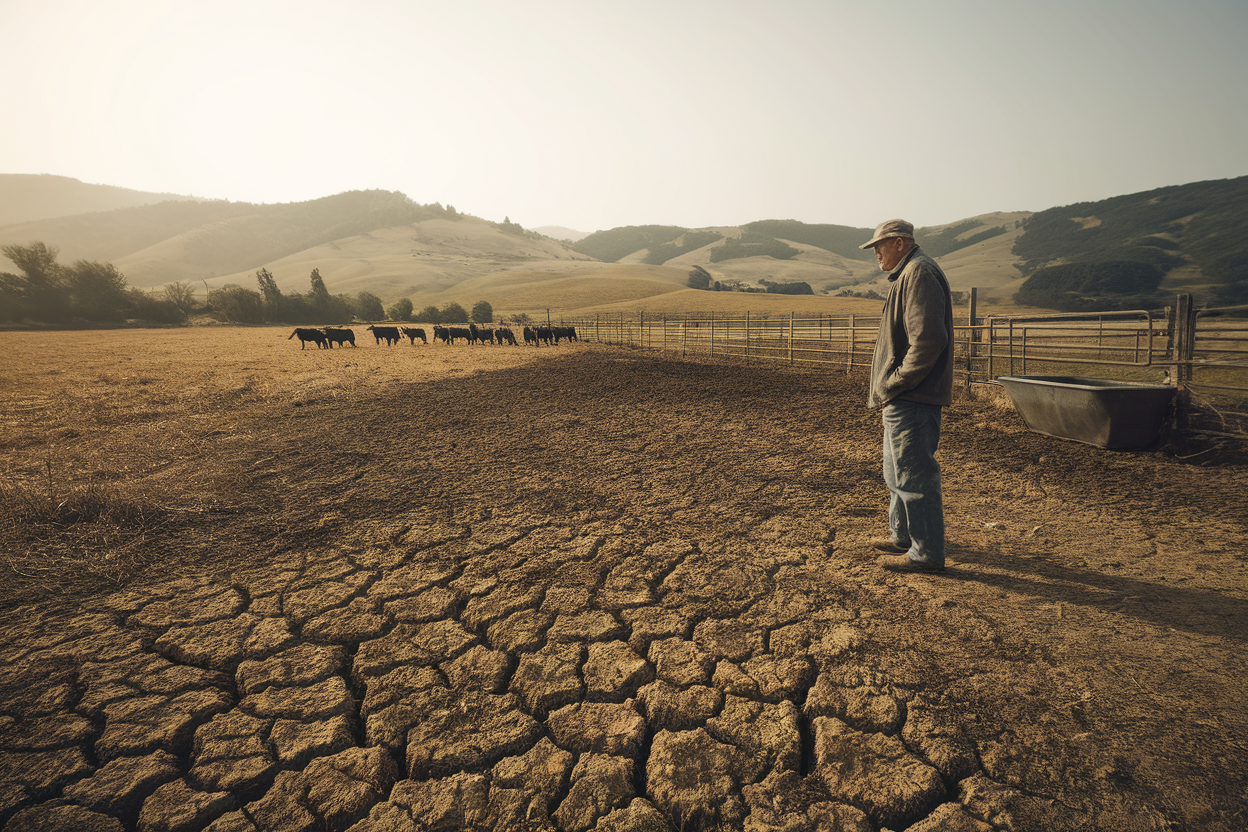
New Zealand sells itself as a green, rain-kissed paradise. But when the water shuts off, the place turns into a stress test for modern agriculture—fast.
And here’s the part the rest of the world should sit with: in a country where farming isn’t a side hustle but a pillar of the economy and national identity, drought doesn’t stay on the back forty. It rips through feed bills, herd sizes, rural jobs, food processing, and eventually politics. This isn’t “bad weather.” It’s a system shock.
Why New Zealand is the drought canary for global agriculture
New Zealand is an agriculture heavyweight. When seasons behave, the machine hums: pasture grows, livestock gains weight, exports move, rural towns stay afloat.
When seasons don’t behave—when drought gets severe—farmers are forced into ugly, immediate decisions. Grass doesn’t grow? You buy feed. Feed gets expensive or scarce? You cut herd numbers or move animals. Soil dries out? Crop yields wobble, and suddenly irrigation, water storage, and switching what you plant stop being “nice-to-haves” and start being survival gear.
The reason New Zealand matters isn’t because it has some magical solution to copy. It matters because if a drought can bend a farm-first nation like this, then “worse than expected” droughts can absolutely hammer other breadbaskets, too.
When droughts get worse than expected, the farm plan breaks
Farm risk management is built on patterns: typical seasons, typical dry spells, a bad year you can absorb if you’ve saved a little and you’re lucky.
But “worse than expected” is the moment those patterns stop paying out. The drought isn’t a rough patch—it’s a prolonged hit that blows past the usual playbook.
That’s when the real trap snaps shut. Keep the herd intact for next season and you might have to import feed at punishing prices. Cut the herd to stop the bleeding and you’ve just kneecapped future production. Either way, you’re making long-term decisions under short-term financial pressure. That’s how farms go from strained to broken.
Now multiply that by thousands of operations getting punched at the same time. Co-ops feel it. Truckers feel it. Veterinarians feel it. Suppliers feel it. Rural communities feel it in the gut.
Why drought hits harder when agriculture runs the place
In a farm-centered economy, drought doesn’t just reduce output—it messes with everything stacked on top of output.
First, there’s less product. Then quality slips, timelines get blown up, and contracts get harder to fulfill. Meanwhile, farm cash flow gets squeezed: more spending to keep animals fed or fields alive, sometimes with less revenue coming in.
You don’t need a spreadsheet to see the knock-on effects. A farm that delays an equipment purchase is a lost sale for a dealer. A scaled-back operation means fewer loads for haulers. A disrupted harvest puts pressure on food processors that need steady supply to keep plants running.
And yes, eventually it becomes political. Water access, who gets priority, what infrastructure gets funded, and how governments help farmers stop the bleeding—those fights get louder when drought stops being occasional and starts being a recurring feature.
What other farm countries should take from this
The New Zealand lesson travels well: if your country leans hard on agriculture, treat severe drought like a top-tier economic risk, not a seasonal inconvenience.
The key isn’t “hope for rain.” It’s organization—planning for longer dry stretches, securing water, changing practices, and building farms that don’t collapse because one variable (water, at the wrong time) goes sideways.
That can mean diversifying crops, rethinking livestock systems, managing soils to hold moisture better, or investing in storage. None of it is cheap. None of it is quick. And farmers can’t do it on vibes—they need financing and some confidence they won’t be bankrupted halfway through the transition.
New Zealand’s droughts are a blunt reminder: when a warming climate turns dry spells into endurance contests, it’s not just farms on trial. It’s the durability of entire countries built around them.