

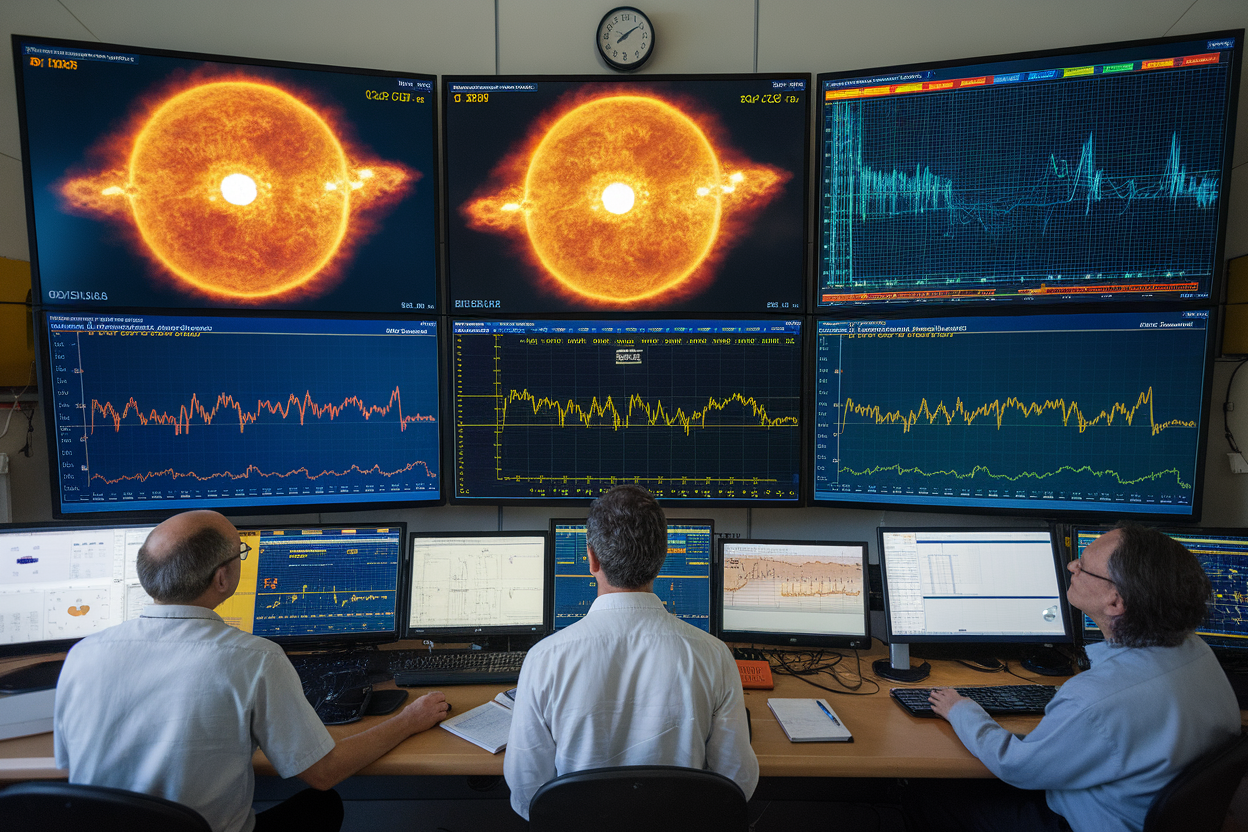
NASA solar watchers saw a radio burst coming off the Sun in August 2025 and did what they always do: logged it, watched it, moved on.
Except this one didn’t move on.
Hours turned into days. Days turned into the kind of long, grinding stretch that makes scientists stop calling something “routine” and start calling it “a problem.” When the signal finally died, the number attached to it landed with a thud: 19 days.
The old record for this kind of solar radio burst? Five days. This one didn’t just beat it—it lapped it.
A boring start, then the Sun refuses to follow the script
The story begins the way a lot of space science begins: with a blip on a screen that looks like a hundred other blips.
Solar radio bursts aren’t rare. NASA tracks them because the Sun is basically a giant, temperamental transmitter that occasionally decides to shout across the solar system. So when the burst first showed up in August 2025, nobody hit the panic button.
But the Sun has a way of turning “normal” into “hang on a second.” This burst didn’t fade out on schedule. The usual expectation—hours, maybe a few days—came and went. The signal stayed.
And once you’re on day six, you’re already in record territory. Once you’re into week two, you’re in “what the hell is powering this?” territory.
Nineteen days: a record that bulldozes the old five-day ceiling
19 days is the kind of number that doesn’t need fancy interpretation. You don’t need a PhD to understand “this lasted almost three weeks.”
NASA’s historical comparisons for these bursts had topped out at five days. That was the informal upper limit—the longest anyone could point to and say, “We’ve seen this before.”
Now that ceiling is gone. The August 2025 event resets the scale. From here on out, when researchers call a burst “long,” they’ve got to explain whether they mean “a few days” long or “nearly three weeks” long.
Why duration matters (and why this one is such a headache)
With solar radio bursts, duration isn’t trivia. It’s a clue.
A burst that lasts a few hours fits neatly into the idea of a solar episode: something flares up, dumps energy, and then the system settles down. A burst that hangs around for 19 days is a different animal. It suggests the Sun kept feeding the same kind of radio emission over and over—or never stopped in the first place.
The reporting here doesn’t get into the exact mechanism, and NASA hasn’t been pinned to a single neat explanation in the material provided. But the core scientific irritation is obvious: the Sun sustained something far longer than the playbook says it should.
A slow-motion surprise, measured one day at a time
The funny part is how this kind of discovery happens. There’s no single “Eureka!” moment.
The surprise accumulates. Day one looks normal. Day three still looks plausible. Day seven starts to feel wrong. Day nineteen turns into a marker that’ll sit in the data archives for years.
And that’s the real punchline: the Sun didn’t need to get louder or flashier to shock the experts. It just had to keep talking.