

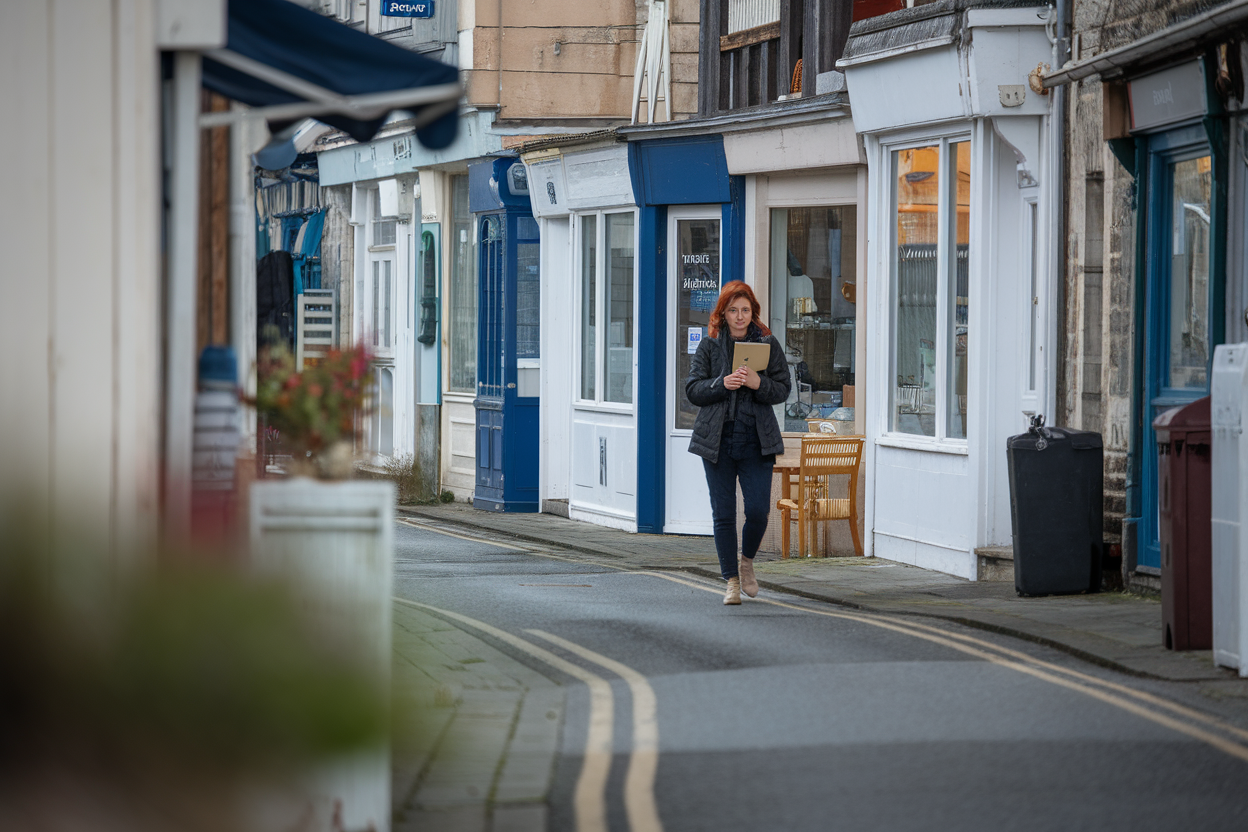
Pornic—a postcard-pretty coastal town on France’s Atlantic edge—has the usual official story: tourism brochures, ribbon cuttings, smiling mayors in staged photos. But the more interesting version is coming from a local woman with a blog and the patience to pay attention.
French daily Ouest-France recently spotlighted her site, which does something simple and oddly rare: it chronicles Pornic as it’s actually lived—street by street, season by season, change by change.
A blog that acts like a neighborhood beat—without the press badge
The premise is almost offensively basic: write about the place where you live, and keep doing it. According to Ouest-France, this Pornic resident posts observations that don’t try to “compete” with local news so much as fill in what straight reporting often misses: the small stuff, the mood shifts, the little civic tweaks that add up before anyone admits the town feels different.
Her posts sit in a useful in-between zone. Sometimes it’s pure field notes—what a corner looks like today, how a public space is being used, what’s changed since last month. Sometimes it’s memory: what disappeared, what got renovated, what got replaced by something shinier and less personal. And sometimes it’s a gentle alarm bell—when a development project or a new pattern of behavior starts nudging the town’s balance.
That’s the advantage of a blog over a press release or a one-off social post: it’s continuous. It’s allowed to be human. It can be messy and specific.
Why a personal town diary can matter beyond friends and neighbors
The fact that Ouest-France bothered to write about her tells you something: local storytelling isn’t locked inside traditional media anymore. Blogs—once dismissed as online diaries—have turned into accidental archives of daily life. They preserve details nobody’s paid to collect.
City halls and tourism offices tend to publish “calibrated” messaging: projects, events, accomplishments, the usual victory lap. A resident blogger can linger in the gray area—what’s being debated, what’s half-built, what people are grumbling about at the bakery, what feels off even if nobody has a statistic for it yet.
That posture can also translate the technical into plain language: how a neighborhood is evolving, how public space is getting reprogrammed, where the friction is between preservation and change. Sometimes that cools down overheated arguments by adding context. Other times it does the opposite—by giving visibility to a local irritation that had been floating around unspoken. Either way, it feeds the town’s ongoing conversation.
When “today’s post” becomes tomorrow’s memory
Write about a town long enough and you’re really writing about time. Ouest-France describes the blogger as sharing her view of Pornic; over the years, that view becomes a kind of shadow history—what people noticed, what they feared, what delighted them, what started to vanish.
That matters in places like coastal towns, where the same street can feel like three different worlds depending on the season: locals running errands, second-home owners drifting through, tourists treating it like a movie set. A blog pins down one perspective without pretending it’s the only one. And that’s exactly why it has documentary value: it says, “Here’s what I see,” not “Here’s what you’re supposed to see.”
Sure, it’s subjective. It selects and emphasizes. But that’s not a flaw—it’s the whole point. A meeting minutes document aims for completeness. A chronicle aims for meaning. And meaning often hides in small signals: a storefront changing hands, a habit fading out, an atmosphere shifting a few blocks over.
What these hyperlocal storytellers do to city politics (whether officials like it or not)
The rise of local blogs, newsletters, and town-focused accounts boils down to one blunt reality: information doesn’t just flow top-down anymore. As Ouest-France notes, this Pornic resident is part of a broader trend—regular people acting as sensors, witnesses, and sometimes translators for their communities.
That changes the ecosystem around municipal decisions. Development plans, public-space rules, and neighborhood transformations get discussed in places that aren’t controlled by official channels. It doesn’t replace watchdog reporting or public hearings. But it thickens the civic chatter—and it can drag “small” issues into daylight before they’re brushed off as nothing.
And compared with social media—built for speed, outrage, and forgetting—blogs still have one stubborn advantage: they keep receipts. They’re searchable. They’re chronological. You can scroll back and watch a town change in slow motion.
In the end, Pornic isn’t just a dot on a map or a brand for visitors. It’s routines, arguments, memories, and the daily texture of living somewhere. When a resident turns that into a running blog, she’s doing something quietly radical: taking the story of the town back from the people paid to polish it.