

Donald Trump says he’s been briefed on a “historic” cold wave and winter storm, and he wants you to know the federal government is on it. In a post on X, he name-checked FEMA, said the agency is “fully ready,” and told people to be careful.
That’s the standard presidential disaster script: show the chain of command, project competence, and plant the White House flag in the middle of the response.
But this storm isn’t just a weather story in Trump-world. It’s also a handy stage prop for a bigger political fight he’s itching to pick—energy, and who gets to call it “national security.”
FEMA gets the spotlight—and the White House wants credit up front
Trump’s message leaned hard on coordination with state and local officials. FEMA isn’t just an operational agency; it’s a political symbol. When presidents invoke it, they’re signaling: resources can be pre-positioned, logistics can be federalized, and money can start flowing when local capacity gets swamped.
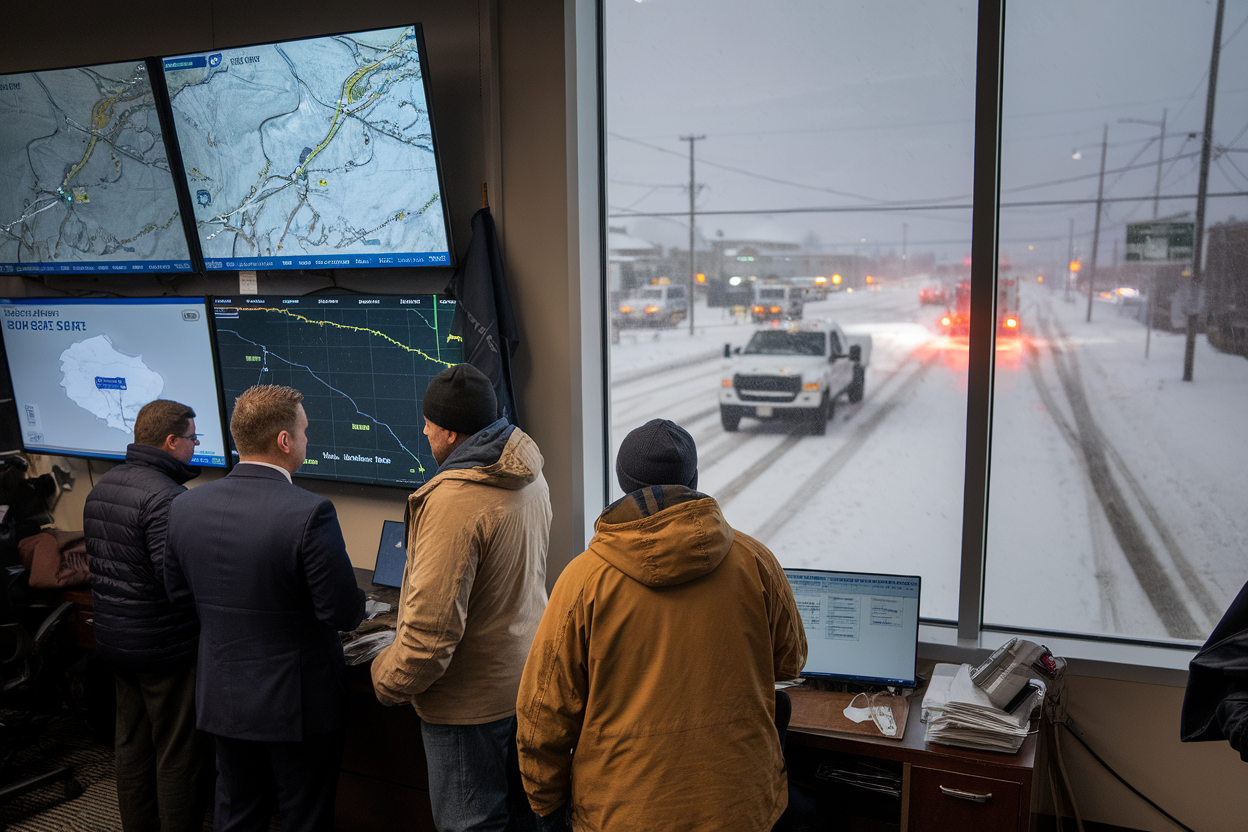
In real winter emergencies, the checklist is brutally practical: keep hospitals reachable, clear critical roads, protect vulnerable people, and deal with power outages that turn homes into refrigerators. That means emergency operations centers, mutual-aid agreements, and constant back-and-forth with utilities and fuel suppliers.
And yes, “stay safe and stay warm” is more than a Hallmark sign-off. Cold snaps reliably bring spikes in deaths and injuries—from exposure, from carbon monoxide poisoning when people misuse space heaters or generators, and from wrecks on iced-over roads. The line is public safety. It’s also narrative control: the president as protector-in-chief.
Trump dusts off a 1950 national security law to push more fuel and power
Here’s where the weather meets the agenda. Trump has signed a series of memos invoking a national security law from 1950 that gives presidents broad authority to steer private industry toward production deemed vital to the United States.
Those memos, as described, aim to let the Department of Energy tap funding set aside in a Republican budget law and point it toward boosting production of fuels and electricity.
The administration’s argument is familiar: industry can’t ramp up fast enough on its own because financing is tight, timelines are long, and the system is clogged—permits, infrastructure constraints, supply-chain bottlenecks. A cold wave, with demand spiking and grids getting stress-tested, is the perfect visual aid for that pitch.
White House spokesperson Taylor Rogers defended the approach with the kind of language Trump loves: “energy dominance” as a shield for the economy and national security. Translation: this isn’t being sold as a mere “lower bills” plan. It’s being sold like defense policy.
War-style powers, fossil-fuel goals
Trump is effectively reaching for wartime-style authorities to backstop fossil fuels. The memos would open the door to moving money under that legal framework and justify a more direct federal hand in energy-related industrial capacity.
Politically, it’s a twofer. First, it lets the administration say it’s protecting Americans from blackouts and fuel shortages when the weather turns nasty—an argument that lands with people staring at a dead furnace. Second, it reframes the climate critique. Instead of debating emissions, the White House shifts the fight to sovereignty, reliability, and “don’t let the lights go out.”
And extreme cold does expose the unglamorous truth: energy systems have weak points. Equipment fails. Demand surges. Supply gets pinched. In that moment, policies that favor more drilling, more fuel logistics, and more generation can be pitched as continuity-of-government measures—not ideology.
Meanwhile, Trump says the Earth is cooling—while federal data says the opposite
Trump’s “historic storm” framing sits next to his broader climate talk, which often veers into contrarian theater. At a Turning Point USA event, he claimed the Earth is cooling.
Federal data points the other way. The article cites information attributed to NOAA indicating a record-warm March and an especially hot 12-month stretch for the contiguous United States.
This is the American climate argument in miniature: a brutal cold weekend becomes a talking point to downplay warming trends, while climate-policy advocates respond—correctly—that weather swings don’t cancel out long-term climate direction.
What matters politically isn’t the temperature outside your window. It’s the priority list: lock down short-term energy supply and grid reliability, or push harder to reshape the energy system. Trump is betting that a cold snap makes his “national security” energy push feel less like a choice—and more like a necessity.