

Austria has decided it’s done playing traffic cop with a whistle and a shrug.
As of now—“ab sofort,” in the government’s blunt German—cities can use cameras to police who gets to drive into downtown areas. Not to “monitor.” To enforce. That’s a big line to cross, and Austria just crossed it with both feet.
The target is what Austrians call Zufahrt: access. The idea is simple even if the rules aren’t—downtown streets are increasingly carved up into permission slips: residents, delivery windows, buses, emergency vehicles, special exemptions, you name it. And when the rules get that fussy, cities either hire an army of enforcement officers or they automate.
Austria flips the switch: cameras can now enforce downtown access rules
This isn’t some pilot program stuck in committee. The legal framework changed immediately. Cameras can now be used to check whether a vehicle is allowed to pass a specific entry point into an Innenstadt—the city center.
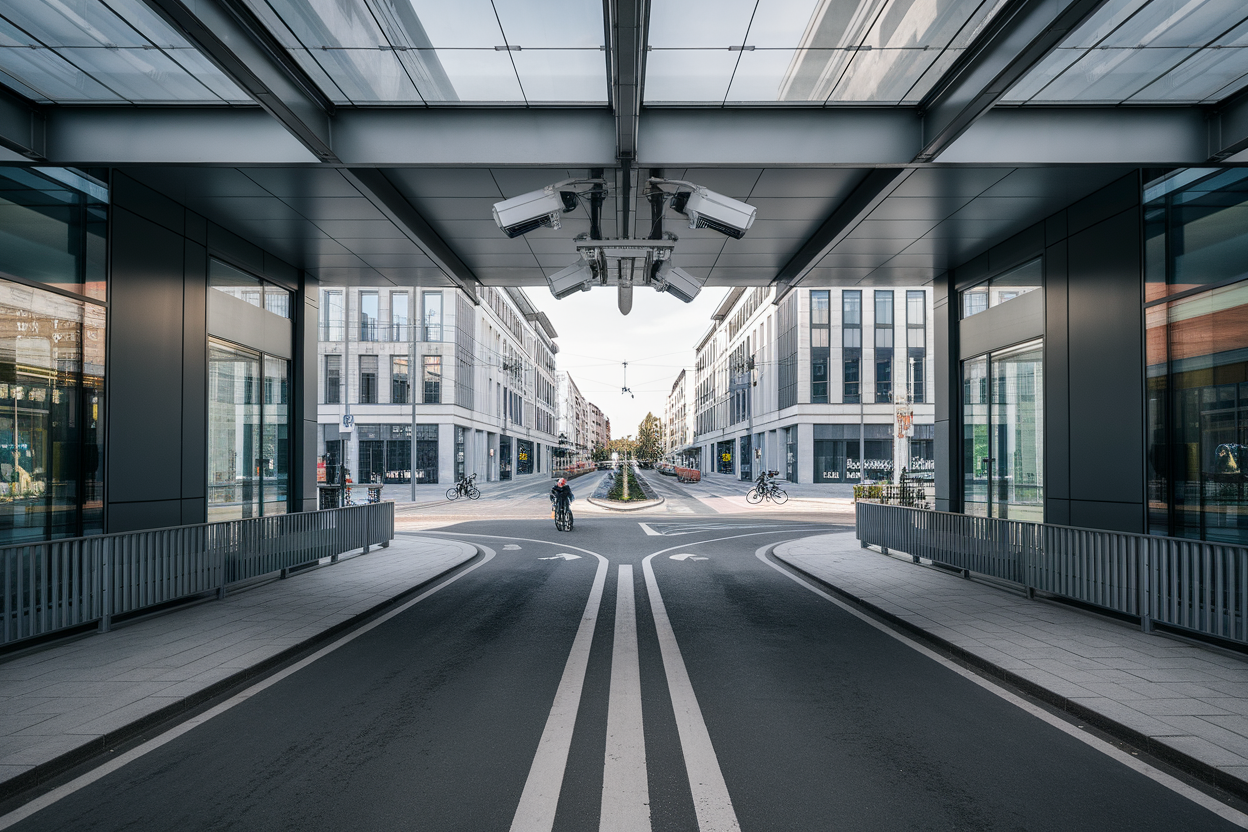
That matters because it turns the camera from a passive witness into an active gatekeeper. The system isn’t just recording traffic for later analysis; it’s meant to connect what the lens sees—license plates, vehicle type, time of day—to a live set of municipal rules and exceptions.
In plain English: if your car doesn’t belong there at that moment, the city can know it, log it, and act on it—far more consistently than a human officer posted on a corner in the rain.
Vienna’s homegrown muscle: Kapsch TrafficCom builds the systems locally
The Austrian outlet futurezone reports it visited Kapsch TrafficCom in Vienna, a company that builds these access-control systems.
That detail isn’t trivia. Austria isn’t just authorizing a concept; it’s sitting on local industrial capacity to crank these systems out, integrate them with city infrastructure, and keep them running. That tends to speed things up—especially when the capital city is both the showroom and the factory floor.
And these setups aren’t a single gadget bolted to a pole. They’re systems: cameras, sensors, roadside infrastructure, software, databases of permits and exemptions, and the bureaucratic plumbing that turns “allowed” and “not allowed” into something enforceable.
How “Zufahrtskontrolle” works: the camera as a bouncer, not a bystander
Zufahrtskontrolle basically means “control who enters.” The camera becomes a sorting machine: authorized vehicles go through; everyone else gets flagged.
For that to work, the tech has to marry the physical world (a street entrance) with the administrative one (permits, local rules, exceptions). Downtown restrictions aren’t always blanket bans. They can hinge on categories—residents vs. commuters—time windows for deliveries, service vehicles, logistics access, and special permissions.
The appeal for cities is obvious: instead of relying on sporadic human enforcement, you get continuous checking at fixed points. The tradeoff is just as obvious: the whole thing is only as fair as the rules are clear—and only as trustworthy as the system’s integration and oversight.
Efficiency vs. creepiness: the politics hiding inside the hardware
Let’s not pretend this is politically neutral. Giving cameras the power to enforce downtown entry rules touches traffic flow, public space, and the relationship between residents and the state.
Supporters will sell it as smoother streets and cleaner enforcement—less chaos, fewer rule-breakers treating downtown like their personal shortcut. Critics will see another step toward normalizing everyday surveillance, with enforcement that feels constant and automatic.
futurezone’s visit to Kapsch underlines the real point: this isn’t a dreamy “smart city” slide deck. It’s equipment being built, installed, and operated. Once it’s real, cities have to answer the questions they’d rather dodge: Where exactly does “downtown” begin? Which streets become checkpoints? How do drivers learn the rules before they get nailed for breaking them?
The public reaction usually hinges on one thing: whether people experience this as sensible access management—or as a faceless ticket machine. Austria’s “effective immediately” green light now puts the burden on cities to prove this is governance, not just automated punishment with a glossy tech wrapper.