

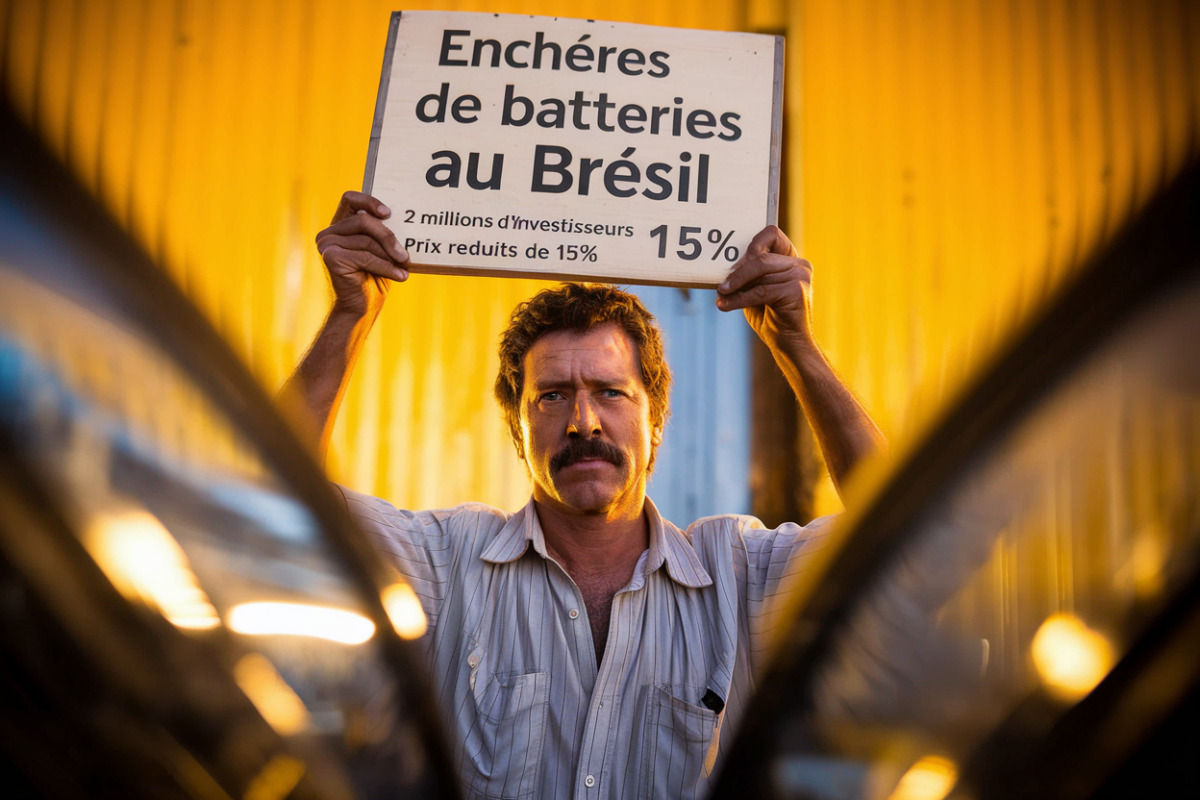
Brazil just held a battery auction that pulled in roughly 2 million investors—and the kicker is the winning prices reportedly came in about 15% lower than expected. In the renewable-energy world, that’s the kind of number that makes executives spit out their coffee.
This wasn’t some niche procurement exercise. It was a loud signal that energy storage—big, grid-scale batteries—is now the main event. Solar and wind keep getting built, but they don’t show up on command. Batteries do. And whoever controls storage controls the terms of the clean-power boom.
Brazil is turning itself into a storage testbed
Brazil has a natural advantage most countries would kill for: massive hydropower, a huge grid, and geography that makes it a serious player in the Americas. Hydropower already acts like a kind of “battery” when reservoirs can be managed—but drought risk and demand growth have pushed the country to look for more flexible, fast-response backup.
So a battery-only auction isn’t just bureaucracy. It’s Brazil’s government basically saying: we’re done treating storage like a science project. We want it on the grid, priced, contracted, and built.
Two million investors chasing batteries tells you where the money thinks this is going
That investor pile-on matters. It’s a sign storage has graduated from “cool tech” to “critical infrastructure.” A decade ago, the prestige projects were wind farms and solar parks. Now the bragging rights—and the leverage—are shifting to whoever can firm up power when the sun quits and the wind takes the night off.
And this isn’t a Brazil-only phenomenon. The U.S. has been ramping up storage procurement for years, especially in places like California and Texas where renewables are booming and grid stress is a daily headline. Europe’s doing the same, trying to keep grids stable while it electrifies everything that moves.
The surprise here is the price move: with that much attention, you’d expect bids to get frothy. Instead, prices fell about 15%. That suggests either developers are getting more efficient—or they’re getting aggressive because they think the next wave of contracts will be even bigger.
What a successful auction could do for Brazil’s clean-power ambitions
If Brazil can scale storage alongside its hydro, wind, and solar, it can stabilize its grid and potentially sell more clean electricity across the region. Think of it as turning a renewables-rich country into a reliable power supplier, not just a place with good weather and big rivers.
For investors, the bet isn’t only about near-term returns. It’s about locking down assets in a market where demand for storage is likely to stay high for a long time—because electrification doesn’t pause for recessions, and grids don’t get less complicated.
But there’s a catch: battery projects live and die on policy details—contract terms, interconnection rules, and how regulators value fast-response power. If Brazil nails the rules, it becomes a magnet for capital. If it botches them, today’s investor stampede turns into tomorrow’s cautionary tale.