

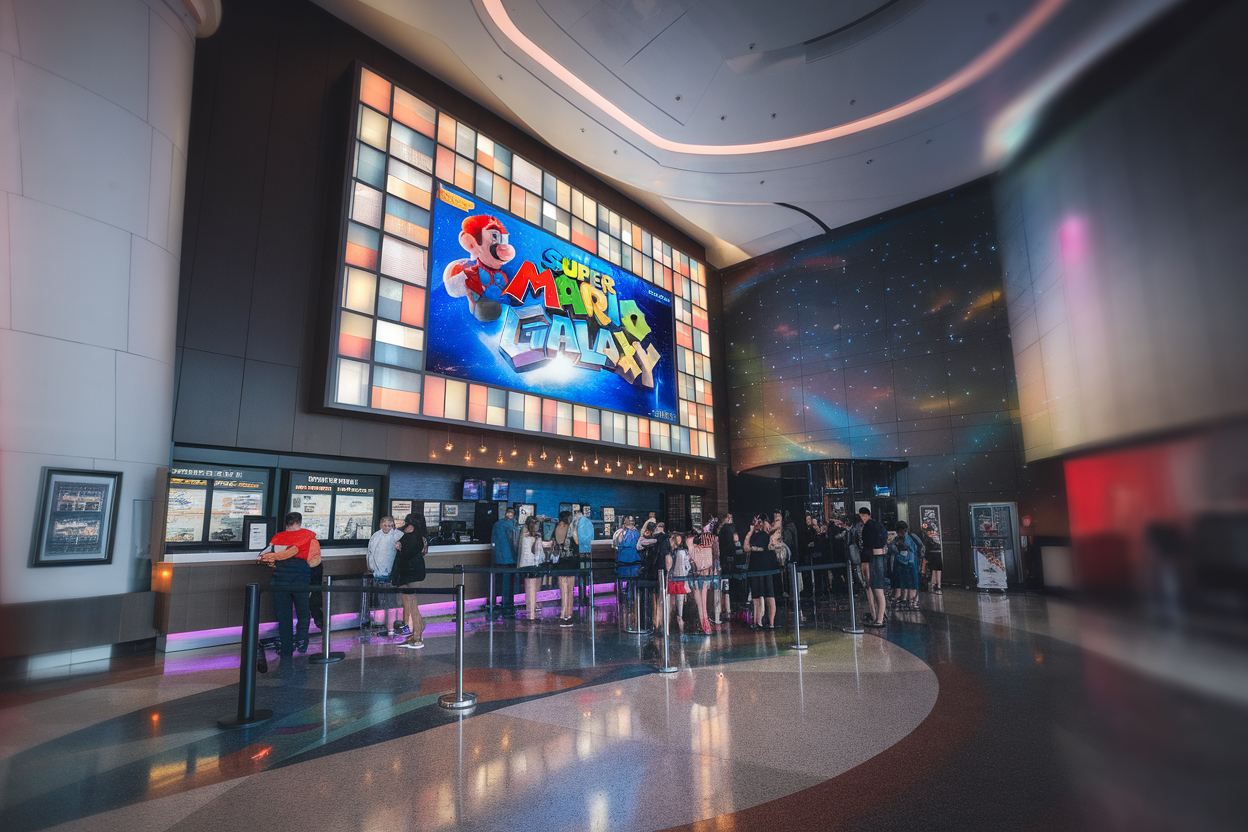
Hollywood saw $1.3 billion roll in for The Super Mario Bros. Movie and did what Hollywood always does: it went back to the ATM.
The next one—titled Super Mario Galaxy: La Película—is slated to hit theaters on April 1, three years after the first film turned a famously hard-to-adapt video game brand into one of the biggest animated box-office hauls in recent memory.
And no, we don’t have the juicy stuff yet. No plot. No cast updates. No runtime. Just a date, a title, and that big, loud reminder of how much money the first one made—information reported by the Spanish film site SensaCine.
$1.3 billion changes everything—and mostly not in a fun way
Crossing a billion dollars doesn’t just buy you a sequel. It buys you a whole new level of corporate anxiety.
At $1.3B worldwide, Mario stops being “a hit” and becomes a financial instrument—something studios build budgets, release calendars, and merchandising empires around. That kind of success doesn’t inspire creative risk. It inspires meetings. Lots of them.
The first movie worked because it wasn’t only for gamers. It pulled in families, casual fans, and people who couldn’t tell a Goomba from a gumbo but knew the mustache. That broad audience is a blessing—until you’re trying to make a follow-up that feels fresh without freaking out the folks who just want bright colors, familiar music cues, and a clean 90 minutes of kid-friendly chaos.
And that $1.3B number? It’s also a flare gun for the rest of the industry. When one video game adaptation prints money, every studio suddenly “discovers” video games. We’ve seen this movie before—superheroes, YA dystopias, shared universes. The gold rush always ends with a few faceplants.
April 1 is a family-movie power move, not a prank
Dropping an animated tentpole on April 1 is a pretty clear tell: this thing is aiming for the family crowd and a long run, not a quick opening-weekend sugar high.
Animated hits don’t live or die on Friday night. They rack up receipts over weeks—weekends, school breaks, repeat viewings, the whole sticky-floored multiplex routine. A firm date also lets theaters plan screens and lets the marketing machine line up the usual avalanche: trailers, fast-food tie-ins, toys, and whatever else can be stamped with Mario’s face.
Three years between films is also a sweet spot. It’s short enough that the first movie still feels recent, but long enough for the studios to claim they “took their time.” Animation is slow and expensive, sure—but it’s also a business that hates leaving money on the table.
SensaCine’s “just the basics” announcement is how big franchises talk now
SensaCine’s report is basically the modern franchise playbook: confirm the sequel exists, lock in a date, and let the internet do the rest.
When the brand is this famous, studios don’t need to sell you on the concept. They need to control the drip. A little information, then silence. Then a poster. Then a teaser. Then a trailer that “breaks the internet,” followed by 400 reaction videos of adults crying over a sound effect.
The title—Super Mario Galaxy: La Película—is doing some work, too. “Galaxy” is a loaded word for anyone who played Nintendo’s Super Mario Galaxy games: space-themed worlds, bigger set pieces, more visual variety. Even without confirmed story details, the branding is basically whispering, “We’re going bigger.”
Video game movies finally found the money—now they have to prove they’ve got stamina
Mario’s success helped cement what used to be a punchline: video game adaptations can be reliable box-office engines, not just cursed fan service.
But here’s the catch—once you’ve already proven the concept, the sequel doesn’t get credit for showing up. It has to deliver. Audiences are brutal about follow-ups that feel like reheated leftovers, especially in animation where the easiest sin is repetition: same jokes, same chase scenes, same “remember this?” winks.
Studios love familiar IP because it lowers risk. The audience loves familiar IP right up until it starts feeling lazy. And with a release date now planted on the calendar, the countdown has started for the only metric that really talks in Hollywood: how close this one gets to that $1.3B benchmark.
Source: SensaCine report citing the theatrical release date and the first film’s $1.3 billion worldwide box office.
FAQ
When does Super Mario Galaxy: La Película hit theaters?
April 1, according to SensaCine.
How much did the first Super Mario Bros. movie make?
SensaCine cites $1.3 billion worldwide.
Why is the sequel under such a microscope?
Because once you cash a $1.3B check, everyone expects you to do it again—only bigger, cleaner, and with fewer excuses.