

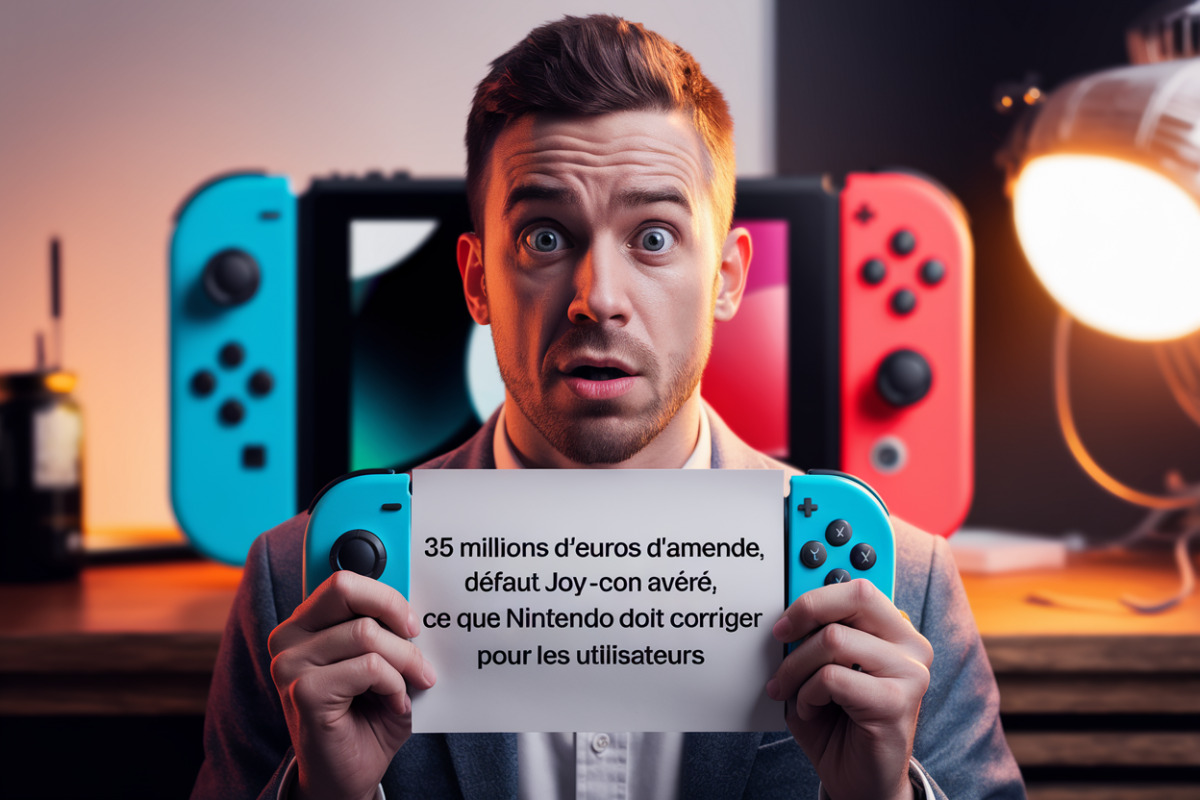
Nintendo just got slapped in France for a problem Switch owners have been yelling about since 2017: Joy-Cons that start “drifting” like a busted shopping cart wheel.
The bill: €35 million, or roughly $38 million. And no, this isn’t about a rare glitch. It’s about a chronic design flaw that can make games borderline unplayable when the joystick starts registering phantom movement—your character walks off a cliff, your camera spins like it’s possessed, and you’re sitting there with your thumb in the air.
A known defect Nintendo let fester
“Joy-Con drift” isn’t some obscure forum myth. It’s been one of the Switch’s defining annoyances since the console launched. Players have described the same pattern for years: the stick loses precision, then starts pulling in one direction, and eventually turns normal gameplay into a fight against your own controller.
For plenty of people, it didn’t take years. It took months.
Nintendo wasn’t clueless. The company offered repairs—free if you were under warranty—but that’s a bandage, not a fix. If your warranty clock ran out, the practical solution was often the one Nintendo’s business model quietly counts on: buy another set at full price.
France sends a message the gaming industry hates
The $38 million sting isn’t just about the money. It’s France putting a big, bright marker down: if you sell hardware with a defect you already know about, you don’t get to shrug for years and keep shipping the same stuff.
And it lands at a moment when consumers—especially in Europe—are getting louder about repairability and product lifespan. People are tired of being told to treat pricey electronics like disposable cups. When the defect directly messes with the core function of the product (playing the game), the “that’s just how it is” excuse doesn’t fly.
Bad timing for Nintendo’s next console era
This is also awkward timing for Nintendo. The Switch is old by console standards—launched in 2017—and Nintendo is openly gearing up for what comes next. A fine like this is basically a warning label for the next generation: don’t ship new controllers with the same weak points and hope customer service can mop it up later.
There’s also the reputational tab. Millions of players have spent real money replacing controllers that shouldn’t have failed in the first place. For some, this penalty will feel like vindication. For others, it’ll feel like France showed up to the party after the snacks were gone and the bill was already paid.
Either way, Nintendo doesn’t get to pretend this chapter never happened.
Sources
Reporting and details based on French coverage including Clubic, 20 Minutes, BFMTV, Libération, and discussion threads compiling the case.