

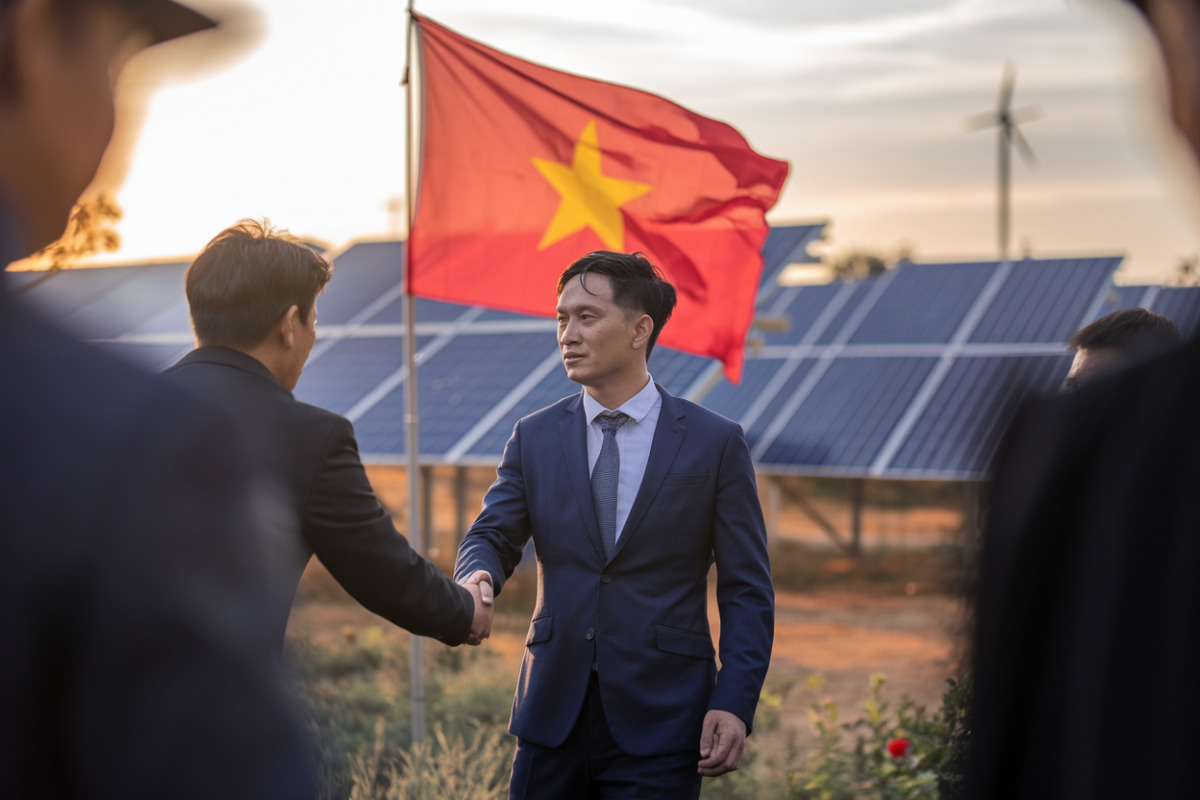
Quang Ninh used to be Vietnam’s coal poster child: mines, soot, and the kind of old-economy muscle memory that doesn’t quit. Now the coastal province up in the country’s north is trying to reinvent itself as a renewables magnet—fast.
The headline number: roughly $2.5 billion in investment tied to a wave of clean-energy activity, including 15 solar projects getting pushed off the drawing board. For a place built on digging black rock out of the ground, that’s a hard pivot—and a pretty loud signal about where Vietnam thinks the money (and political oxygen) is headed.
From coal pits to clean power: a deliberate identity change
This isn’t a feel-good “green” makeover. It’s economic triage with a climate wrapper.
Quang Ninh’s coal sector has been losing steam, and local officials know what happens to one-industry regions when the main act starts shrinking. So they’re chasing the next payroll: solar now, and especially offshore wind later.
Geography helps. Quang Ninh has a long coastline—prime real estate for turbines planted out at sea—and enough sun to justify utility-scale solar. It also sits in a strategically useful corner of northern Vietnam, close to major demand centers and regional connections. Developers like projects that can actually plug into something.
The pitch: foreign cash, domestic players, and jobs that don’t come with lung damage
The province is courting both international investors and Vietnam’s own energy companies. The goal is blunt: replace declining coal revenue, build a new tax base, and create jobs that don’t depend on the next seam of coal.
Zoom out and Quang Ninh is playing a role in a bigger national ambition: Vietnam wants to become a serious regional hub for renewable electricity in Southeast Asia. That’s not charity—it’s industrial strategy. Cheap, scalable power is how you keep factories humming and foreign manufacturers interested.
The annoying part: grids, financing, and the human cost of “transition”
Here’s the catch: you can approve projects all day long, but if the grid can’t handle the power, you’re just collecting press releases.
Quang Ninh still has to deal with the unglamorous bottlenecks—transmission upgrades, big-ticket project financing, and regulations that satisfy international lenders who don’t like surprises. And then there’s the hardest piece: what happens to workers whose skills were built in mines, not in maintaining solar farms or servicing offshore turbines.
If the province pulls this off, it becomes a template for other Vietnamese regions staring down the same problem: how to decarbonize without gutting the local economy. If it doesn’t, it’ll be another cautionary tale about how “green growth” can stall out on the power line.
Sources
Le Courrier du Vietnam; Nhan Dan (French edition); VietnamPlus; VietnamNet (English): reporting on Quang Ninh’s investment push, offshore wind approvals, and early wind project launches.