

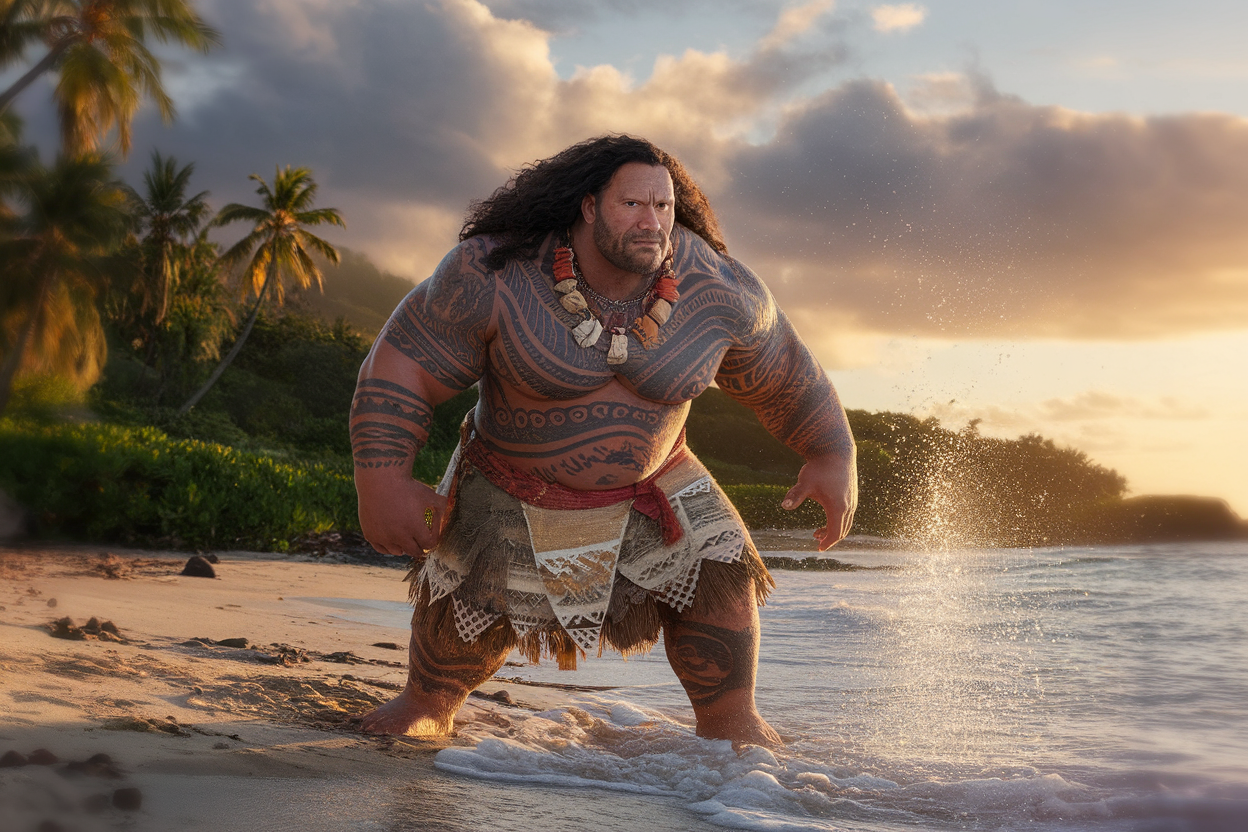
Disney dropped a new trailer Monday for its live-action Moana, and it delivers the shot the studio knew would light up the internet: Dwayne “The Rock” Johnson, back in the role of the tattooed demigod Maui—this time in the flesh, not just the voice booth.
It’s a very Disney move: take a globally recognized brand, bolt it to a globally recognized star, and dare families not to show up. The trailer leans hard into “epic”—big natural scenery, plenty of digital polish, and a more grounded look for characters that were designed to pop in animation.
And yes, this is part of Disney’s decade-long habit of turning its animated hits into live-action do-overs. The trailer isn’t just a preview anymore; it’s a stress test. Studios watch the reaction in real time—enthusiasm, nitpicks, culture-war flare-ups—and they adjust the marketing machine months (or years) before release.
The Rock as Maui: continuity, comfort, and a calculated flex
Putting Maui at the center of the teaser isn’t subtle. In the 2016 animated film, Maui became a cultural calling card—funny, loud, musically memorable, and basically engineered to be quoted by kids and cosplayed by adults.
Johnson returning gives Disney something it rarely gets in these remakes: continuity that feels real. He already voiced Maui in the original, so the studio can sell this as an extension of what audiences loved, not a replacement that invites instant “the old one was better” comparisons.
But live-action Maui comes with a built-in problem: the character’s design was made for exaggeration—his proportions, his tattoos, the way animation lets him be larger than life without looking ridiculous. In live-action, “larger than life” can turn into “expensive Halloween costume” in about half a second.
The trailer hints at a hybrid approach—costume and makeup doing some of the work, visual effects doing the rest—trying to keep Maui mythic without making him look like a CGI experiment. That’s the line Disney has to walk, because online audiences can smell a compromise from a single frame.
There’s also the character stuff. Maui isn’t just comic relief with biceps; he’s pride, guilt, and redemption wrapped in a demigod ego. The teaser keeps it light and punchy, but the movie will need Johnson to sell the moral weight, not just the swagger.
Disney’s live-action machine runs on familiar titles—and big box office math
The business logic here is blunt: known titles reduce risk. A recognizable name sells faster, travels better internationally, and feeds the whole Disney ecosystem—streaming, music, merch, theme parks, the works.
And the numbers explain why Disney keeps doing this even when critics roll their eyes. According to Box Office Mojo, the animated Moana (2016) made more than $680 million worldwide. That’s not Avatar money, but it’s plenty big enough to justify a live-action swing—especially when Disney’s other remakes have printed cash.
Again per Box Office Mojo: The Lion King (2019) cleared $1.6 billion globally, and Aladdin (2019) crossed $1 billion. Those are the kinds of receipts that turn “creative debate” into “greenlight the next one.”
Moana also has a modern advantage: it’s become a streaming staple. Disney doesn’t always hand out detailed viewing stats, but the company has repeatedly touted how its family franchises perform on Disney+. Translation: this isn’t just about opening weekend. It’s about keeping the brand loud everywhere, all the time.
The real risk isn’t the budget—it’s remake fatigue
Disney’s problem isn’t whether it can make a live-action Moana. Of course it can. The problem is saturation. After years of remakes, audiences have gotten sharper—and less forgiving—about the feeling that the studio is recycling instead of inventing.
So Disney has to thread a needle: make it faithful enough that fans don’t revolt, but different enough that it doesn’t feel like a shot-for-shot museum exhibit. This trailer’s answer is scale and realism—bigger landscapes, heavier “real world” texture, less cartoon elasticity.
That approach can work. It can also drain the charm if the movie forgets that the original’s magic came from stylization and rhythm, not just pretty scenery.
Why Disney wants Johnson: he’s a walking global marketing campaign
Johnson isn’t just casting. He’s distribution. He’s a worldwide billboard with a social media megaphone, and Disney knows he can keep a family movie in the conversation without the studio buying every inch of ad space on Earth.
Maui also fits Johnson’s public persona like a glove: strength, showmanship, and self-aware humor. The trailer plays that up, signaling they’re not sanding down Maui into a safer, quieter sidekick. They’re betting the character’s big energy still works when it’s attached to a real human body.
But that’s also the artistic gamble. In animation, Maui could be borderline caricature and still feel mythic. In live-action, go too natural and the myth deflates; go too broad and it turns into parody. The trailer smartly avoids long scenes that would invite immediate judgment—every quick cut is a promise, and promises are dangerous things.
Culture, representation, and the pressure on a live-action “Moana” in 2026
Moana isn’t just another princess property. Its popularity is tied to a Pacific Islander-inspired world—filtered through Disney, sure, but still rooted in specific cultural imagery and mythology. Live-action puts that under a hotter lamp.
The trailer doesn’t (and can’t) settle debates about representation, authenticity, or cultural consultation. But the scrutiny is baked in now. Viewers will be watching who’s cast, who’s advising, what languages are used, how costumes and bodies are filmed, and whether the movie feels respectful—or like a glossy postcard version of someone else’s heritage.
Music is another minefield. The 2016 songs became household staples. A live-action remake has to decide what to keep, what to rearrange, what to re-record, and what to tweak. Stay too close and people call it a copy. Change too much and you break the emotional attachment that made the original a repeat-watch obsession.
And there’s a newer, quieter question Disney is trying to answer with this whole project: can a franchise that blew up on streaming convert into movie-theater tickets? Moana is only a 2016 release—nostalgia is there, but it’s not the same multi-decade “I grew up on this” force that powered the older remakes.
By putting Maui—and Johnson—at the center of the trailer, Disney is basically planting a flag: this is supposed to be an event, not just content. Whether audiences buy that pitch will depend on one thing the trailer can’t fully prove yet: that this live-action version earns its existence.