

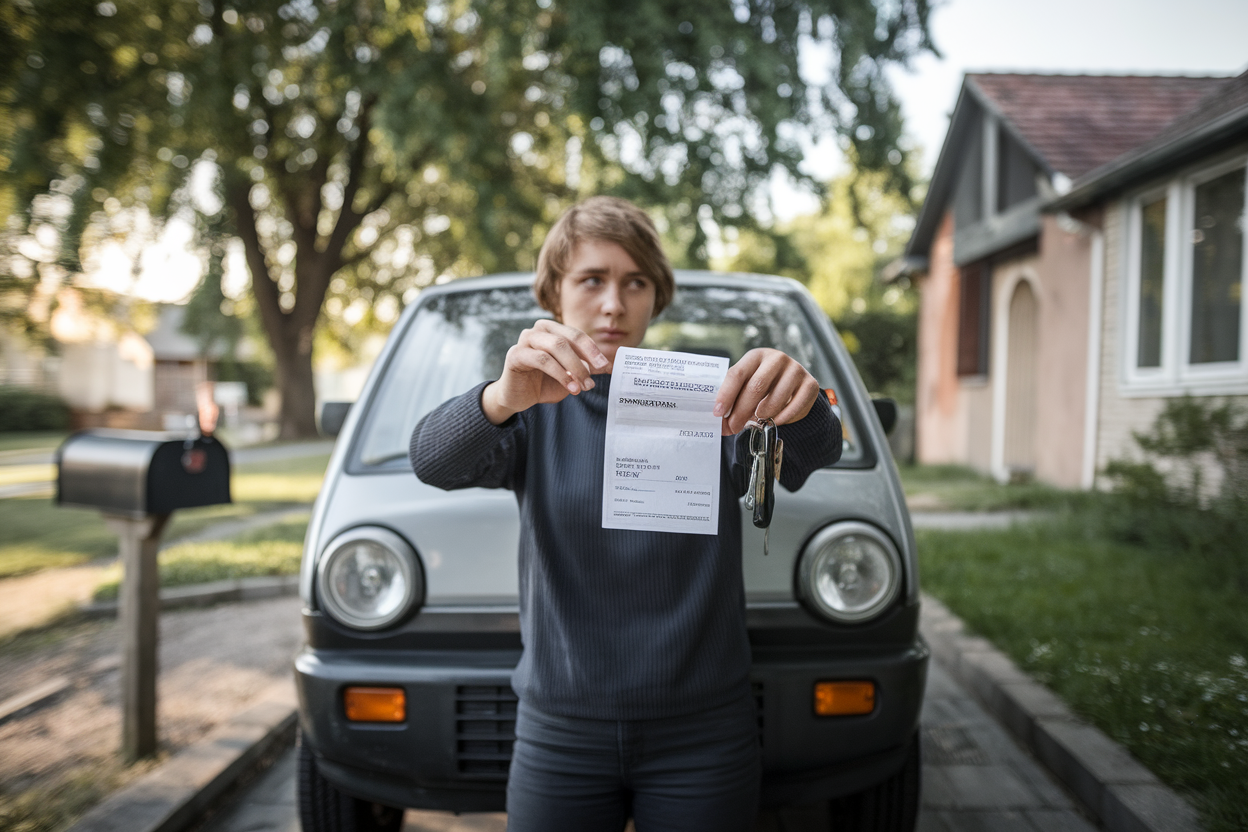
You make that last car payment and feel like you just won a small, boring lottery. Five years of auto-drafts, done. No more monthly hit. Freedom.
And then—quietly—you start spending it.
The last payment doesn’t make you richer. It removes the guardrail.
A car loan forces discipline because the bank doesn’t care about your “unexpected expenses.” The money leaves your account every month, period. When the loan ends, your budget doesn’t magically improve—it changes shape. That old payment turns into “available” money, which is another way of saying: money you’ll negotiate with yourself about.
Behavioral economists have a name for this kind of thing: when an external constraint disappears, you replace it with internal decision-making. And internal decision-making is exhausting. So what happens? The freed-up cash gets absorbed by a thousand little leaks—streaming subscriptions, dinners out, a nicer grocery run, random Amazon boxes, “we deserve it” weekends.
The other trap is the reward mindset. After years of being good, treating yourself makes sense. But if you don’t put boundaries around it, that “treat” becomes your new baseline. The old payment stops building anything and starts funding a lifestyle. No asset. No cushion. Just vibes.
And here’s the kicker: right when the loan ends, the car often starts getting expensive in a different way. Tires. Brakes. Battery. Surprise repairs. The debt disappears, but the car bill doesn’t—it just changes costumes. Smart households take part of that old payment and build a dedicated maintenance fund.
Why paying something off can feel weirdly like retirement
This isn’t just about cars. Former UFC champ Henry Cejudo once talked about how hard it is to stop when your life has been structured by a routine for years—training, schedule, purpose—and then suddenly you’re home and the question is: now what?
That’s the same psychological hangover you get after the final loan payment. While you’re paying, the goal is simple: finish the thing. Your brain treats it like a marked trail. When it’s over, you need a new target—and a plan to match. That transition period is where people wobble.
In money terms, “wobble” usually means filling the empty space with the easiest default setting: immediate consumption. Discipline takes a project. And the real danger isn’t that you stop paying—it’s that you accidentally recreate the same monthly burden with something else, without ever deciding to.
The payoff moment feels like an event. The weeks after are just… Tuesdays. Habits are built on Tuesdays. Without an automatic rule, that old payment gets chopped into fragments. Fragmented money disappears.
Student loans show the same pattern: the grace period, then reality
You can see the same behavioral flip with student debt. Federal student loans in the U.S. typically come with a six-month grace period after graduation before the first payment is due, according to Nancy Nierman. That breathing room helps—but it also proves the point: the start (or end) of a payment changes behavior more than your actual resources do.
When the grace period ends, the pain isn’t only the dollar amount. It’s the lifestyle adjustment—first job, moving costs, insurance, transportation, food. The debt goes from abstract to automatic withdrawal. The reverse happens when a debt ends: the withdrawal vanishes and people treat that disappearance like a permanent raise. It isn’t. It’s just money that now needs an assignment.
Betsy Mayotte, president of The Institute of Student Loan Advisors, has urged borrowers to explore repayment options early—before the bills hit. Same lesson for a car loan: plan the “after” before the last payment clears. Don’t let the vacuum form.
And with student-loan rules still shifting, uncertainty pushes people toward short-term choices. Ironically, the end of a car loan is one of the cleanest moments to make a long-term move—because nothing hurts yet.
Three smart places to send that freed-up payment
Once the loan is gone, you’ve basically got three good uses for that old monthly number. They can overlap, but they have a natural order.
1) Safety first. A lot of households aren’t broke—they’re cushion-less. Building cash reserves reduces your dependence on overdrafts and credit cards, which are basically financial bear traps with nice branding.
2) Pay your “next car payment” to yourself. Cars depreciate, but the need for transportation always comes back. If you keep “making the payment” into a savings account, you can fund the next vehicle with a serious down payment—or skip the loan entirely. Same routine, different winner.
3) Attack other debt. For plenty of families, the car loan is just one layer: personal loans, credit cards, “buy now pay later,” maybe a home improvement note. Redirecting that freed-up payment to the highest-interest or riskiest debt changes your whole trajectory, even if it doesn’t feel dramatic day-to-day.
The key across all three: automate it. If the money sits in checking, your brain labels it “spendable.” Move it out on the same schedule as the old auto-draft. Recreate the constraint—without the debt.
Debt hides the real price—cars and college both play that game
There’s a bigger theme here: debt messes with how we perceive cost. People tolerate huge prices as long as the monthly payment “works.” Some critics make the same argument about universities: schools charge what students will accept because the debt burden lands on the borrower, not the institution.
Auto buying runs on the same psychology. Dealers don’t sell you a $38,000 car; they sell you “only $499 a month.” When the loan ends, you get a double hit: pride that you finished, and the dawning realization that you were married to that payment for a long time.
Students often don’t grasp the full weight of their loans when they sign. Neither do car buyers, especially when the decision happens in the glow of a new purchase, under pressure, in a showroom designed to keep you thinking monthly instead of total cost.
The post-loan period is a rare chance to break that habit—because you can finally see what you can save when you’re not locked into a payment.
The real test: don’t replace one loan with another
The classic mistake after paying off a car is immediately “upgrading.” New car, new loan—sometimes bigger—because hey, the budget has room now. People call it a natural step up. Sometimes it is. But plenty of the time it’s just the monthly-payment addiction talking.
The sneakier version is death by a thousand mini-debts: finance the phone, split-pay the couch, put appliances on a store card. Each one feels small. Together they rebuild the same old monthly chokehold you just escaped.
The months after that final payment are a personal governance test: can you turn a former constraint into an actual strategy? If you keep assigning that old payment—toward savings, maintenance, or killing other debt—you keep the structure and ditch the shackles. It’s not flashy. It’s how people stop getting stuck.