

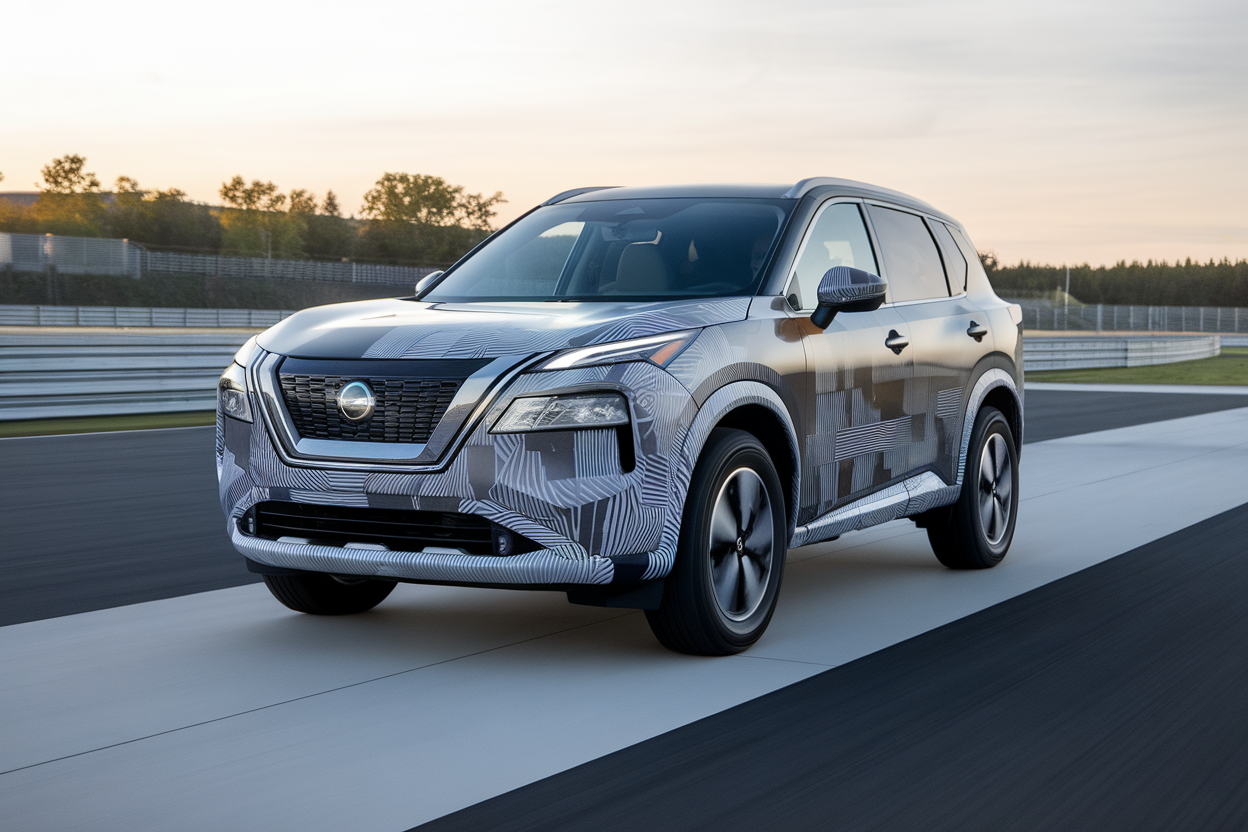
Nissan’s cooking up a new Rogue for North America, and the pitch is blunt: it’s a hybrid that’s supposed to drive like an electric vehicle. Not “kind of,” not “EV-inspired.” The company says the 2027 Rogue e‑POWER will deliver that instant, smooth electric shove—while you keep filling up with gas like it’s 2014.
The trick is the hardware. This isn’t the usual hybrid setup where a gas engine sometimes powers the wheels. In Nissan’s version, the gas engine doesn’t touch the wheels at all. It’s basically a rolling power plant.
A hybrid where the gas engine never drives the wheels
Here’s the core idea: the Rogue e‑POWER is a series hybrid. Translation: the wheels are driven by electric motors, period. The gasoline engine’s job is to spin a generator that makes electricity for the motors (and to keep the battery fed).
That changes the feel. Electric motors deliver torque right now, not after a transmission thinks about it. Nissan’s betting that everyday driving—stoplights, merges, suburban creep—will feel more like an EV than like the typical “engine + motor negotiating custody of the drivetrain” hybrid.
And because the gas engine isn’t tied to a gearbox and driveshafts, Nissan can run it in a narrower, more efficient operating range—at least in theory. The goal is fewer of those awkward hybrid moments: the surge, the lag, the weird rev flare that makes you feel like the car’s arguing with itself.
Nissan also wants you to stop calling it “just a hybrid.” That’s why it keeps pushing the e‑POWER label, a system it’s already sold in Europe on other models, marketed around driving feel more than raw MPG bragging rights.
What’s under the hood: a 1.5-liter turbo three-cylinder plus two electric motors
Nissan says the system centers on an integrated e‑POWER unit combining the electric motor, inverter, and a 1.5-liter turbocharged three-cylinder gas engine. Again: that three-cylinder isn’t there to propel the SUV directly. It’s there to generate electricity so the electric motors can do the moving.
And Nissan isn’t treating this like some front-wheel-drive efficiency special. The plan includes an electric motor on the rear axle for AWD. In the compact SUV world—Toyota RAV4 territory, Honda CR‑V country—AWD isn’t just about snow. It’s a checkbox, a resale-value booster, and for plenty of buyers, a vibe.
Nissan isn’t sharing full specs yet—no power numbers, no battery capacity, no fuel economy. What it is saying: a “significant” battery, two electric motors, and standard AWD, with the whole package tuned to feel more electric than the segment’s big-name hybrids.
EV-style driving: one-pedal mode and heavy regen are the selling points
The most convincing EV trick usually happens below highway speeds, where electrification actually feels different: slowing down, rolling through traffic, pulling away from a stop. Nissan is leaning hard into one-pedal driving, like the Nissan Leaf, using aggressive regenerative braking so you can modulate speed mostly with the accelerator.
Nissan claims one-pedal driving can bring the Rogue e‑POWER to a complete stop without touching the brake pedal, and says it cuts brake-pedal use by about 90%. That’s a big claim, and it’ll depend on how they calibrate regen and how people actually drive. But the upside is real: less brake wear in city driving, and a smoother, more EV-like rhythm once you get used to it.
During testing at Nissan’s Grandrive facility in Yokosuka, Japan, the report from the track was telling: drivers struggled to notice when the gas engine kicked on. That’s the whole point. If the generator engine fades into the background, the system feels coherent instead of gimmicky.
Of course, series hybrids have a classic failure mode: the engine revs don’t always match what your right foot is asking for, and the sound can get annoying if the car feels like it’s “mowing the lawn” while you’re cruising. Nissan’s insulation and tuning will make or break this.
Why Nissan’s aiming at 2027: the compact SUV hybrid arms race
The Rogue lives in one of the most crowded, most cutthroat slices of the U.S. market: compact family SUVs. Hybrids have become the default “I want better fuel economy but I’m not rearranging my life around charging” choice.
Nissan’s plan is to bring a more advanced hybrid Rogue around 2027, using a third-generation version of its e‑POWER tech already seen overseas. The timing isn’t subtle. A lot of American drivers like the idea of EVs and hate the idea of planning their lives around plugs—especially if they road-trip, rent apartments, or don’t have reliable home charging.
Series hybrid architecture is Nissan’s way of dodging some of the compromises of parallel hybrids, where both gas and electric can drive the wheels and the system is constantly juggling clutches, gears, and power splits. Nissan’s promise is simpler: electric motors always drive, gas just makes electricity, and you refuel in five minutes.
The real test: highway noise, long-trip behavior, and whether it can beat the leaders
Nissan doesn’t just need decent numbers—it needs the feel to land. The Rogue e‑POWER has to deliver the stuff people associate with EVs: quick response, smooth power, and that low-effort glide. If the engine truly stays in the background most of the time, Nissan will have something.
The AWD setup—rear electric motor—could also be a legit differentiator. Electric AWD can react fast and meter torque precisely, especially on wet roads or snow, assuming Nissan nails the software.
But here’s where series hybrids get judged: sustained high-speed driving. Long highway climbs, loaded road trips, hours of steady demand—those are the moments when the generator engine may run hard and get loud. If the Rogue e‑POWER turns into a droning companion at 75 mph, Americans will notice, and they won’t be polite about it.
Nissan’s betting it can thread the needle: give EV-curious drivers the electric feel they want, without the charging infrastructure they don’t.