

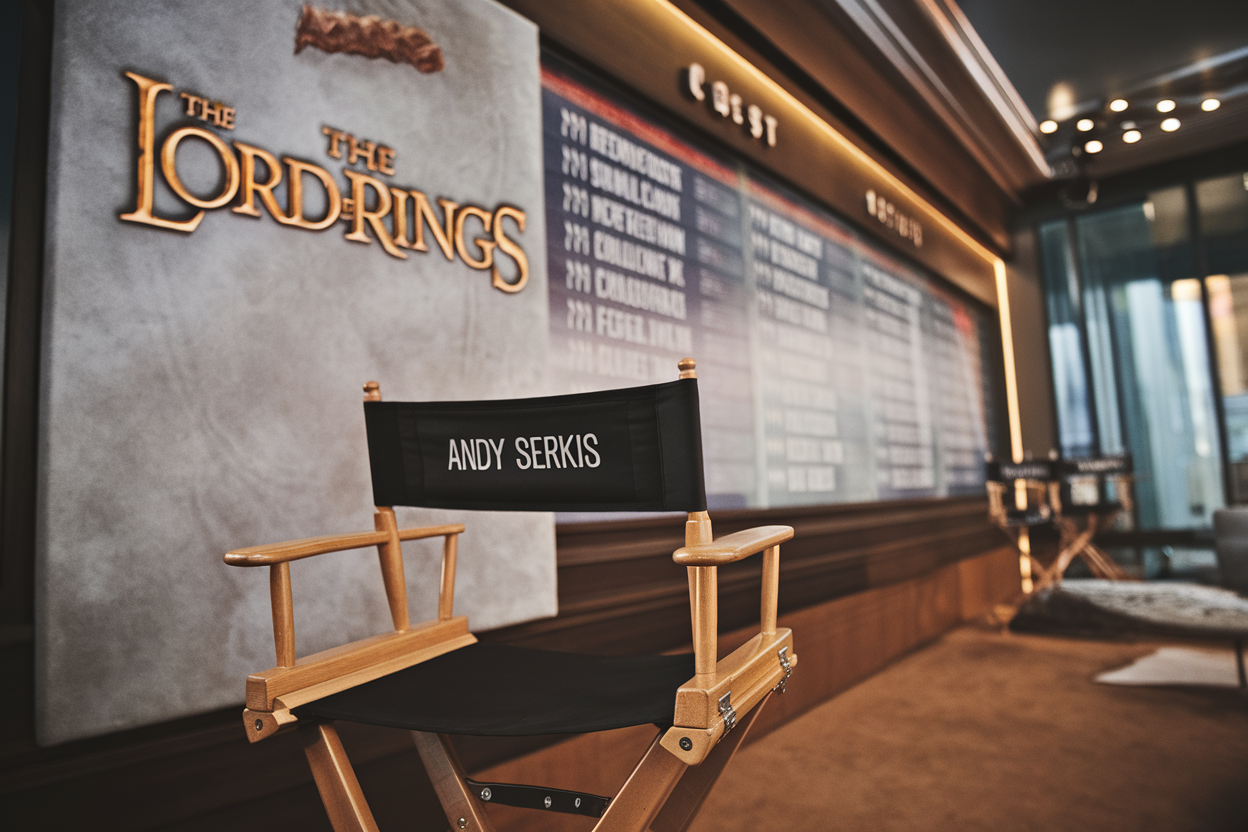
Warner Bros. just tossed a shiny ring of nostalgia onto social media and watched the internet lunge for it.
The studio confirmed a chunk of the cast for its next trip to Middle-earth: a Gollum-centered spin-off led by Andy Serkis, the guy who practically built modern motion-capture acting with that wheezing, split-personality creature. It’s the first major Lord of the Rings movie push in more than a decade, and Warner’s play is obvious—bring back faces people trust, then sneak in new blood to keep the franchise from feeling like a museum exhibit.
Frodo and Gandalf are back—because Warner wants your money to feel “safe”
Two names do the heavy lifting right out of the gate: Elijah Wood is returning as Frodo, and Ian McKellen is back as Gandalf.
This isn’t subtle. Those two are basically the emotional and spiritual brand logos of Peter Jackson’s original trilogy—the movies that turned Tolkien into a global multiplex religion. Warner didn’t drop plot details, but if Frodo and Gandalf are in the mix, the story either sits in a timeline where their presence makes sense or uses flashbacks/side sequences to pull them in without detonating continuity.
And yes, it’s also a business decision. McKellen’s name reads like a quality stamp to casual viewers. Wood is a direct IV drip of early-2000s moviegoing nostalgia—back when a “big release” meant a shared cultural weekend, not a thousand algorithm-fed micro-audiences.
But Warner can’t just trot them out like theme-park mascots. If Gandalf shows up, the writing has to justify it beyond a wink at the camera. Same for Frodo, whose arc is already locked in pretty tight. Any added scenes have to slide into the existing story without turning the original trilogy into a continuity crime scene.
Aragorn gets recast: Jamie Dornan replaces Viggo Mortensen
Here’s the part that’ll make some fans spit out their ale: Viggo Mortensen isn’t playing Aragorn.
Warner is reportedly recasting the role with Jamie Dornan, and the explanation is blunt—age. If this movie is set when Aragorn is younger, you can either spend a fortune trying to de-age Mortensen (and pray it doesn’t look like a wax museum) or you hire a younger actor and accept the inevitable comparisons.
Dornan is still “Fifty Shades” to a lot of Americans, which is… a vibe shift from the rugged, lived-in gravitas Mortensen baked into the character. But Dornan’s done darker, tighter dramatic work too, and a Gollum movie doesn’t exactly scream “clean heroic pageant.” If the script leans psychological and grim, Warner may want an Aragorn who feels less like a mythic king-in-waiting and more like a dangerous man in the mud.
The risk is aesthetic whiplash. Jackson’s trilogy etched Aragorn into pop culture with a specific look, voice, and physical presence. A new face forces the filmmakers to choose: reinvent the character for a different style of movie, or chase the old vibe and get punished for every moment that doesn’t match the memory.
And there’s a cold studio logic here too: recasting can mean “we want actors we can lock down for multiple projects.” Franchises don’t plan one movie anymore. They plan a decade.
Kate Winslet as Sméagol’s mother, plus new faces—and a targeted elf return
Warner’s not relying only on legacy casting. The reported new additions are doing something else: building out Gollum’s story from the inside.
Kate Winslet is set to play a character named Marigol—described as Sméagol’s mother. That’s a big swing. The films have treated Sméagol’s origins like a tragic sketch: enough to hurt, not enough to explain him into boredom. Bringing in a mother figure suggests the movie wants to dig into class, family, and whatever cracked inside him long before the Ring finished the job.
Winslet also signals “serious drama incoming.” You don’t hire her to stand around delivering fantasy exposition like a tour guide. You hire her to make a scene bleed.
Another reported casting: Leo Woodall as Halvard, a character being kept conveniently vague. The early read is he could be tied to the Rangers—potentially in Aragorn’s orbit—which would widen the movie beyond Gollum’s personal misery and into the human networks moving through Middle-earth at the time.
And then there’s a familiar, very specific return: Lee Pace as Thranduil, the Elvenking from The Hobbit films and Legolas’ father. Pace played him like an ice sculpture with a crown—cold, elegant, and vaguely terrifying. Bringing Thranduil back reconnects this spin-off to the elven power politics of the wider world, not just one creature’s descent into obsession.
Put it together and you can see the blueprint: intimate tragedy (Sméagol’s roots) plus bigger chessboard stuff (Rangers, elves). That can work. Or it can turn into a franchise showroom where the plot exists mainly to escort you from one recognizable face to the next.
Andy Serkis directs: the guy who is Gollum now has to justify a whole movie about him
Andy Serkis is steering this thing, and that’s the most intriguing part of the package.
He knows Gollum from the inside—literally, physically, technically. He also has directing experience. If anyone can make a Gollum-focused film feel like something other than a cynical IP exercise, it’s probably the actor who gave the character his twitchy soul in the first place.
Still, a Gollum movie has a built-in trap: over-explaining. The original trilogy made Gollum powerful partly because he stayed half in shadow—an emblem of corruption and survival, not a neatly diagnosed case study. If this film turns into a checklist of “why he’s like this,” it could shrink the character instead of deepening him.
Warner’s announcement leaned on casting, not story. That’s caution. It’s also a tell: they’re selling reassurance first, details later. And with a recast Aragorn, a new mother character for Sméagol, and Thranduil back in the mix, the movie sounds ambitious—maybe even fragile.
Audiences won’t grade this on how many names appear on a poster. They’ll grade it on whether the story earns its existence.