

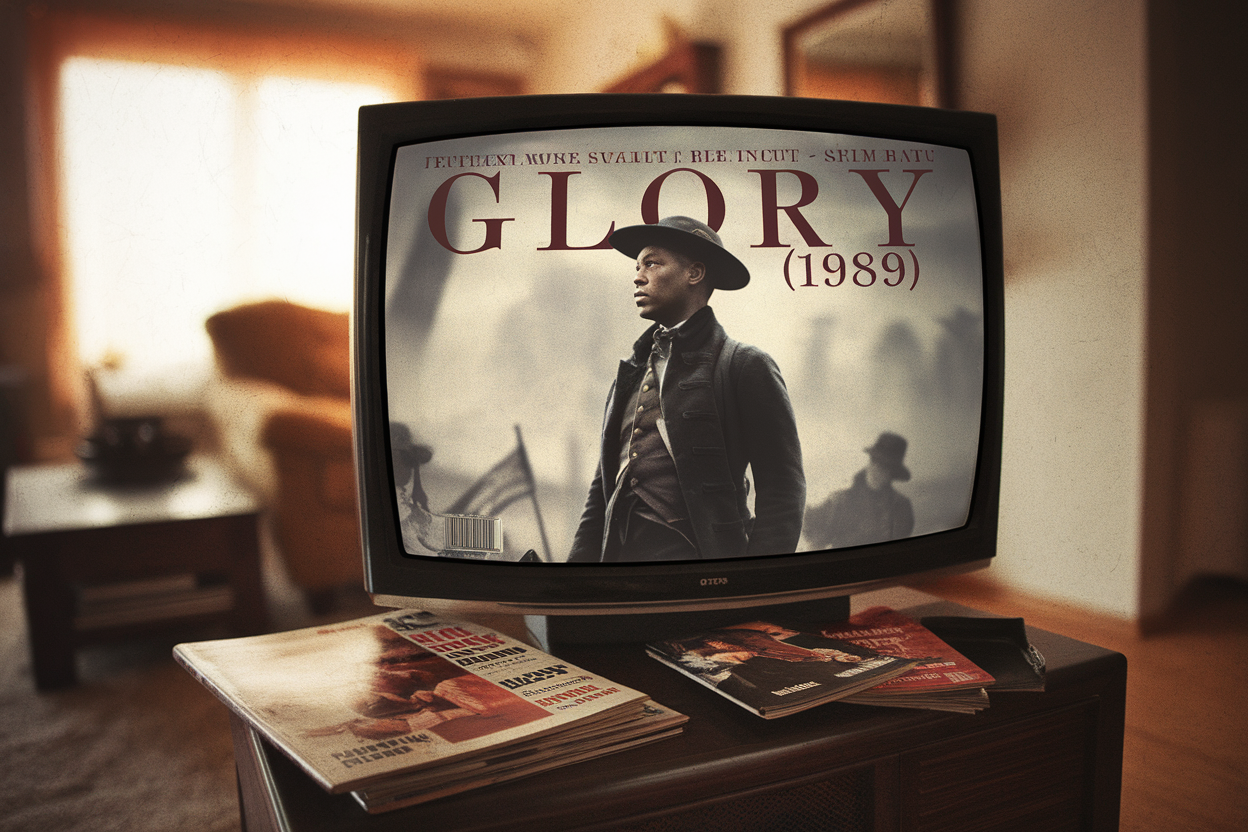
Before Denzel Washington was the guy who could sell a thriller on sheer swagger—or turn a family drama into a gut punch—he was a respected actor still waiting for the moment that made Hollywood stop politely nodding and start paying up.
That moment came in 1989 with Glory.
The movie won two Oscars, and one of them—Best Supporting Actor—went to Washington for a performance that’s equal parts rage, pride, and raw nerve. It didn’t just add a trophy to his shelf. It stamped him as a star you couldn’t ignore.
A Civil War movie that actually centers Black soldiers
Glory is set during the Civil War and follows the 54th Massachusetts Infantry Regiment—one of the first official Black units in the Union Army. The film tracks the regiment’s formation, training, and eventual march into combat, all while the men are forced to swallow daily humiliations from a military and a country that still treated them as second-class citizens.
That’s the hook that still lands: these men are asked to fight and die for a nation that won’t grant them equal rights. It’s a clean political premise, and the movie doesn’t need to scream it to make it sting.
Now, let’s be honest about the packaging. This is still a late-’80s studio film, directed by Edward Zwick, and it uses a white officer—played by Matthew Broderick—as the audience’s entry point. That framing choice wasn’t accidental; it was the kind of “insurance policy” Hollywood liked back then. But the film also does something rarer for its era: it gives Black characters real interior lives—contradictions, dignity, anger, humor, fear—without shoving them into the background as props.
The performance that won Denzel his first Oscar—and changed his career
Washington plays a soldier who refuses to be “inspirational” on cue. He’s proud. He’s volatile. He can be brutal. And he doesn’t angle for your sympathy—he takes the screen and dares you to look away.
That’s why the performance hit like a brick in 1989. It’s controlled intensity: posture, eyes, the way he occupies space. He’s not delivering a speech every five minutes; he’s radiating pressure.
The Oscar mattered because Oscars change the math. They don’t guarantee anything, but they shift power in casting rooms and studio meetings. Washington suddenly wasn’t just “talented.” He was validated in the most public way possible, and studios had a clear signal: this guy can carry weight, even if he doesn’t fit the then-dominant mold of the action hero or the comedy lead.
Watch Glory now and you can see the blueprint for what came later—authority, vulnerability, cold anger—before the vigilante roles, before Fences, before the era when “a Denzel movie” became its own genre.
Broderick, Freeman, and a cast built for friction
Broderick’s officer character functions as the narrative anchor, guiding viewers through the military hierarchy and the institutional hypocrisy: the Army needs these men, but plenty of people in power don’t respect them.
Then Morgan Freeman walks in and steadies the whole film. His presence is calm, moral, and heavy with lived experience—without turning into the cliché “wise man” routine. He plays endurance. He plays the kind of hard-earned clarity that comes from surviving a system designed to grind you down.
And the movie’s internal music comes from the contrast: Freeman’s restraint against Washington’s combustible energy. Zwick leans into the group dynamic—training scenes, camp life, marches—so the regiment feels like a living organism, not a lineup of character types waiting their turn.
The battle sequences are brutal enough to make the point: war here isn’t a heroic backdrop. It’s a machine. Honor doesn’t refund the human cost.
Why “Glory” still hits on streaming—despite the algorithm brain
Rewatching Glory today is a reminder of what big, mainstream historical dramas used to aim for: emotional accessibility without turning history into a theme-park ride.
And yes, it lands differently now, because the arguments it brushes up against haven’t gone anywhere—how America teaches its history, who gets centered in the national story, what gets left out, what gets sanitized. Glory doesn’t pretend to solve any of that. It just plants a flag on one undeniable fact: Black soldiers fought in a war Americans love to call “foundational,” even as the country stayed deeply unequal.
There’s also a practical reason it endures: it’s a war movie that’s actually about people. Not maps. Not tactics. Not hardware. People.
The downside is the same one facing any older, slower-burn film on modern platforms: streaming rewards speed—new releases, bingeable series, quick hits. Glory asks for attention. It makes you sit with silence, fear, humiliation, and resolve. That’s a tougher sell in a scroll-happy culture, which makes its staying power even more impressive.
Per the Academy of Motion Picture Arts and Sciences, Glory delivered Washington’s first Oscar. And if you scan industry references like IMDb and standard film histories, 1989 is still the year most people point to when they talk about his leap from “highly respected” to “household name.”