

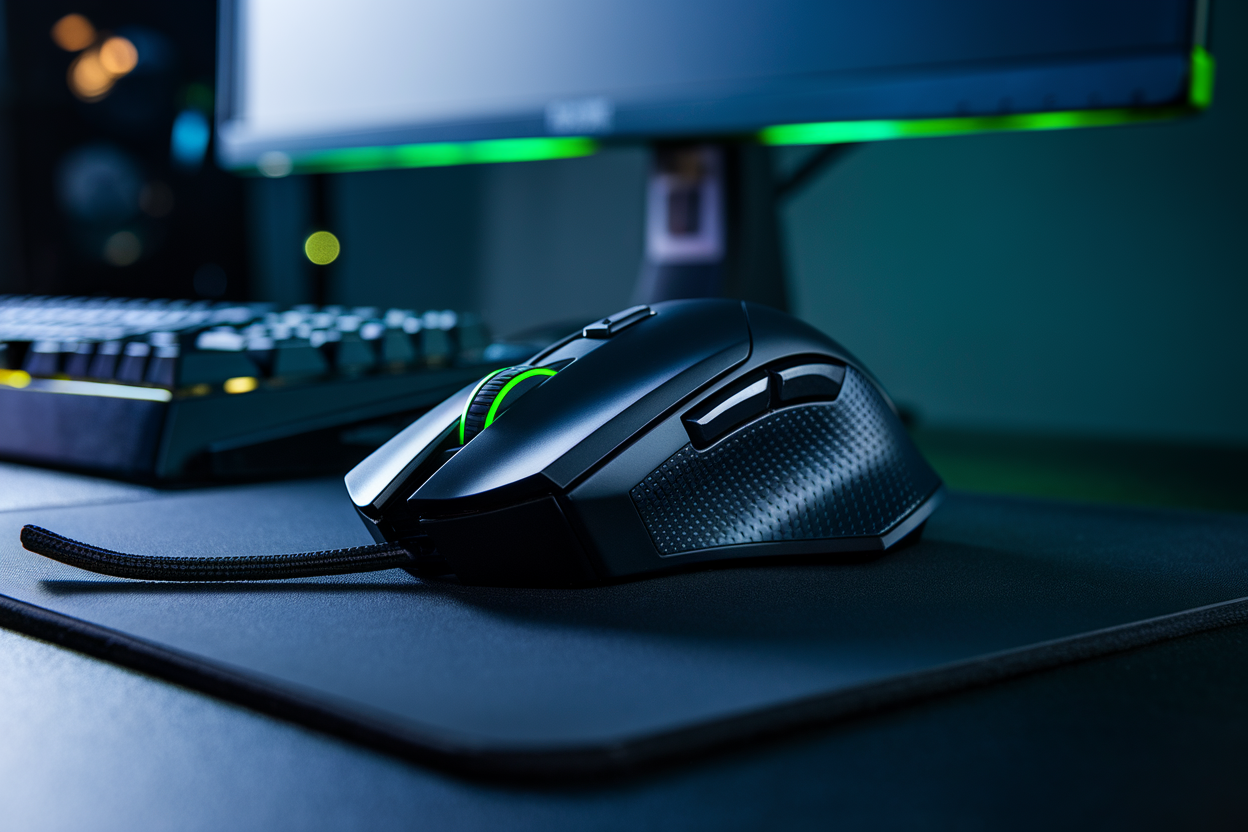
Razer just rolled out the Viper V4 Pro and, for once, the marketing isn’t pretending a new paint job counts as progress. The company is planting its flag on a single, nerdy, make-or-break component: the sensor.
The pitch is blunt: in a mouse market where shape tweaks and wireless checkboxes have basically hit a ceiling, the only real flex left is measurable precision. Razer says this sensor beats what’s out there on a key competitive metric—and it’s daring the internet’s army of testers to prove it wrong.
Razer’s strategy: stop selling “vibes,” start selling numbers
High-end gaming mice have become like $300 sneakers: lots of launches, lots of hype, and for most people the “upgrade” is hard to feel. Manufacturers know that. So they aim their arguments at the folks who actually care—competitive players who obsess over tracking stability, latency, consistency, and how a mouse behaves when you’re making tiny corrections or whipping 180s.
That’s why centering the whole launch around the sensor is a calculated move. Ergonomics are personal. Weight balance is personal. Even click feel is personal. But sensors? Sensors can be tested, compared, and ranked. Razer’s bet is that it can turn an internal component into the headline feature—and then quietly make it the standard everyone else has to answer to.
DPI is the oldest trick in the book—and serious players don’t buy it
For years, mouse makers have screamed about DPI the way TV brands scream about “dynamic contrast.” Big number, easy to print on a box, mostly irrelevant in real life.
Competitive players typically run moderate or even low sensitivity because control beats chaos. What separates a good sensor from a great one isn’t some cartoonish max DPI—it’s whether the cursor does exactly what your hand did, every time, with no weird smoothing, no unwanted acceleration, no jitter, no “helpful” correction that turns your aim into mush.
At high levels, tiny tracking inconsistencies aren’t academic. They’re missed shots. They’re lost rounds. The holy grail is repeatability: same motion, same result—whether you’re creeping a pixel at a time or snapping fast across the pad.
Logitech and SteelSeries can’t ignore a credible sensor flex
The “Pro” mouse tier is a small club with loud members. Logitech and SteelSeries live here, along with a handful of other brands that fight over the same customers: people willing to pay premium money for something that’s supposed to be flawless.
So when Razer says, essentially, “our sensor is better,” it forces a response. Competitors can try to dispute the measurements, or they can change the subject—software ecosystem, switch tech, battery life, comfort, build quality. But the sensor is symbolic in this category. If you’re charging top dollar, you don’t get to shrug off being second-best at the one thing that’s supposed to be objective.
And this is how spec escalation works: one company pushes a new “must-have,” and suddenly everyone else has to match it just to stay in the conversation. Razer isn’t only selling a mouse here. It’s trying to set the bar.
The real judge: independent tests and what the pros actually use
Talk is cheap in gaming peripherals. The Viper V4 Pro’s sensor claim lives or dies with independent testing—repeatable measurements that look at tracking consistency, smoothing, angle snapping, surface behavior, lift-off performance, and stability during very fast movements.
Then comes the second test: pro adoption. Esports players don’t swap mice casually because muscle memory is money. If a bunch of top players move to a new model, it usually means one of two things: it’s genuinely better, or at least it has zero deal-breaking flaws.
And that’s the part Razer can’t fake. A premium mouse that nails the sensor but stumbles on build quality, click durability, or buggy software gets dragged fast—and the internet is undefeated at turning small defects into brand-wide reputational damage.
For now, Razer’s announcement is a shot across the bow: the next round of mouse bragging rights is going to be fought inside the shell. If the Viper V4 Pro backs up the sensor talk once the testers get their hands on it, Logitech and SteelSeries won’t have the luxury of ignoring the new benchmark.