

Europe’s politicians want to shove diesel off the road. Trucking companies still need rigs that can haul heavy loads all day without babysitting a charger. So here comes a very European compromise: a hydrogen-burning internal combustion engine—basically a diesel’s cousin running on a different fuel.
Germany’s MAN just rolled out what it’s calling Europe’s first hydrogen truck line, the hTGX. The headline number is loud: 520 horsepower. The quieter point is what MAN’s really selling—fast refueling and long-range hauling in places where battery-electric trucks are a pain.
Meet the MAN hTGX: a hydrogen ICE truck with a 373-mile range
MAN’s hTGX is a new series of heavy trucks powered by a hydrogen internal combustion engine (not a fuel cell). The company says the truck can go up to 600 km—about 373 miles—on a fill.
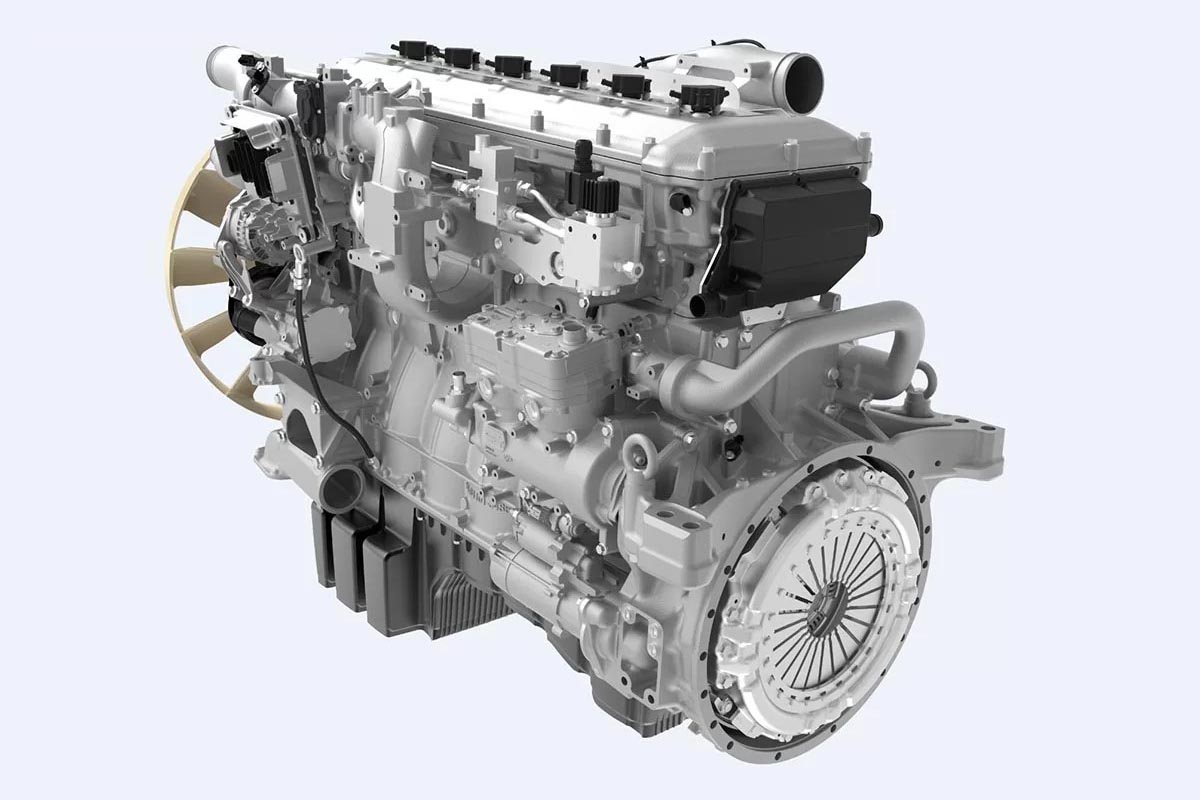
This isn’t some sci-fi clean-sheet engine, either. MAN’s hydrogen motor is derived from an existing diesel platform, then reworked to burn hydrogen and slash emissions. That’s the pitch: familiar hardware, “green” fuel.
Small rollout, very specific customers
Don’t expect these to flood European highways. MAN’s initial plan caps production at 200 trucks. Deliveries are slated to start in 2025, with early customers in Germany, the Netherlands, Norway, and Iceland—plus a few markets outside Europe.
That limited run tells you everything: this is a targeted tool, not a mass-market takeover.
Why MAN thinks hydrogen combustion beats batteries in certain trucks
Battery-electric trucks can work great—until they don’t. MAN’s argument is simple: some specialty rigs don’t have room for big battery packs on the chassis because the bodywork eats the space.
Think multi-axle trucks built for awkward, heavy-duty jobs—tankers, timber haulers, construction-material rigs. In those cases, MAN says hydrogen combustion can keep the truck’s packaging workable without redesigning the whole vehicle around batteries.
Specs: 56 kg of hydrogen at 10,000 psi, refuel in under 15 minutes
The hTGX will come in 6×2 and 6×4 configurations. It carries 56 kilograms of hydrogen stored at 700 bar—about 10,000 psi. And MAN claims refueling takes less than 15 minutes.
That refuel time is the real flex. For fleet operators, minutes matter. Hours on a charger can wreck scheduling, especially where high-power charging infrastructure is thin—or where the grid just can’t spare the electricity.
The H4 engine: 520 hp, 1,844 lb-ft of torque—and a regulatory loophole it can drive through
The hydrogen engine—called the H4—is based on MAN’s D38 inline-six diesel. Output: 520 horsepower (383 kW) and 2,500 Nm of torque, which is about 1,844 lb-ft, delivered between 900 and 1,300 rpm. That’s right in the sweet spot for heavy hauling.
MAN says emissions are “less than 1 g CO2 per ton-kilometer,” which allows it to qualify as a “zero-emissions vehicle” under the European Union’s new CO2 rules.
Yes, you read that correctly: an internal combustion engine that can be counted as “zero-emissions” in the regulatory framework. Europe loves a technical definition.
MAN’s not ditching electric—this is the side bet
MAN is also careful to say it’s still prioritizing battery-electric trucks. The hydrogen combustion program is positioned as the option for the hard cases—where charging is lousy, electricity is scarce, or the truck’s job makes batteries impractical.
And MAN isn’t stopping at highway trucks. The company says it wants to test hydrogen internal combustion in other applications through its MAN Engines division—off-road and marine included.
Where else could hydrogen combustion show up? Snowplows, trains, cranes
MAN points to vehicles that are notoriously tough to electrify: snowplows, non-electrified trains, excavators, and cranes. Basically: big machines that work long shifts, in bad weather, far from chargers, and don’t have time for downtime.
Europe’s first hydrogen truck engine is here—and it’s a brute. The open question isn’t whether 520 horsepower is “too much.” It’s whether hydrogen supply, cost, and infrastructure can keep up with the ambition.